REVIEW · CHARLESTON
Charm of Charleston – Walk Through Time with a Charleston Native
Book on Viator →Operated by Best of Charleston Tours · Bookable on Viator
Charleston history walks right past your feet. This small-group walk turns the most photographed corners of downtown into clear, human stories, from Rainbow Row to City Market and the old port.
I love how the tour links symbols to meaning, like why pineapples show up everywhere. I also like the pace: lots of stops, but not so many that you feel rushed.
One thing to plan for: it’s a walking tour that’s weather-dependent, so you’ll want decent weather for best comfort and photos.
If you get Paige as your guide, you’re in good hands—she’s a Charleston native and she brings the details with energy. With a maximum of 15 people, it stays conversational instead of a lecture through the crowd.
In This Review
- Key things to know before you go
- A 90-minute route that strings together Charleston’s big clues
- Where the tour starts at 195 E Bay St
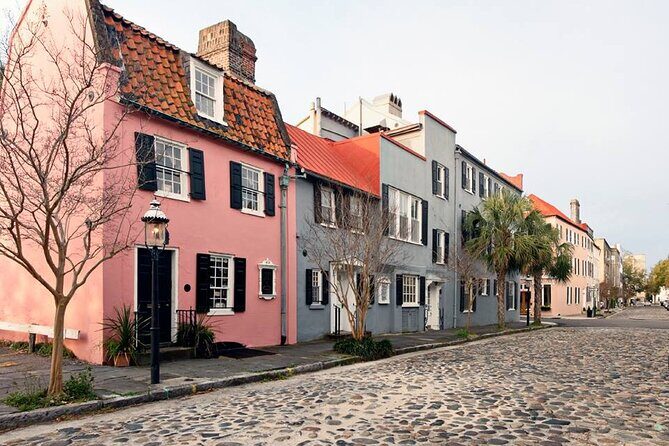
- Rainbow Row: more than a pretty photo wall
- Waterfront Park and the Pineapple Fountain: southern hospitality in plain sight
- City Market: the original shopping district with a surprising twist
- Philadelphia Alley: a short passage with a big revolutionary link
- Four Corners of Law and Saint Michael’s: old power on one skyline
- The city’s oldest structure as a tavern for centuries
- America’s oldest theater: architecture you can feel
- The Revolution-era port: dungeon, customs, meeting house, grand ballroom
- What you’re really paying for: $29 and the value of a native’s route
- How to make this walk work for your day
- Who this tour is best for
- Should you book Charm of Charleston Walk Through Time?
- FAQ
- How long is the Charm of Charleston walk?
- What does the tour cost?
- What language is the tour offered in?
- Where do you meet, and where does it end?
- How big is the group?
- What’s included in the price?
- Is the tour affected by weather?
- Can I cancel for a full refund?
Key things to know before you go

- Rainbow Row’s color story, explained as you stroll the landmark people come to photograph
- Pineapple symbolism at Waterfront Park, tied to southern hospitality and harbor views
- City Market context, so the shopping streets feel meaningful instead of just busy storefronts
- Philadelphia Alley, a short stop with a big idea: the bond between two revolutionary cities
- Four Corners of Law and Saint Michael’s, for skyline views and the feel of old business power
- Old tavern walls and America’s oldest theater, stitched into one walk rather than separate visits
A 90-minute route that strings together Charleston’s big clues

Charm of Charleston is a well-shaped walking loop that gives you fast orientation, then pays it off with stories tied to specific places. You’re not just seeing famous spots—you’re learning why they matter and how they connect.
At $29 per person for roughly 1 hour 45 minutes, the value comes from focus. You get a native’s running commentary and suggestions afterward, which can save you time when you start planning the rest of your day. With a small group (15 max), you’re more likely to ask questions and get straight answers.
This is also a tour that works well for first-timers. You’ll cover a lot of downtown highlights in one go, then you can decide what’s worth a longer look later.
If you're still narrowing it down, here are other tours in Charleston we've reviewed.



Where the tour starts at 195 E Bay St

The walk begins at 195 E Bay St in downtown Charleston. Starting here matters because it places you close to the center of action early, before you drift farther into specific historic pockets.
You’ll finish at Waterfront Park on Vendue Range / Concord St. That end point is handy: once you’ve got your bearings, Waterfront Park is a natural place to continue on foot, grab a snack, or simply reset with harbor views.
The tour is offered in English with a mobile ticket, so you can keep things simple once you arrive.
Rainbow Row: more than a pretty photo wall
One of the first stops takes you along Charleston’s most famous landmark and explains how it became Rainbow Row. The big payoff here is perspective. Instead of treating the buildings like a backdrop, you learn what the name means and how the landmark earned its identity over time.
Even if you’re the type who normally snaps photos and keeps moving, this stop tends to make people pause. The explanation gives your photos a story. You’ll also be walking while you learn, which keeps the experience light instead of turning into a museum-style lecture.
Practical tip: If you care about photos, hold off on the fastest ones until you understand what you’re looking at. You’ll frame better once you know what matters.
Waterfront Park and the Pineapple Fountain: southern hospitality in plain sight
Next comes Waterfront Park, with views over Charleston Harbor and the Ravenel Bridges. This is where the tour balances story with scenery, so you get a breather between denser historic areas.
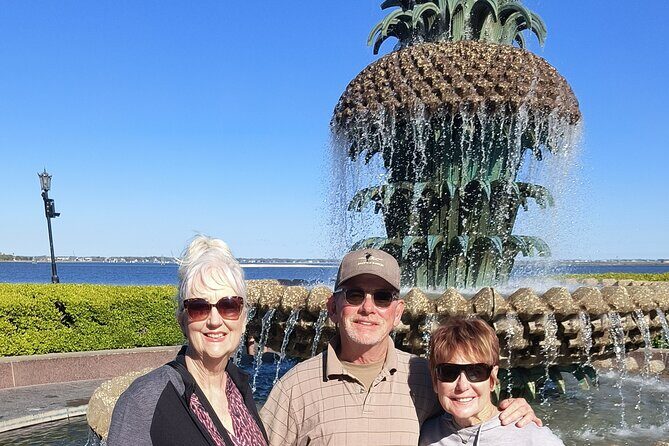
You’ll also learn why pineapples represent southern hospitality, then see the famous Pineapple Fountain as you stroll. The important part isn’t just that pineapples look cheerful—it’s the meaning behind the symbol, so it feels connected to local culture instead of random décor.
From a practical standpoint, this stop is great for timing. Harbor views are best when the light is decent, and Waterfront Park gives you open space to step out of the crowd rhythm for a moment.
City Market: the original shopping district with a surprising twist
The walk then shifts into City Market, Charleston’s original shopping district. You’ll find out how this place carries surprising history, which changes how you’ll read the area once you’re on your own.
This matters because downtown Charleston can look like a nonstop parade of pretty facades. City Market helps you understand how commerce and community overlap in older cities. You’ll finish the stop with a better sense of what you’re seeing and why people have been gathering here for a long time.
One practical advantage: after the tour, you’ll be more likely to pick the right places to revisit or browse deeper—shops, side streets, or nearby viewpoints.



Philadelphia Alley: a short passage with a big revolutionary link
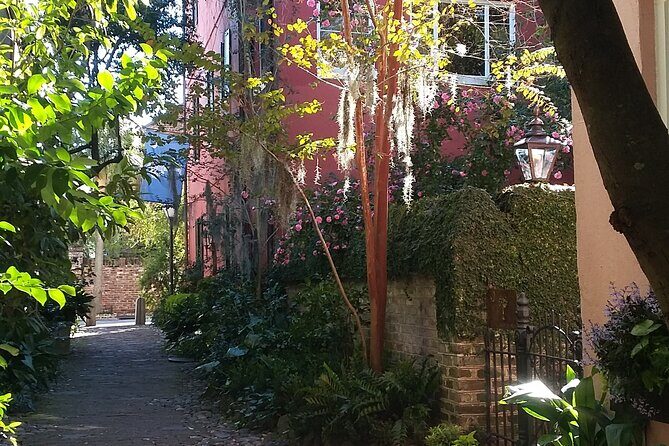
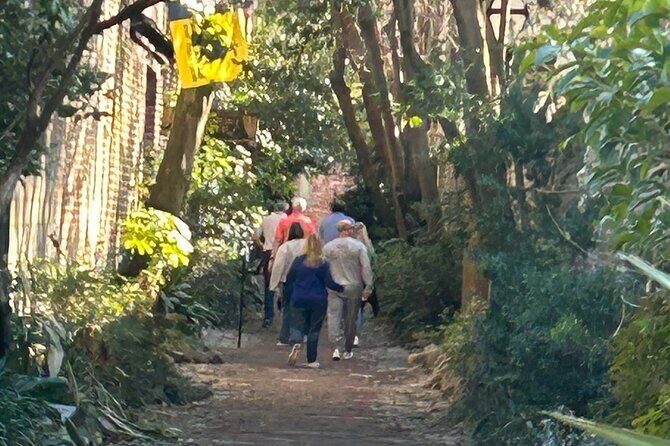
Philadelphia Alley is one of the brief-but-memorable stops. You’ll walk through this passageway that commemorates the close relationship between two revolutionary cities, and you’ll hear about the many secrets hidden there.
At about 10 minutes, it’s a quick hit, not a detour. Still, the tone here is different. Instead of major landmarks, this is the kind of stop where the details feel more personal—like you’re getting an insider’s note about a place you might otherwise pass by without noticing.
If you like your history in small doses, this is a strong part of the route. If you hate narrow alleys, you can still enjoy the story while keeping your pacing steady—just don’t expect a wide-open space.
Four Corners of Law and Saint Michael’s: old power on one skyline

As the tour continues, you’ll see the Four Corners of Law, the original business district of Charleston. You’ll also spot City Hall, the County Courthouse, and the Federal Courthouse.
Then comes a key visual: Saint Michael’s, the city’s oldest standing church gracing the skyline. Seeing the buildings together gives you a sense of how law, business, and civic life all shaped the downtown core.
This portion works especially well if you like architecture and “reading” towns by their layout. Even if you aren’t an architecture buff, it’s easy to connect the dots: where decisions were made, where business happened, and why certain buildings became symbols.
The city’s oldest structure as a tavern for centuries

Another stop in the route covers an idea that feels almost impossible until you hear it: Charleston’s oldest structure was also its most popular tavern for centuries. If those walls could talk, you’ll get the gist of how food, drink, and community stories shaped daily life.
This stop is a good reminder that historic places weren’t only backdrops for important events. They also functioned as social hubs, where locals met, talked, and passed along information.
From a viewer’s standpoint, it adds variety to the tour. You’re not only looking at churches and civic buildings—you’re also connecting to everyday life in old Charleston.
America’s oldest theater: architecture you can feel
The walk includes a stop focused on the exquisite and intriguing architecture of America’s oldest theater. This is one of those moments where the story and the building combine.
Even without going inside for a full program, the outside architecture gives you something to look at while the guide ties it back to Charleston’s cultural importance. You’ll come away thinking about how entertainment fit into the city’s older rhythms.
If you’re planning to attend a show later, it helps to know why this theater is a big deal before you sit down.
The Revolution-era port: dungeon, customs, meeting house, grand ballroom
In the later part of the experience, the tour zooms in on Charleston’s crucial Revolutionary role as a port. You’ll hear about the port’s first dungeon, customs house, meeting house, and grand ballroom.
Even with brief stops, this is valuable because it shows how a single port could serve multiple purposes. You’re learning about systems—trade, control, gathering places, and the formal side of civic life—without needing to bounce between separate venues.
This section can feel like the tour’s “timeline anchor.” After seeing rooftops and streets, you now understand how the city functioned during a decisive era.
What you’re really paying for: $29 and the value of a native’s route
Let’s talk value plainly. $29 for about 1 hour 45 minutes is reasonable for a downtown walking tour, especially when the guide does more than recite facts. What you’re buying is a tight route plus a local’s suggestions for further exploration, dining, and events.
That last part can be worth a lot. Charleston has plenty to do, and it’s easy to waste time chasing the wrong neighborhood for the wrong mood. A native guide can help you match the city to what you actually want that day—quiet history, scenic harbor time, or places to eat before the crowds.
Also, the tour caps at 15 people, which helps with quality. You’re not stuck listening over heads or waiting too long for the group to move.
How to make this walk work for your day
A tour like this is best as an early step. If you do it near the start of your Charleston trip, you’ll use the stories to guide what you choose next.
Here’s how I’d plan it:
- Pair it with a later self-guided stroll, using the landmarks you learned as anchors.
- If you want photos, bring a phone camera-ready setup and give yourself a little time to linger after the guide moves on.
- Wear comfortable shoes. It’s a walking experience for 1 hour 45 minutes, so your body will feel it if you’re in dress shoes.
Since the experience requires good weather, check conditions on the morning of. If it’s canceled due to poor weather, you’ll be offered a different date or a full refund—so don’t assume you’re locked into a single option.
Who this tour is best for
This is a strong fit if you want:
- A first-time-friendly introduction to downtown Charleston
- History explained in plain language tied to exact places
- A route that includes both famous landmarks and smaller, story-driven corners like Philadelphia Alley
It may be less ideal if you prefer long indoor stops or deep museum time. This is about walking and understanding, not sitting down for hours.
Should you book Charm of Charleston Walk Through Time?
Yes, book it if you want an efficient, story-led walk that helps you see Charleston in a more meaningful way. The $29 price point feels fair for the time, the small group size, and especially the native-guided local tips you can use right away.
Skip it only if walking for about 1 hour 45 minutes is a deal-breaker for you, or if you’re traveling during a stretch where weather is likely to disrupt outdoor plans. Otherwise, this is the kind of tour that makes the city click fast—and keeps you curious for the rest of your trip.
FAQ
How long is the Charm of Charleston walk?
It runs for about 1 hour 45 minutes.
What does the tour cost?
The price is $29.00 per person.
What language is the tour offered in?
The tour is offered in English.
Where do you meet, and where does it end?
It starts at 195 E Bay St, Charleston, SC 29401 and ends at Waterfront Park, Vendue Range, Concord St, Charleston, SC 29401.
How big is the group?
The tour has a maximum of 15 travelers.
What’s included in the price?
You get a pleasant, informative, entertaining walk of Charleston’s iconic landmarks plus suggestions for further exploration, dining, and events from a Charleston native.
Is the tour affected by weather?
Yes. It requires good weather. If it’s canceled due to poor weather, you’ll be offered a different date or a full refund.
Can I cancel for a full refund?
Yes. You can cancel up to 24 hours in advance for a full refund.