REVIEW · CHARLESTON
108 Elemental Presents Beauty & Tragedy: History w/ Adam Miles
Book on Viator →Operated by 108 Elemental Tours · Bookable on Viator
Charleston’s beauty comes with a hard ledger. I like how this 2-hour walk with Adam Miles stitches the city’s famous postcard scenes to the darker parts of its story, so you get the full picture instead of separate “happy Charleston” and “serious Charleston” days. I also like the pacing: short stops that keep you moving, with standout introductions at places like the Powder Magazine.
The main thing to consider is admissions. Several key stops are listed as ticketed separately, so your total cost may be a bit higher if you want to go in. Also, the tour covers slavery history, so if you know you prefer a lighter topic, this one may feel heavy.
In This Review
- Key things to know before you go
- A 2-Hour Walking Route That Balances Beauty and Suffering
- Powder Magazine: Early Colonial Charleston in One of Its Oldest Buildings
- Old Slave Mart Museum: Confronting Charleston’s Darkest Chapter
- Old Exchange & Provost Dungeon: Pirates, Jail Cells, and a Quirky Twist
- Rainbow Row’s Pastel Facades: Why Restoration Is Part of the Story
- The Battery and White Point Gardens: Harbor Views With Real Perspective
- Historic Downtown Charleston: From the French Quarter to Four Corners of Law
- Price and Value: What $40 Buys You (and What It Does Not)
- Practical Logistics That Make the Tour Easier
- Who This Tour Fits Best
- Should You Book This Charleston Tour with Adam Miles?
- FAQ
- How long is the tour?
- How much does it cost?
- What language is the tour offered in?
- Where does the tour start and end?
- Are admission tickets included for all stops?
- How many people are in the group?
- Is the tour accessible to most people?
- Are service animals allowed?
- What is the cancellation policy?
Key things to know before you go
- A guide who points out what you’d miss: this format is all about seeing details you’d walk past on your own.
- Short, focused stops: most locations are about 10 minutes, with extra time for the Battery views.
- Hard history is part of the route: the Old Slave Mart Museum stop makes sure you don’t skip the painful chapter.
- Free-to-see Charleston landmarks: Rainbow Row and the Battery/White Point Gardens are free.
- Some stops need separate tickets: budget for the Powder Magazine, Old Slave Mart Museum, and Old Exchange & Provost Dungeon.
- Small group size: maximum 20 travelers helps keep questions from getting lost.
A 2-Hour Walking Route That Balances Beauty and Suffering
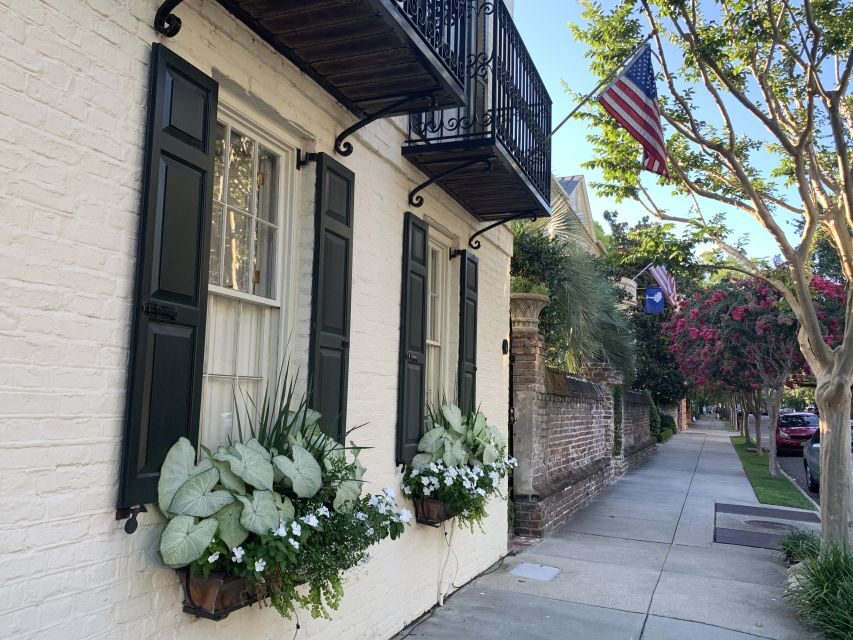
This tour is built for people who want meaning, not just photos. You’ll walk through central Charleston at a comfortable pace, with the guide connecting each stop to the larger story of the city. The vibe is straightforward: see the place, learn what happened there, and keep moving.
The strongest “value” angle here is focus. At about 2 hours, you’re getting multiple major stops without committing to a full museum day. And with a maximum of 20 people, it’s not a stampede. That matters because Charleston’s best details are small: plaques, street layout, building purpose, and why a place matters beyond its facade.
You’ll also be walking past some of the city’s most recognizable sights, like Rainbow Row and the Battery, while still being anchored to why Charleston looks the way it does. For me, that’s the sweet spot: you get beauty, then you get the context that makes it feel honest.
Other historical tours in Charleston



Powder Magazine: Early Colonial Charleston in One of Its Oldest Buildings
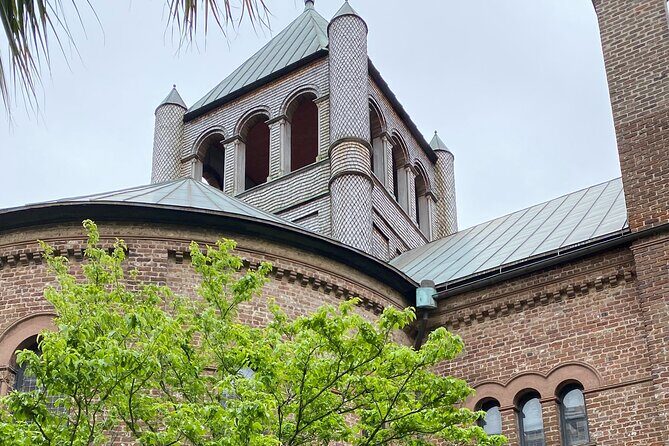
The Powder Magazine is your first stop, and it’s a smart opener. It’s described as the oldest public building in South Carolina, and the guide’s job here is to set the stage with the earliest colonial era. When you start with a site this old, you immediately understand that Charleston wasn’t always “the picturesque port”—it was also a strategic, defensive place.
Expect a short introduction—about 10 minutes—and plan for it to feel like orientation. The listing also notes admission ticket not included, which usually means you can still learn and look around, but if you want to enter, you’ll need your own ticket plan. If you’re the type who loves stepping inside historic structures, bring a little extra money and time in your head.
Why this stop is worth the slot: it gives you a framework. Later sites make more sense when you’ve already seen how the city’s early priorities shaped its buildings.
Old Slave Mart Museum: Confronting Charleston’s Darkest Chapter
Next up is the Old Slave Mart Museum, and it’s not a “light” stop. The way this location is described—one of the most heartbreaking and important buildings—is a clear heads-up. The tour is designed so you don’t just hear about slavery history in abstract terms. You get it tied to a specific place.
You’ll pass by and the guide will cover some of the Holy City’s darker history. This part of the tour is listed at about 10 minutes, which means it’s intense and compact rather than long and slow. That can be good, because it keeps the walk moving, but it also means you may want a moment after this stop to regroup.
A consideration: if you’re sensitive to heavy historical topics, decide before you arrive how you want to handle it. There’s no way to soften the reality of what this museum represents. If you can handle serious content, though, this is the stop that gives the tour its moral backbone.
Old Exchange & Provost Dungeon: Pirates, Jail Cells, and a Quirky Twist

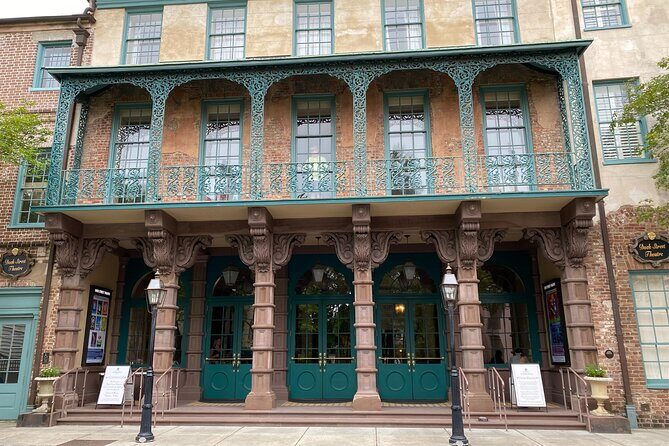
The Old Exchange & Provost Dungeon is where the tour turns into story time with teeth. It’s described as having a fascinating and checkered history—ranging from jailed pirates to a dancing George Washington.
That mix is exactly why this stop works on a walking tour. Even if you’re not the kind of person who reads every plaque on vacation, you’ll still be able to follow along. The guide can explain how the building functioned over time and how wildly different its uses were. That’s the kind of detail that makes a place feel alive instead of frozen.
Like the other early stops, this one lists admission ticket not included, so again: you’ll likely need to plan separately if you want to go inside at your own pace. Time here is about 10 minutes, so think of it as a guided highlight—enough to understand the building’s role, not enough to replace a full museum visit.
Rainbow Row’s Pastel Facades: Why Restoration Is Part of the Story

Then you get a break that isn’t just visual. Rainbow Row is one of Charleston’s most discussed sections, and it’s free during this tour. The listing notes it was restored in the 1930s and 1940s, and that detail matters.
If you only treat Rainbow Row like a photo background, you miss the point. Restoration tells you that even iconic city images require decisions: what to keep, what to fix, what to preserve for the next generation. The guide’s approach here is likely to connect the pretty exterior to the city’s historical changes.
You’ll spend about 10 minutes here, and since it’s listed as free, you can linger if you want extra photos (as long as you follow the group). For many first-timers, this stop is where you go from hearing history to seeing it—street by street, door by door.



The Battery and White Point Gardens: Harbor Views With Real Perspective
Next is the Battery and White Point Gardens, and this is your most scenic stretch. You get about 20 minutes, which is longer than most stops. The views are described in a very specific way: Fort Sumter, the USS Yorktown, Castle Pinckney, and the Charleston harbor.
This is more than a skyline moment. From a history-focused tour standpoint, it’s also a reminder that Charleston’s identity is tied to trade, war, and the geography that shapes who controls the waterway. Even if the tour covers harsh subjects earlier, the harbor views help you understand why this city became so strategic.
Both the Battery and White Point Gardens are listed as free. That’s great for value. You’re not paying another admission price just to take in the view.
Quick practical tip: harbor walks can be breezy and bright. I’d bring sunglasses and dress in layers if you’re going in cooler or windy seasons. You’ll feel it right away standing near the water.
Historic Downtown Charleston: From the French Quarter to Four Corners of Law
The biggest chunk of the tour time is the downtown walking portion. You’ll spend about 1 hour on Historic Downtown Charleston, and the route includes places like the French Quarter and Four Corners of law, plus parks and cobblestone streets.
This is where the guide earns their keep. Walking Charleston without context is easy: you admire, you photograph, you move on. With a guide, the city starts to act like a map of stories. The French Quarter isn’t just a name. Four Corners of law isn’t just an intersection. Both become clues about how daily life worked, how power was enforced, and how the city organized itself.
Because this section is free during the tour, it’s a nice budget win. It also helps you “absorb” the earlier stops. You’re not just jumping from attraction to attraction—you’re connecting them through streets, squares, and the flow of neighborhoods.
Price and Value: What $40 Buys You (and What It Does Not)
At $40 per person for about 2 hours, this tour is priced for guided storytelling rather than for museum admission bundles. And that’s a legit value approach in Charleston, where the best tours aren’t only about ticketed interiors—they’re about interpretation and connections between places.
Here’s the honest accounting based on what the tour lists:
- Powder Magazine: admission not included
- Old Slave Mart Museum: admission not included
- Old Exchange & Provost Dungeon: admission not included
- Rainbow Row: free
- Battery & White Point Gardens: free
- Historic Downtown Charleston walk: free
So, if you buy tickets for those first three stops, your total trip cost will go up. But even without entering everything, the guided walk portion is still the point: you’re paying for someone—Adam Miles—to connect the dots in real time.
Why that matters: Charleston can overwhelm you fast. Too many streets, too many old buildings, too many “this looks important” moments. A guided route compresses that confusion into something you can actually remember.
Practical Logistics That Make the Tour Easier
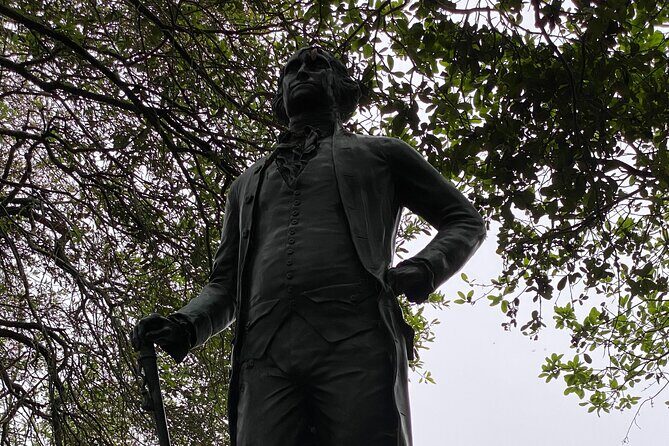
You’ll meet at Cumberland Street & Church Street in Charleston. The activity ends back at the meeting point, so you don’t need to chase a distant ending location.
The tour is offered in English, and it uses a mobile ticket, which is helpful if you don’t want to manage paper. The listing also says it’s near public transportation, so you can plan your day without locking yourself into a car.
Group size matters here. With a maximum of 20, you’re more likely to get explanations that fit your pace. It also helps if you want to stop briefly for photos or read street-level details without feeling rushed.
One more planning note: this tour is often booked about 32 days in advance on average. If you’re traveling in peak season or you have a tight schedule, I’d book earlier rather than hoping for a last-minute slot.
Who This Tour Fits Best
This is a strong match if you:
- want a guided walking format instead of an all-day museum crawl
- like history that includes both the beautiful and the brutal parts
- prefer shorter stops that keep your attention
- appreciate a guide who helps you notice the small stuff that adds up
It’s also a good fit for couples and solo travelers because the route is compact and the guide can set the mood quickly. If you’re with kids or teens, the tour might still work, but the slavery history topic is real—so it depends on how your family handles serious content.
And if you don’t want dark history at all, this tour may not be the right energy. The “Beauty & Tragedy” concept isn’t decoration—it’s the structure.
Should You Book This Charleston Tour with Adam Miles?
Book it if you want a smart first look at Charleston that connects the famous sights—Rainbow Row, the Battery, the harbor—to the city’s harder truths. The biggest reason is the format. This isn’t just about where you stand. It’s about why you stand there, explained clearly enough to stick.
Skip or think twice if:
- you’re avoiding emotionally heavy content
- you’re hoping for a mostly photo-and-views walk
- you’d rather not deal with separate admissions for several stops
If you’re on the fence, here’s my simplest advice: if you can handle history being honest, this is a good way to spend two hours in Charleston without wasting time guessing what matters.
FAQ
How long is the tour?
The tour lasts about 2 hours.
How much does it cost?
It costs $40.00 per person.
What language is the tour offered in?
The tour is offered in English.
Where does the tour start and end?
It starts at Cumberland Street & Church Street in Charleston and ends back at the meeting point.
Are admission tickets included for all stops?
No. Admission tickets are not included for the Powder Magazine, Old Slave Mart Museum, and Old Exchange & Provost Dungeon. Rainbow Row and Battery & White Point Gardens are listed as free.
How many people are in the group?
The tour has a maximum of 20 travelers.
Is the tour accessible to most people?
The listing says most people can participate.
Are service animals allowed?
Yes, service animals are allowed.
What is the cancellation policy?
You can cancel for a full refund if you cancel at least 24 hours before the experience’s start time. If you cancel within 24 hours, the amount paid is not refunded.