REVIEW · CHARLESTON
Small-Group Tour: Charleston Old Walled City Historical Walking Tour
Book on Viator →Operated by Charleston Old Walled City Tours · Bookable on Viator
Charleston hits different when you walk it. This 2-hour small-group tour turns the peninsula into a story, with stops that connect churchyards, war-era buildings, and seaside landmarks.
I especially like how the guide narration lands in the right places, from legible tombstones in the graveyard to siege-era details you’d miss at street level. You’ll also get a clean, hill-free route that makes it easy to stay with the group and actually enjoy the scenery.
One thing to consider: the pace is fast for short stops, so if you need extra time in quieter spots (or if you have trouble hearing a guide who talks quickly), plan to focus and bring your best listening ears.
In This Review
- Key Things That Make This Walking Tour Worth Your Time
- Getting Your Bearings: Meeting at 108 Meeting St and Staying Comfortable
- Stop-by-Stop: Circular Congregational Church Through French Huguenot Roots
- Powder Magazine to Dock Street Theater: City Oddities You’ll Actually Remember
- Old Slave Mart Museum: The Tour Doesn’t Flinch
- Old Exchange & Provost Dungeon and St. Michael’s Churchyard: War Stories with Names
- Rainbow Row, The Battery, and Fort Sumter From the High Seawall
- Nathaniel Russell House Garden: Horticulture, Layout, and the Joggling Board
- Price and Value: What You Don’t Have to Pay For, and What You Do
- Should You Book This Charleston Old Walled City Tour?
- FAQ
- How long is the Charleston Old Walled City Historical Walking Tour?
- How many people are in the small group?
- Where do I meet for the tour?
- What about admission fees for the stops?
- Is the tour offered in English?
- Does the tour operate in bad weather?
Key Things That Make This Walking Tour Worth Your Time

- Small-group size (up to 15) keeps the walk from feeling like a cattle chute
- Free admission stops on the route mean you’re not juggling extra ticket costs
- Sidewalk and graveyard narration ties buildings to names, dates, and events
- Hard history is included, including the Old Slave Mart Museum
- Fort Sumter views from the High Battery seawall give the war story real scale
- Local-guide feel shows up in the way stops get explained, sometimes with personal neighborhood detail
Getting Your Bearings: Meeting at 108 Meeting St and Staying Comfortable

The walk starts at 108 Meeting St in downtown Charleston, and it ends somewhere else after the final harbor viewpoint and garden stop. That shift matters: you’ll likely want to plan nearby meals afterward, or at least know you won’t be handed back exactly to your first street corner.
You’ll be with a small group (max 15), so you can actually hear the guide and keep up without sprinting. The route is described as hill-free, which is a big deal in Charleston. Even so, you’re still on sidewalks for about 2 hours, so comfortable shoes aren’t optional. If the weather turns, the tour still runs in all weather conditions, so dress for rain, sun, and coastal humidity.
Logistics are simple: you’ll use a mobile ticket, and there’s no hotel pickup. That’s good news if you like independence. It’s also good to know the meeting point is near public transportation, so you can arrive without building an entire day around parking.
Finally, this tour leans hard on walking narration. Many stops are quick, so the value is in how the guide connects dots while you’re moving.
Other walking tours we've reviewed in Charleston



Stop-by-Stop: Circular Congregational Church Through French Huguenot Roots
The first stop is Circular Congregational Church, a congregation that has worshipped on site since 1681. The big takeaway here isn’t just that the church is old. It’s the graveyard narration and the striking presence of clearly legible slate tombstones from the 18th century. Standing in that yard, you get a sense of how visible death and community memory were in early Charleston.
You get only about 20 minutes at the church area, but that’s usually enough time to take in the tombstones and let the story settle. If you’re the kind of visitor who likes to read every carved line slowly, you might feel rushed. But the guide’s pacing helps you catch the main connections without getting stuck.
Next up is the Powder Magazine, a city-built gunpowder storage facility completed by 1713. The guide tells you why it mattered: Charleston was under threat, and storing gunpowder in a safe, purpose-built structure was a life-and-death kind of logistics problem. This is the kind of stop that makes the city feel strategic, not just pretty. It’s also listed as the oldest surviving public structure between St Augustine and Williamsburg, which helps you place it on a broader map.
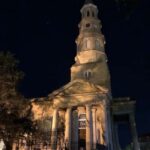
Then comes St. Philip’s Church, tied to the idea of planters and politics. It’s described as the oldest congregation in the Carolinas (1680), with a graveyard where national figures are at rest, including people associated with the Declaration and the Constitution. This is one of those stops where you’ll get a clearer understanding of why Charleston produced names that mattered far beyond South Carolina.
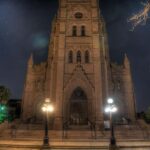
After that, you’ll reach the French Huguenot Church. This one gets attention because it’s described as home to the only active French Calvinist congregation in North America, worshipping on site since 1706. The setting shifts again, from English colonial-era feel into something more pointed and Gothic in spirit. It’s a reminder that Charleston’s population wasn’t one-note. People came from different places and carried different traditions.
Stops 1 through 4 are where the tour builds its foundation: early worship, community identity, and what the city looked like before it became a visitor postcard. You’ll leave this section with a mental map of Charleston that isn’t just streets and buildings.
Powder Magazine to Dock Street Theater: City Oddities You’ll Actually Remember
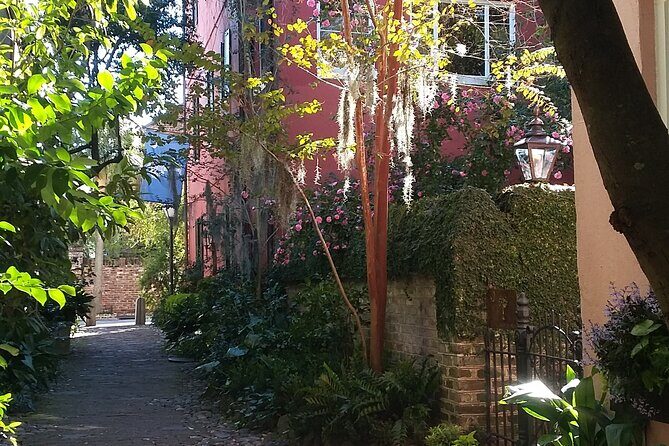
From the Powder Magazine, the story pivots into culture and urban quirks.
At Dock Street Theater, you’ll see an 18th-century style playhouse built in 1937 as a WPA project. Here’s why it matters: it’s built on the site of the first playhouse in British North America (1736). So yes, this is a theater. But it’s also a lesson in how Charleston reused prime real estate across generations.
The stop time is short, so don’t expect a full performance explanation. What you want is the context—the sense that the city’s entertainment life has deep roots, and that architecture can carry history even when the building itself is from later.
Then you’ll hit Four Corners of Law, an intersection dedicated to public use since 1680. The famous angle here is that it’s described as the intersection where the four governing laws of mankind come together, with Ripley’s Believe It or Not! calling it the only such intersection worldwide. Whether you take that claim literally or as a quirky conversation starter, the point is practical: Charleston’s legal and civic life shows up in street layout, not only in courthouses.
This is also where the guide’s style shows. Some guides are great at facts. Others are good at making the city feel logical. If your guide is the storytelling type, Four Corners of Law becomes more than trivia. It becomes a way to read the street plan like a map.
Old Slave Mart Museum: The Tour Doesn’t Flinch

The walking route includes Old Slave Mart Museum, described as the only surviving Charleston structure used as a showroom for slave sales. It’s also a museum that chronicles the history of slavery in the South Carolina Lowcountry.
I appreciate that this stop isn’t skipped, because it changes the emotional weight of the whole walk. The city’s churches and mansions can make Charleston look like a museum already. Old Slave Mart forces you to face the reality behind the elegance.
This is a short stop (about 5 minutes on the route), so you won’t leave with every detail. But you will get the grounding: what the building was used for, and why it deserves to be part of a real Charleston orientation.
If you prefer a lighter, purely scenic tour, this section may feel heavy. If you want your city time to be honest, it’s essential.
Old Exchange & Provost Dungeon and St. Michael’s Churchyard: War Stories with Names

Next comes Old Exchange & Provost Dungeon, a Revolutionary War museum space tied to events that helped found the nation. This stop has a specific, memorable connection: President Washington was entertained there four times in 1791.
That one detail gives you scale. You can stand outside and point to a building, but hearing about Washington repeatedly in 1791 helps you picture Charleston not as a side character. It was a stage where big national moments landed.
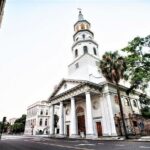
From there, the route continues to St. Michael’s Church, described as the oldest surviving church (1761). The guide connects this church to conflict across centuries. It was targeted during the British siege in 1780 and during the Federal siege from 1863 to 1865. That repeat targeting is the kind of fact that makes the Revolutionary War and the Civil War feel like one long arc, not separate chapters.
The graveyard adds another layer: two signers of the Constitution are at rest there. Even if you don’t recognize every name instantly, the point is clear. This isn’t only a church building. It’s a civic memory site.
If you’re a detail person, you’ll love how the guide ties the churchyard to the American political story. If you’re not, you can still follow along because the names and siege dates act like anchor points.
Other city tours we've reviewed in Charleston



Rainbow Row, The Battery, and Fort Sumter From the High Seawall

Now the walk shifts from inland stories to ocean-facing consequences.
Rainbow Row is next: a grouping of 18th-century commercial buildings painted in pastel colors. The tour frames the colors and style as pointing to Charleston’s early ties to Barbados, Antigua, and Nevis. This is one of the quickest stops on the route, but it’s also where you get that signature Charleston look without losing the backstory.
After Rainbow Row, you’ll walk to The Battery, Charleston’s waterfront line of grand mansions. Many are described as built in the first half of the 19th century as party palaces for the Winter Season. That explains the vibe: this is where wealth showed itself in public, seasonal ways.
The Battery also ties directly into the start of the Civil War. The tour connects an order given by General Pierre Beauregard from one of these houses to Fire at Fort Sumter, which is described as commencing the first battle of the Civil War. You’re no longer just sightseeing. You’re seeing the physical proximity between decision-makers and the consequences of those decisions.
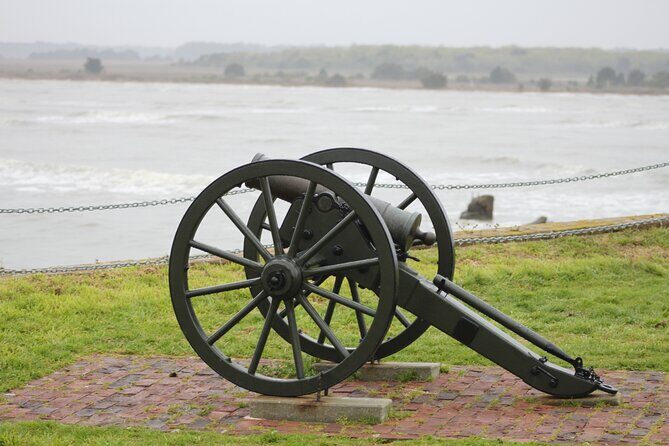
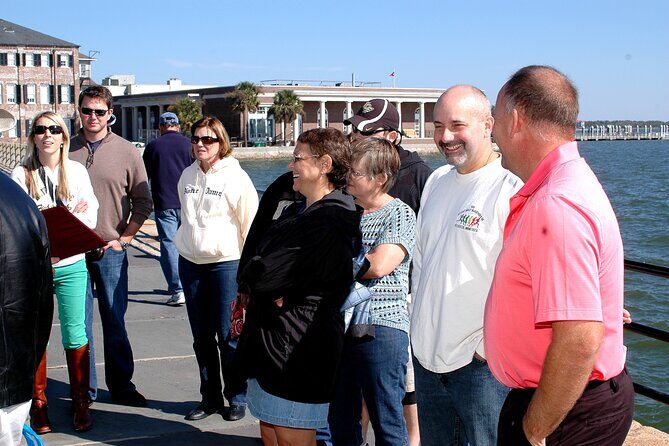
Then comes the big finale: Fort Sumter National Monument. You’ll view Fort Sumter from the High Battery seawall, and you’ll hear the story of the siege and bombardment involving Fort Sumter and Charleston’s civilian population. The narrative includes the city’s dramatic fall after 587 days. That number is a gut-check. It makes the siege time feel real, not abstract.
This is also the best section for photos. But don’t let the camera take over. Let the guide’s siege timeline run once, and then take your pictures with that context in mind.
Nathaniel Russell House Garden: Horticulture, Layout, and the Joggling Board
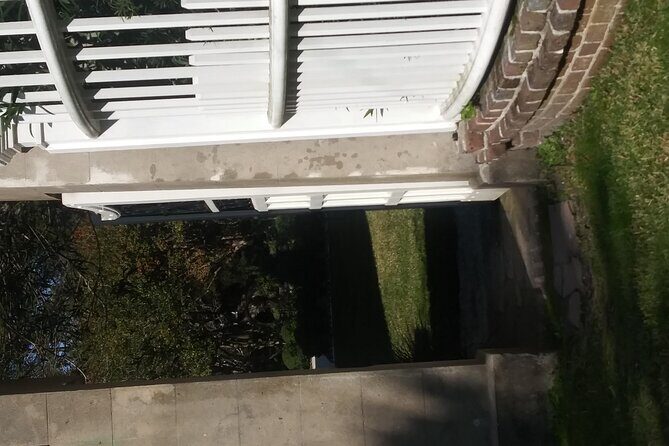
The final stop is the Nathaniel Russell House garden. You don’t go into the house itself here. Instead, you get garden narration and a look at how an 18th-century Charleston property would have been laid out.
The house is dated 1808, and the guide uses the garden to talk about horticulture and garden design—how plants, space, and layout worked as part of daily life. This is a smart ending because it gives your brain a break from war and politics and brings you back to a slower, human scale.
One detail you should look forward to is the story of the joggling board. It’s the kind of weird-but-fun local feature that makes architecture feel practical and alive, not just decorative.
If you’re tired, this stop is still enjoyable because you can stand, look, and listen without constantly walking between points.
Price and Value: What You Don’t Have to Pay For, and What You Do
No single tour listing gives you a “best value” guarantee. But this one stacks a few things that make it feel fair.
First, many of the specific stops are listed with free admission. That means you’re not arriving at each site wondering whether you need another ticket. You’re paying for interpretation and time, not for entry fees.
Second, the tour includes a local guide and is designed for a compact time window—about 2 hours. In a city where it’s easy to wander without direction, that’s value. You get a route that hits major peninsular highlights like Rainbow Row and The Battery while still taking you into graveyards, civic buildings, and museums.
Third, the small group format matters. With up to 15 people, the guide can adjust to the group and keep the conversation moving. Several guide names show up across experiences, including Al, Bruce, Alfred Ray, Erik, and Linda, and they’re described as bringing more than dates—architecture talk, local stories, and friendly interaction.
A practical consideration: stop times are short. If you want to read every tombstone line-by-line or take long museum breaks, you may feel the clock. Also, a few people have mentioned that some guides can be hard to follow if the pace is quick. If you’re sensitive to that, sit close to the guide when you can and bring your questions early.
Should You Book This Charleston Old Walled City Tour?
Book it if you want an organized orientation that goes beyond the usual postcard route. It’s a strong fit for first-timers, history lovers who also care about architecture, and active walkers who like a clear plan.
Skip it if you want a slow, self-paced tour where you can linger deeply at one or two sites. This walk is built around momentum and narration, not long independent exploration.
If you book, do one smart thing: wear shoes you can move in for two hours and plan your post-tour meal on the other end of town. Then let the guide do the heavy lifting—Charleston makes much more sense when someone connects the tombstones, the gunpowder story, the war sites, and the waterfront into one continuous human map.
FAQ
How long is the Charleston Old Walled City Historical Walking Tour?
It’s about 2 hours (approx.).
How many people are in the small group?
The tour has a maximum of 15 travelers.
Where do I meet for the tour?
The start meeting point is 108 Meeting St, Charleston, SC 29401.
What about admission fees for the stops?
The stops listed on the route are marked as free admission.
Is the tour offered in English?
Yes, it’s offered in English.
Does the tour operate in bad weather?
It operates in all weather conditions, so dress appropriately.