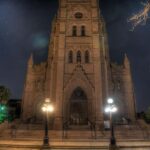
REVIEW · CHARLESTON
Revolutionary Charleston Walks – Ghost Tour
Book on Viator →Operated by Revolutionary Charleston: Ghost & History Walking Tours · Bookable on Viator
Spooky tales meet real streets here. This 1 hour 30 minute walk blends ghost stories with iconic Charleston stops like Rainbow Row and the Charleston City Market, plus sea-wall views toward Fort Sumter, all in small-group format (up to 20 people). You’ll get a mobile ticket, the tour runs in English, and it all starts at Washington Square at 80 Broad St.
I especially like how the stories stay tied to visible places you can point at right after. Second, I like the way the tone can flex for different ages—there’s a history-first approach, and guides can dial up or down the fright. The one thing to consider: you’ll be walking outdoors and you won’t go inside the big stops (Fort Sumter, Ryan’s Mart, and the church), so this is more about seeing and listening than touring interiors.
In This Review
- Key things to know before you go
- Washington Square is the smart launch point
- Rainbow Row: pastel houses, and why the shadows feel close
- Charleston City Market: 4 blocks of daily life and dark backstory
- Fort Sumter views: no ferry needed, but the setting is real
- Ryan’s Mart: the walking tour stop that hits hardest
- Circular Congregational Church: old doors, walked past
- The harbor outlook and the city’s defense mindset
- How the tour stays spooky without losing the plot
- Price and value: is $36 worth 90 minutes?
- What to bring (so the tour feels good, not miserable)
- Who should book this walking ghost tour
- Should you book Revolutionary Charleston Walks – Ghost Tour?
- FAQ
- How long is the Ghost Tour?
- What does it cost?
- Where do we meet and where does it end?
- What stops are included on the route?
- Is bottled water included?
- What language is the tour in?
- Is there a limit on group size?
- Can I cancel and get a full refund?
Key things to know before you go
- Small group pace: capped at 20 people, so your guide can keep the flow without racing.
- Mobile ticket: easy entry and less time fumbling with paperwork.
- Iconic stops with story context: Rainbow Row, City Market, sea-wall Fort Sumter views, Ryan’s Mart, and more.
- Not an inside-places tour: you’ll look from viewpoints or walk past—bring comfortable walking shoes.
- Tone can be adjusted: history-forward and suitable for kids when you want less scare factor.
- Bring the basics: water you supply, plus bug spray and sunscreen.
Washington Square is the smart launch point
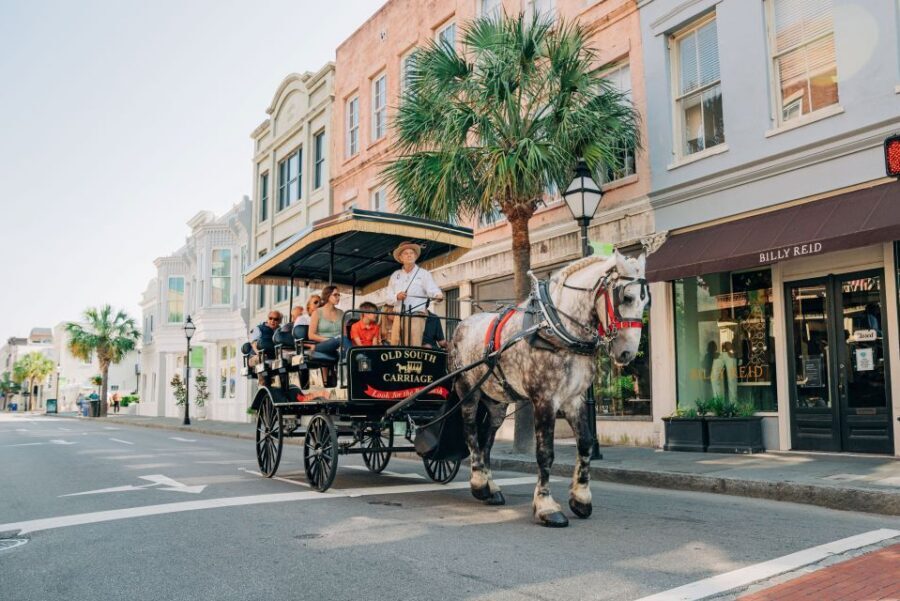
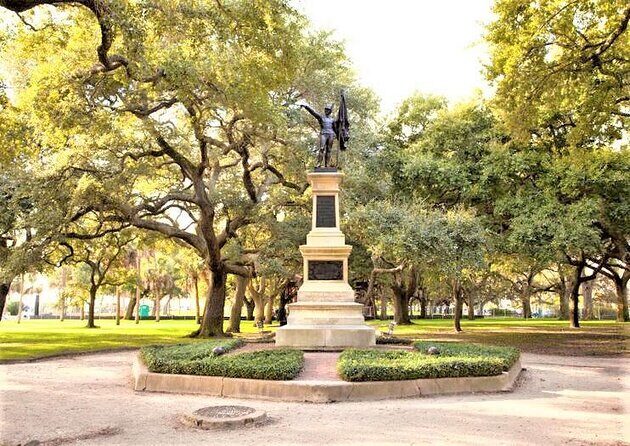
Meet at Washington Square (80 Broad St, Charleston, SC), then set off on foot through the historic core. This is a good starting choice because you’re immediately among the city’s most photographed streets and buildings, not stuck in a random parking-lot limbo first.
The tour also ends back at the meeting point, which makes your planning simple. No backtracking. No mystery “where do we end up” stress.
And since it’s near public transportation, you can keep your day light on logistics if you’re mixing this with other stops.
If you're still narrowing it down, here are other tours in Charleston we've reviewed.



Rainbow Row: pastel houses, and why the shadows feel close
You’ll head to Rainbow Row on East Bay Street near the Battery. Yes, it’s the postcard-famous strip of pastel-colored historic homes—but it’s also a great place for ghost stories because you can see the beauty and the age at the same time.
This is one of those locations where you’ll likely notice engagement-photo chaos in any season: couples posing in front of the same houses you’re standing beside. That contrast matters. A ghost tour works best when the setting feels familiar and close, not like you’re hiking somewhere isolated.
What to watch for: look at how the homes line up along the street. The guide’s stories work because you can follow along visually—who lived where, what changed, and how Charleston’s past keeps echoing.
Possible drawback: if you’re hoping for a lot of “hidden alley” energy, this part can feel more like a city stroll than a spooky lane. That’s intentional: Charleston makes the mood just by standing still.
Charleston City Market: 4 blocks of daily life and dark backstory
Next is Charleston City Market, a National Historic Landmark that stretches across four city blocks. It’s home to 300+ daily vendors, so even if you think you’re booking a ghost tour, you’re also stepping into a working marketplace.
That combination is what makes the stories land. A ghost story told in a place people use every day feels sharper. It’s not just history on a plaque—it’s history next to commerce, bargaining, and motion.
What you’ll take away: the market isn’t only a shopping stop. It’s a long-running hub of activity in the city. When a guide connects that daily rhythm to the darker chapters of the past, you get a fuller picture of Charleston—human, messy, and real.
One heads-up: because the market is active, it can be crowded. Wear shoes that handle uneven sidewalks and expect some weaving around vendor stalls.
Fort Sumter views: no ferry needed, but the setting is real
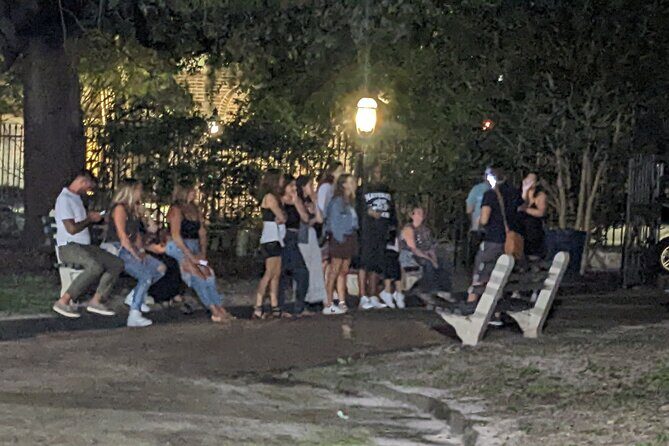
You’ll get the Fort Sumter angle without boarding a boat. The tour looks from the sea wall, focusing on the harbor and the fort’s position in Charleston Harbor.
Here’s the historical anchor your guide will connect: Fort Sumter was built to help protect Charleston from naval invasion. Its origins tie back to the War of 1812, and it was still incomplete when the Battle of Fort Sumter helped kick off the Civil War in 1861. Even if you don’t step onto the fort itself, the geography tells the story.
Why this works for you: you save time and hassle. Many visitors spend half a day coordinating ferries and lines. This tour is designed for people who want the meaning of the harbor view fast—then keep moving.
Drawback to know: since you’re not visiting the fort, you won’t get interior exhibits or the full “on-site” feel. You’re there for the sea-wall perspective and the story tied to it.
Ryan’s Mart: the walking tour stop that hits hardest
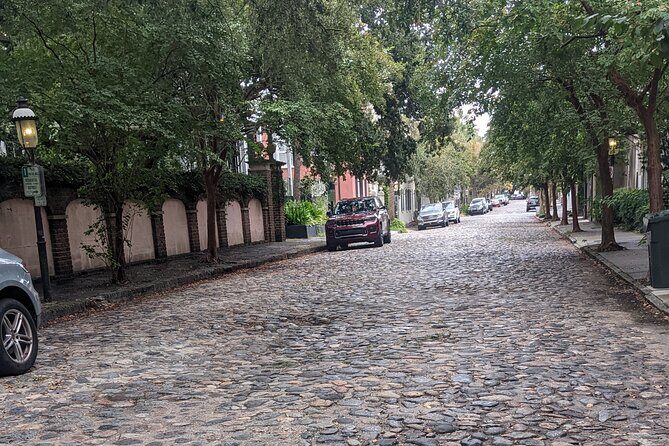
This is one of the stops that can make the hair-on-arms part of the evening. You’ll visit the area connected to Ryan’s Mart, part of a larger complex that once included a brick wall yard, a four-story building, and spaces tied to the terrible practice of enslavement. The tour references a barracoon (slave jail), along with a kitchen and a morgue.
Important detail: you won’t enter the structures. You’ll walk the site and hear the stories connected to it.
Why I think this part is valuable: it keeps the tour grounded. Ghost stories are often about fear and mystery, but this chapter is about real people and real cruelty. That shift can be heavy, but it’s also what turns a “spooky walk” into a meaningful Charleston experience.
If you’re bringing kids: this stop may require a softer approach. The good news is guides can adjust the tone—so if you want less scare and more history, say so ahead of time.



Circular Congregational Church: old doors, walked past
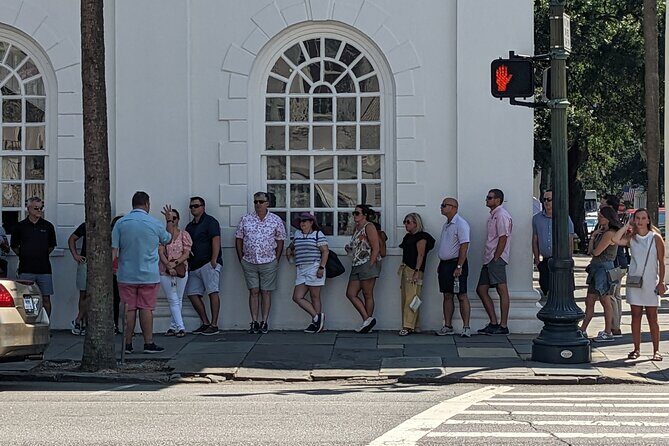
You’ll walk past the Circular Congregational Church of Charleston. The congregation was founded in 1681, and it’s described as one of the oldest continuously worshipping congregations in the South.
Because you’re walking past rather than entering, you won’t get a traditional tour inside the building. Still, seeing such a long-running institution from the outside helps you feel how long Charleston has held onto community life—even as the city’s history swung between growth and harm.
What you’ll gain: continuity. Charleston isn’t just a set of ruins. It’s a place where something has kept going for centuries.
Practical tip: treat this as a “look-and-listen” moment. If you’re rushing for photos, you’ll miss the guide’s connections.
The harbor outlook and the city’s defense mindset
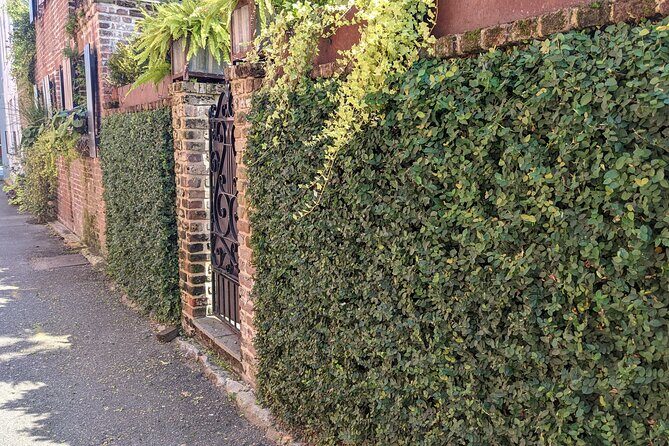
Another highlight is a prominent viewpoint in the historic district that gives a big view toward Fort Sumter and the harbor. The route connects what you’re seeing to how the Ashley and Cooper rivers empty into the Atlantic Ocean.
This spot also has a layered timeline: it was first used as a public garden in 1837, and when the Civil War began, it became part of the city’s fortification strategy.
Why this matters for a ghost tour: fear in Charleston isn’t only about hauntings. It’s also about how people lived with threat—how the landscape shaped choices, and how public spaces could change purpose in a hurry.
You’ll like it if: you enjoy stories that connect mood to geography. Standing here and hearing the harbor explained makes the city feel less like a postcard and more like a living stage.
How the tour stays spooky without losing the plot
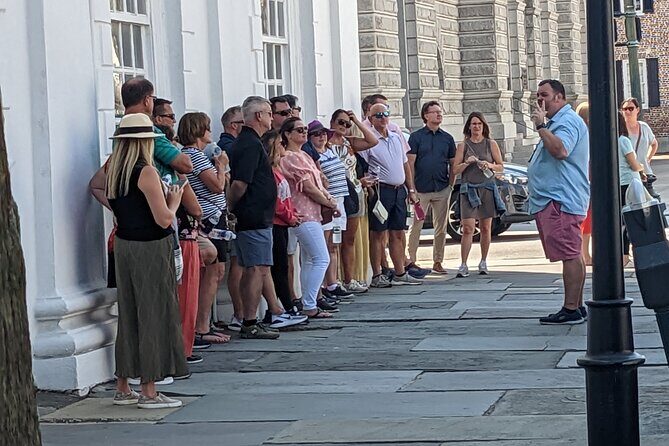
This is where the experience really earns its high marks. The tone tends to be history-first, with ghost stories added on top. That approach keeps the walk from turning into pure shock value.
Guides such as Bri, Sarah, and Sara are noted for being flexible with tone. If your group wants a lighter ghost component, you can often get a version that focuses on spooky facts and story atmosphere rather than heavy scares. One family example includes a guide adapting for kids aged 8, keeping the attention without overwhelming them.
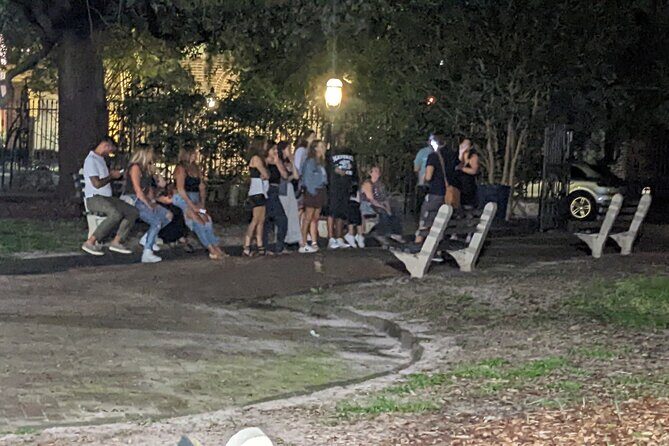
What to expect from the group dynamic: with up to 20 people, you’re not stuck in a huge conga line. You can hear the story without constant “what did they say?” moments—especially if you stay attentive at the front of your little cluster.
One small consideration: since there’s history plus hauntings, the tour isn’t just a sequence of jump-scare moments. If you only want maximum fright, you may find it more “clever and creepy” than “thrillingly terrifying.”
Price and value: is $36 worth 90 minutes?
At $36 per person for about 1 hour 30 minutes, you’re paying for three things: a guided narrative, the ability to hit multiple major landmarks efficiently, and a small-group walking pace.
If your goal is to learn how Charleston’s past connects—from iconic beauty to brutal realities to harbor defense—then $36 is a fair price. You’re not paying for entry fees. You’re paying for someone to connect the dots so you don’t wander around asking yourself, Why does this matter?
If you’re traveling with people who like stories more than museums, this can be one of the best value formats in the city: you get atmosphere without lining up at ticket counters.
What to bring (so the tour feels good, not miserable)
Bring what the tour asks for: water, plus comfortable shoes. Also add bug spray and sunscreen. This matters because you’ll be walking outdoors through historic streets and open areas.
A few more practical ideas:
- Wear socks/shoes you trust on uneven sidewalks.
- If you’re sensitive to heat, consider bringing a light layer for shade breaks.
- If you want a less scary version for kids or nervous adults, communicate that early so the guide can set the tone.
Who should book this walking ghost tour
You’ll be especially happy with this tour if you:
- Want Charleston landmarks explained with an entertaining story thread.
- Prefer a walk where the guide connects history and atmosphere.
- Like the idea of a ghost tour that’s suitable for families, with the option to keep it lighter.
You might skip it if:
- You want interior building access and museum-style touring.
- You’re chasing nonstop scares instead of a guided storytelling experience.
Should you book Revolutionary Charleston Walks – Ghost Tour?
If you want a story-driven Charleston night that covers big-name sights without taking half your day to coordinate ferries or museum hours, I’d book it. The mix of ghost tone plus place-based history, the small group size, and the ability to adjust fright level make it a strong pick for couples, families, and anyone who likes their spooky with context.
Just do yourself a favor: wear comfy shoes, bring water, and decide ahead of time whether you want full creep or a more ghost-light vibe. Then let the harbor, the market, and the old streets do their job.
FAQ
How long is the Ghost Tour?
The tour lasts about 1 hour 30 minutes.
What does it cost?
It costs $36.00 per person.
Where do we meet and where does it end?
You meet at Washington Square, 80 Broad St, Charleston, SC 29401, USA. The tour ends back at the meeting point.
What stops are included on the route?
The route includes Rainbow Row, Charleston City Market, Fort Sumter views from the sea wall (without visiting the fort), Ryan’s Mart (you visit but do not enter), Circular Congregational Church (walk past), and a viewpoint connected to a former public garden that later became part of the city’s Civil War fortifications.
Is bottled water included?
No. Bottled water is not included, so bring water.
What language is the tour in?
The tour is offered in English.
Is there a limit on group size?
Yes. The maximum group size is 20 travelers.
Can I cancel and get a full refund?
Yes. Free cancellation is available. You can cancel up to 24 hours in advance for a full refund. If you cancel less than 24 hours before the start time, the amount paid is not refunded.