REVIEW · CHARLESTON
Charleston: Historical Downtown Tour by Horse-drawn Carriage
Book on GetYourGuide →Operated by Old South Carriage Co · Bookable on GetYourGuide
Charleston can be a lot to take in on your own. A horse-drawn carriage tour turns the 350-year story into something you can actually follow. I like that you get live commentary while you pass major landmarks, from the harbor to King Street. One thing to plan for: with four people per bench, spacing can feel tight.
You also get real “this is where to explore next” value. The route includes big-ticket photo spots like Rainbow Row, the Charleston Battery, and White Point Gardens, plus smaller landmarks that help you understand how the city grew. The main drawback to watch for is hearing the guide on louder street stretches, especially if you’re not close to the front.
You’ll start at Old South Carriage Co and ride through the historic residential district at a relaxed pace for about an hour. If you want a simple way to map Charleston without wearing out your feet, this is a strong pick. Just arrive on time for check-in, since you can lose your reservation if you’re late.
In This Review
- Key Points You’ll Care About
- Why Horse-Drawn Feels Right for Charleston Downtown
- Starting at Old South Carriage Co and the Old City Market Gate
- The 1-Hour Loop: Harbor Views, Rainbow Row, and King Street
- Charleston Harbor: Your first big “oh, that’s why”
- Rainbow Row: More than a photo line
- King Street: The shopping street that’s also a story street
- 4 Corners of Law, White Point Gardens, and the Charleston Battery
- 4 Corners of Law: When you learn why places mattered
- White Point Gardens: A pause with purpose
- The Charleston Battery: The waterfront finale
- Guides and Horses: What Makes the Ride Work
- Price and Value: Is $50 Worth It?
- Comfort, Seating, and Practical Tips for Your Group
- When Weather Changes Plans: How the Tour Handles It
- Should You Book This Charleston Carriage Tour?
- FAQ
- Where is the tour meeting point?
- How long is the Charleston historical downtown carriage tour?
- What does the tour cost?
- What sights does the tour pass during the ride?
- Do I get a live guide?
- Is the tour wheelchair accessible?
- Are restrooms available?
- What happens if I’m late to check in?
- Is there free cancellation?
- What if weather prevents the tour from departing?
- FAQ
- Where is the tour meeting point?
- How long is the tour?
- What is the price per person?
- What sights are included?
- Is the narration live and in English?
- Is the carriage tour wheelchair accessible?
- Are restrooms available?
- What happens if I arrive late?
- What is the cancellation window?
- What if weather cancels the tour?
Key Points You’ll Care About
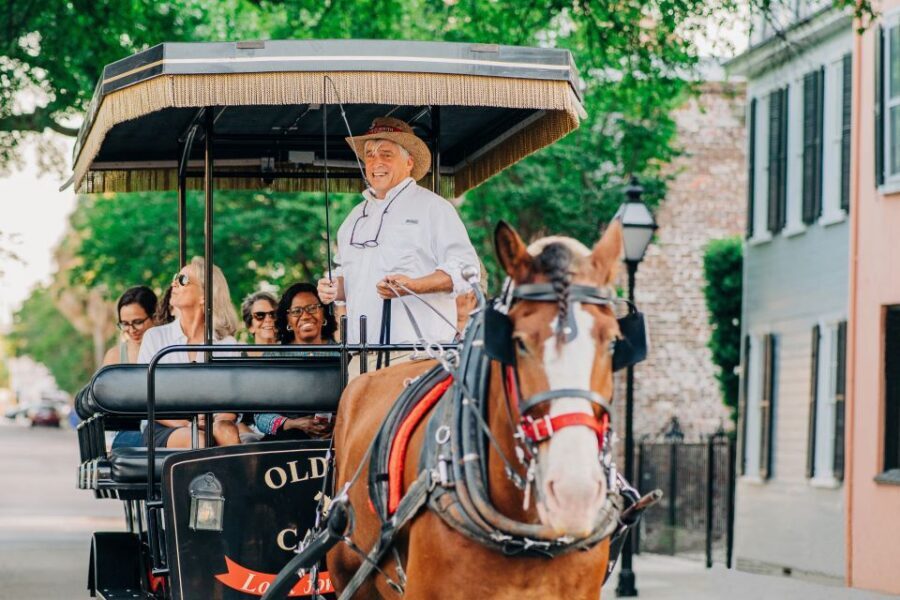
- Live English narration with a licensed guide, delivered with history and humor (guides like Michael H and Donald come up often).
- Top downtown sights in one loop: Charleston Harbor, Rainbow Row, King Street, 4 Corners of Law, White Point Gardens, and the Battery.
- Route changes from day to day using a city-run bingo system, so you may not see the exact same streets twice.
- Comfort is mostly about where you sit; getting four across can feel snug for average-size adults.
- Horses are a big part of the experience, and you’ll notice operators take care and calm seriously (you may hear horse names like Jesse, Buddy, Ace, and Winston).
- You’re done fast: one hour is long enough for highlights, short enough to still explore on foot after.
Why Horse-Drawn Feels Right for Charleston Downtown
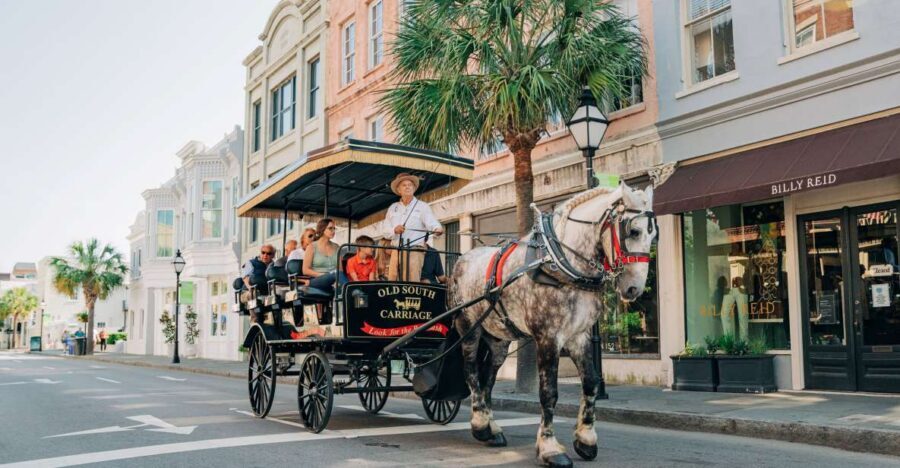
Charleston’s downtown is packed with details. Walking gets you close, but it also turns into a sprint—especially when you’re trying to read plaques, dodge crowds, and remember street names. On a carriage, you move through the same areas at a slower rhythm. That pace matters because the tour isn’t just about photos. It’s about context.
This is a 1-hour overview that helps you understand what you’re looking at before you go deeper later. You’ll ride past the harbor area and then work your way along the downtown highlights tied to the city’s long development. That makes the stops feel less random. Instead of seeing Rainbow Row as a picture you’ve already seen, you get the story thread that explains why it’s a big deal.
Two things I’d call out right away:
- You get live guide talk while you’re actually in motion, which keeps the time from feeling like waiting around.
- You see the “where should I go next” pieces fast—King Street for browsing, White Point Gardens for a pause, and the Battery for waterfront vibes.
A single potential downside is the carriage seating width. If you end up four people across, some riders find it tighter than expected. It’s not a reason to skip the tour, but it’s useful to know so you can plan your expectations.
Other historical tours in Charleston



Starting at Old South Carriage Co and the Old City Market Gate
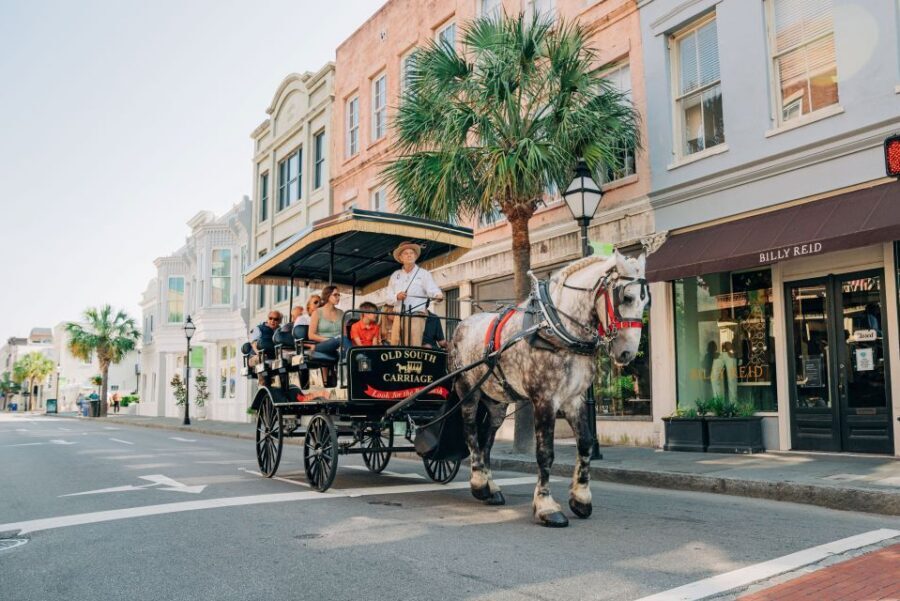
Check-in is at Old South Carriage Co, in the lobby area. You enter through the front door, and you check in with the customer service specialists at the desk. Restrooms are available in that lobby area, along with seating and water. That lobby setup is practical if you’re arriving early or trying to keep kids or anyone in your group comfortable before departure.
Plan to be there early enough that you’re settled well before your departure time. If you don’t check in at least 10 minutes prior, you lose the reservation and get placed on the next available carriage. That’s the kind of rule that can ruin a schedule, so treat it like a real timed ticket, not a flexible drop-in.
Once you check in, you board a custom-built, traditional carriage. Then you pull out from the barn and head toward the city gate area around the Old City Market. This first stretch is a big part of the value: you’re not just starting the ride, you’re starting to orient yourself—where the historic core begins, how the route feeds into downtown, and which streets lead toward the big sights.
The 1-Hour Loop: Harbor Views, Rainbow Row, and King Street
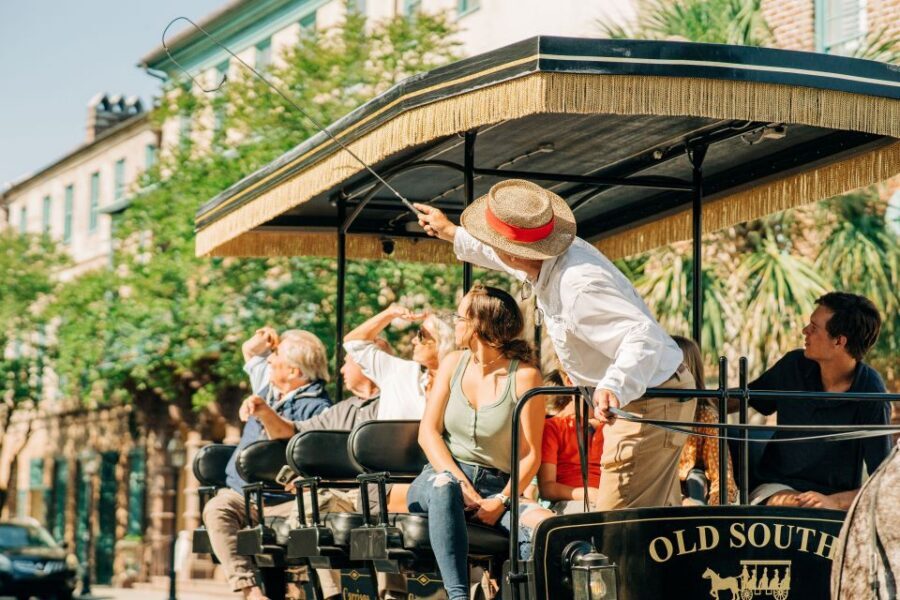
The heart of the tour is the loop through the historic downtown highlights. You’ll ride with guided, live narration as your carriage passes key stops, including Charleston Harbor, Rainbow Row, and King Street.
Charleston Harbor: Your first big “oh, that’s why”
The harbor is where Charleston’s relationship with trade and the coastline becomes obvious. Even if you don’t know the details yet, the waterfront setting gives the tour a visual anchor. You also start building a mental map: where the city turns outward toward the water and where downtown opens up around the harbor corridor.
Rainbow Row: More than a photo line
Rainbow Row is one of those places where photos are common, but understanding comes from knowing what you’re seeing. The carriage format helps because you’re not hopping in and out of viewpoints. You can take it in from your seat while your guide explains what makes the area meaningful and how it connects to Charleston’s longer timeline.
If you're still narrowing it down, here are other tours in Charleston we've reviewed


King Street: The shopping street that’s also a story street
King Street is one of the biggest “you should walk this next” streets in the city. Passing it on the carriage gives you the overview, and then you can decide what to explore after the tour. You’ll see the street as part of a bigger urban pattern—shops and historic buildings together—rather than as a single stop on your list.
If you like planning with your feet, this is where the carriage earns its keep. You end up with a more useful shortlist: which blocks to revisit, where to slow down later, and what streets might connect to your interests.
4 Corners of Law, White Point Gardens, and the Charleston Battery
After the downtown core sights, the tour continues into spots that help explain how Charleston works as a city—where people gathered, where the city faced outward, and where you go when you want waterfront air.
4 Corners of Law: When you learn why places mattered
You’ll pass by 4 Corners of Law, a landmark that carries meaning beyond the intersection itself. A guide’s job here is to connect the dots: this isn’t only a photo-worthy corner, it’s a point in the story of how the city organized itself and how civic life shaped what you see today.
It’s the kind of stop that helps if you want your sightseeing to add up. You’re not memorizing names just to say you did. You’re learning what to pay attention to when you revisit later.
White Point Gardens: A pause with purpose
White Point Gardens is one of the best “catch your breath” areas in downtown. From the carriage, you experience the space as a transition point—somewhere the city softens a bit and you can feel the waterfront influence. It’s a natural contrast after busier streets like King Street.
If you’re traveling with anyone who needs breaks, this sort of scenery stop is a win. The tour stays moving, but you still get a sense of calm.
The Charleston Battery: The waterfront finale
The Charleston Battery is where the tour’s view of the coastline really lands. This is the moment many people remember because it ties the city’s history to the water right away. You see why the Battery is a classic Charleston walk and why it’s worth giving yourself time after your carriage ride.
By the end of the hour, you’ve usually got enough context to enjoy the waterfront for what it is—both scenic and historically tied to how the city grew.
Guides and Horses: What Makes the Ride Work
A carriage tour lives or dies on two things: the guide and the horse handling.
Across recent rides, guides have shown a consistent pattern: they mix story, humor, and local detail. Names that come up include Michael H, Donald, Terry, Carol, Scott, and Sydney. The common thread is that the narration doesn’t feel like a script. It’s spoken in a way that keeps the ride interesting while staying grounded in what you’re actually passing.
You’ll also notice the horses are treated as working partners, not background props. Horse names you might hear include Jesse, Buddy, Ace, Winston, Henry, Roger, Cooper, Milo, and Dusty. The repeated praise is about calm handling and care, which matters because downtown traffic can be busy and the ride still needs to feel safe and steady.
One practical note: street noise can make it harder to hear the guide at times. If you want the best audio experience, you’ll generally have an easier time hearing if you’re seated in a position where you’re closer to the front of the carriage and not buried in noise from passing vehicles. If sound is a big concern for you, it’s worth planning for that.
Price and Value: Is $50 Worth It?
$50 per person for a 1-hour carriage tour is not the cheapest way to see downtown—but it’s also not trying to be. You’re paying for transportation plus live narration plus the chance to sit and take in a coherent loop without constantly stopping.
Here’s why I think it’s fair value:
- You get a guided overview of multiple major sights in one ride, so you don’t need to spend extra time figuring out an efficient route.
- The cost includes the guide’s work, not just the vehicle. That matters in Charleston because the city is full of meaning-laden details.
- It’s short enough that you can pair it with walking after. In practice, that means you can turn this into a “first pass” and then spend your remaining time where you feel drawn.
If you’re a couple, the value often feels stronger because you’re both getting the same narration and context while avoiding the “who’s taking photos and who’s reading signs” tradeoff.
Comfort, Seating, and Practical Tips for Your Group
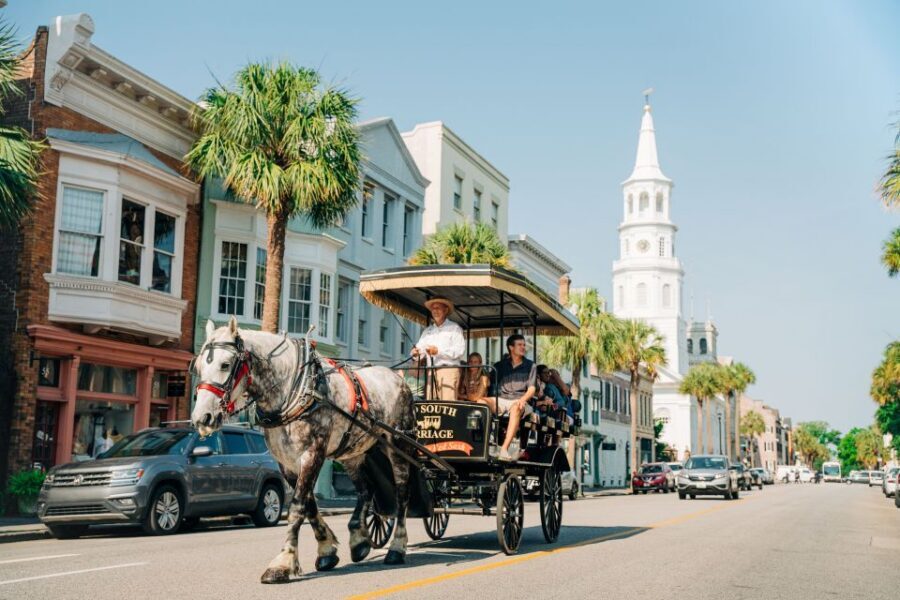
This tour is wheelchair accessible. That’s a real advantage in a city where cobblestones and sidewalk crowding can turn a simple plan into a hassle.
For general comfort, keep expectations realistic. Some riders mention that four people across each seat can feel tight for average-size adults. That doesn’t mean you can’t enjoy it. It means you should consider whether you’re the sort of person who needs extra space when sitting for a full hour.
Also consider that the tour operates outdoors and covers streets with normal downtown noise. If you’re sensitive to hearing details in traffic environments, try to seat where you’ll have the easiest access to the guide’s voice.
Restrooms are available in the meeting lobby area, which helps you start the ride comfortably. Since the tour itself is one hour, you’ll likely want to use the facilities before departure.
When Weather Changes Plans: How the Tour Handles It
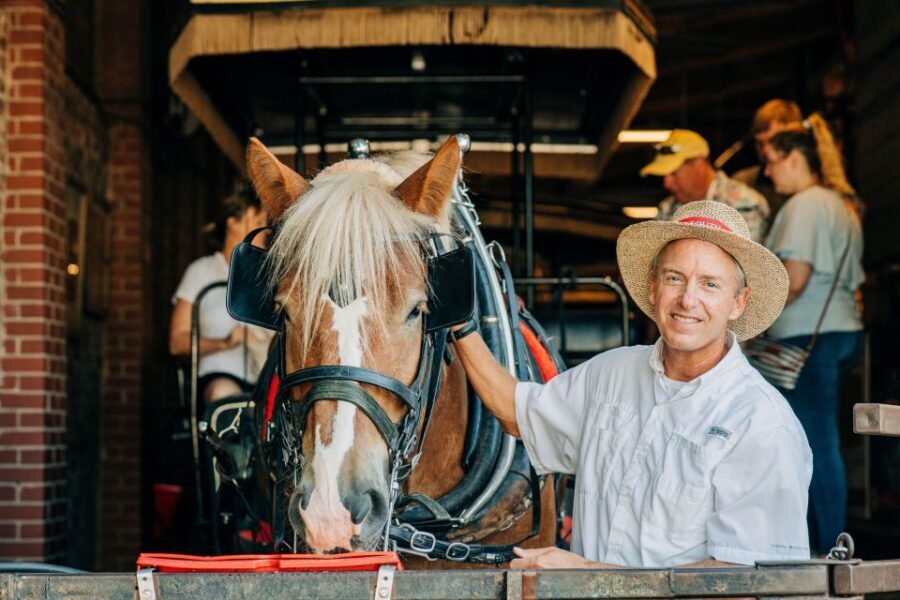
Charleston weather can shift fast, and this tour has a clear approach. If inclement weather prevents tours from departing, you’ll be offered a refund or a new date to take the tour. That’s important because you don’t want your sightseeing day destroyed by a light change in conditions.
If you’re booking for a specific day, I’d still treat it as an outdoor plan: have a backup idea for the same time window in case weather pushes the schedule.
Should You Book This Charleston Carriage Tour?
Book it if you want:
- An efficient, guided way to understand Charleston’s downtown in about an hour
- A car-free way to see big highlights like Rainbow Row, King Street, and the Battery
- Live narration from guides known for mixing story and humor, like Michael H or Donald
- A route that may vary day to day thanks to Charleston’s city-run bingo routing
Skip or reconsider if:
- You’re very space-sensitive and four-across seating would stress you out
- You need consistently clear audio in busy street noise areas
- You already have a deep, self-guided plan and don’t care about an overview loop
For most first-time visitors, this is a smart way to get your bearings fast and then spend the rest of your time on the streets you want to revisit.
FAQ
Where is the tour meeting point?
You check in at Old South Carriage Co. Go into the main lobby area through the front door and check in at the desk.
How long is the Charleston historical downtown carriage tour?
The duration is 1 hour.
What does the tour cost?
The price is listed as $50 per person.
What sights does the tour pass during the ride?
You’ll pass by Charleston Harbor, Rainbow Row, King Street, White Point Gardens, and the Charleston Battery, along with 4 Corners of Law.
Do I get a live guide?
Yes. The tour includes a live tour guide speaking English.
Is the tour wheelchair accessible?
Yes, it is listed as wheelchair accessible.
Are restrooms available?
Restrooms are available in the meeting lobby area, and restroom use is included.
What happens if I’m late to check in?
If you have not checked in 10 minutes prior to departure, you will lose your scheduled reservation and be placed on the next available carriage.
Is there free cancellation?
Yes. You can cancel up to 24 hours in advance for a full refund.
What if weather prevents the tour from departing?
If inclement weather prevents tours from departing, you’ll be offered a refund or a new date to take the tour.
FAQ
Where is the tour meeting point?
You check in at Old South Carriage Co. Enter through the front door and check in at the desk in the main lobby.
How long is the tour?
It runs for 1 hour.
What is the price per person?
It costs $50 per person.
What sights are included?
You’ll see highlights like Charleston Harbor, Rainbow Row, King Street, White Point Gardens, and the Charleston Battery, plus 4 Corners of Law.
Is the narration live and in English?
Yes, the tour includes a live guide in English.
Is the carriage tour wheelchair accessible?
Yes, wheelchair accessibility is listed.
Are restrooms available?
Yes. Restrooms are available in the lobby area, and restroom use is included.
What happens if I arrive late?
If you don’t check in at least 10 minutes before departure, your reservation is lost and you’re moved to the next available carriage.
What is the cancellation window?
You can cancel up to 24 hours in advance for a full refund.
What if weather cancels the tour?
If tours can’t depart due to inclement weather, you’ll get a refund or a new date.