REVIEW · CHARLESTON
Charleston History, Homes, and Architecture Guided Walking Tour
Book on Viator →Operated by Lowcountry Walking Tours · Bookable on Viator
Charleston is all about details you miss alone. This 2-hour walking tour strings together churches, homes, and landmark architecture in a way that actually makes the city’s story click. You start near City Hall, hear how Charleston shaped American history, and finish in Battery area with a museum ticket ready to use.
I especially like that the pace stays manageable for a walking tour, with frequent, short stops where you can read the scene and listen.
My second favorite part is the way the tour mixes famous sights with neighborhood texture, from St. Michael’s Church to the colorful pull of Rainbow Row and the big themes of revolution and civil war. The guide names and styles vary, but the common thread is clear: you get lots of architecture talk and real local context.
One thing to consider: this is a walking route with limited downtime. If you hate heat, or you need frequent breaks, plan on wearing comfortable shoes and bringing water, since you’ll be on your feet most of the time.
In This Review
- Key things I’d plan for
- Why This 2-Hour Charleston Walk Feels Just Right
- Starting at 80 Broad St: City Hall Sets the Tone
- St. Michael’s Church and George Washington: A Story With Stone Behind It
- Rainbow Row: When Color Works as a History Lesson
- The Old Exchange & Provost Dungeon: Pirates, Patriots, Presidents
- South of Broad and the Battery: Mansions, Sea Walls, and Cooling Breezes
- Powder Magazine Museum: The Included Ticket Worth Timing
- Price, Value, and How to Decide If It Fits Your Trip
- Booking Timing, Departure Choices, and Getting the Most Out of the Route
- Should You Book This Charleston History and Architecture Tour?
- FAQ
- How long is the walking tour?
- Where does the tour start?
- Where does the tour end?
- Is the Powder Magazine Museum included?
- Are there morning and afternoon departure times?
- What is the group size limit?
- Does the tour operate in bad weather?
- Can children join the tour?
- What languages is the tour offered in?
- Is free cancellation available?
Key things I’d plan for
- Licensed local guide who keeps the storytelling moving and easy to follow
- Small group size (max 20) so you can actually hear and see the details
- Major Charleston stops in one loop, from City Hall and Washington Square to the Battery
- Powder Magazine Museum entrance included, so the tour keeps paying off after you finish walking
- Morning or afternoon departures, handy when you’re building a day around other plans
- Starts on Broad St and ends near Battery Pl, so you can keep exploring right away
Why This 2-Hour Charleston Walk Feels Just Right
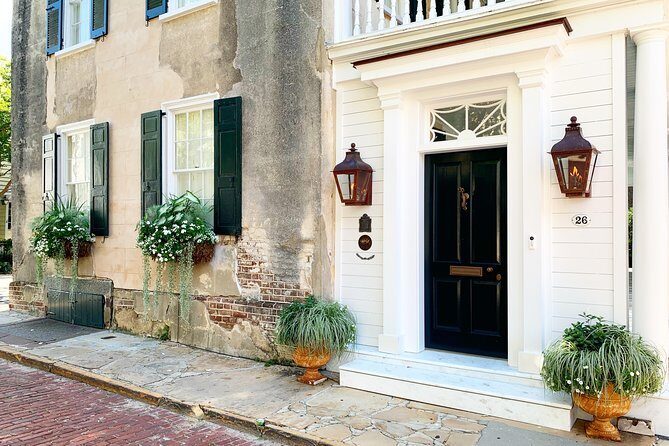
This is the kind of tour that helps you get oriented fast. Downtown Charleston can feel like a postcard, but it’s also a living city with layers: civic power near City Hall, religious history around the churches, and residential neighborhoods that look charming on the surface and complicated underneath.
At $28 for about 2 hours, you’re not just buying “a history lecture on the move.” You’re buying a local guide who points out what to look for and what to notice, then gives you a museum ticket after the walk. The small group cap (20 people) matters here. With fewer people, it’s easier for your guide to keep things flowing and for you to slip into the right side of the sidewalk instead of getting trapped behind a crowd.
You’ll also like that it runs in all weather conditions. That sounds strict, but it usually means you still see the plan even when conditions are rough. Still, dress for the day, not for the forecast optimism.
Other walking tours we've reviewed in Charleston



Starting at 80 Broad St: City Hall Sets the Tone

The tour begins outside Charleston City Hall at 80 Broad St. This is a strong starting point because the guide can explain civic Charleston in plain terms: who ran things, what the city valued, and why the built environment matters.
The first stop is short, about 10 minutes, and the emphasis is on the setting. You’ll hear how City Hall fits into Charleston’s “Four Corners of Law.” It’s not just trivia. It’s a quick way to understand that Charleston’s power wasn’t abstract. It had addresses, institutions, and a physical presence you can still see today.
Then you move a few blocks to Washington Square, with another short stop (about 5 minutes). Washington Square is one of those spaces that helps you reset visually. After the dense streets near Broad, it gives you a breather and a chance to see how public squares work in Charleston: greenery, people, and the surrounding architecture doing a lot of talking.
Practical note: early on, you’ll feel the “walking tour rhythm.” The route is designed to keep stops frequent but not long. If you do best with short chunks and lots of sights, this format fits you.
St. Michael’s Church and George Washington: A Story With Stone Behind It
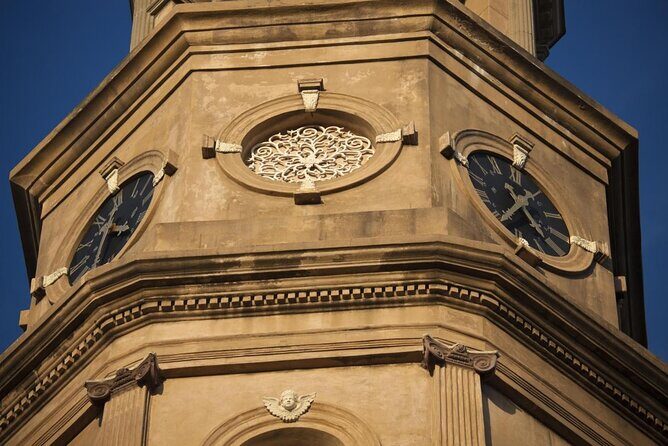
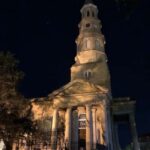
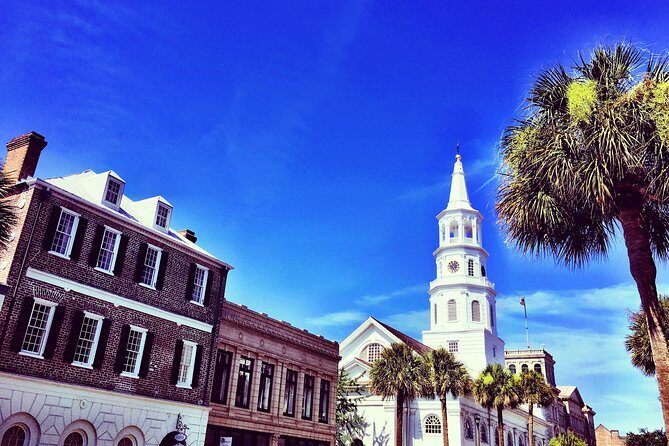
One of the most striking stops is St. Michael’s Episcopal Church. The tour pauses here for about 10 minutes, and the goal is to connect the building to American history in a way you can actually picture.
This is the church connected to the moment when George Washington once worshipped there. The tour also frames it as the oldest surviving religious structure in Charleston, which changes how you look at it. It’s not just a pretty church façade. It’s evidence of how early Charleston stayed religious and influential across centuries.
What I like about this stop is how it anchors the tour’s bigger themes. Charleston’s story isn’t only about ships and battles. It’s also about institutions that endure—religion, civic life, and community identity—long after the original events.
If you’re sensitive to heavy topics, be aware that the tour can touch difficult parts of Charleston’s past. Some guides are careful and thoughtful about how they handle that material. Reviews specifically praise sensitivity in discussing slave history. If that topic affects your mood, you might still find it handled in a respectful, contextual way, but it’s wise to keep your expectations realistic.
Rainbow Row: When Color Works as a History Lesson
Next up is Rainbow Row, the famous line of colorful Georgian houses along East Bay Road. You’ll get around 10 minutes here, and the focus isn’t just on Instagram-worthy paint. Your guide explains the history behind the houses and what their Georgian style signals about the era that built them.
Here’s the practical angle: if you go to Charleston only for “pretty,” you miss the reason these buildings became icons. Georgian houses are a language. The spacing, proportions, and decorative approach tell you who had money, what “respectability” looked like, and how neighborhoods evolved over time.
Rainbow Row is also a great spot to slow down because you can look straight across street levels. You’ll probably notice architectural patterns you didn’t clock in photos: how façades sit, how entrances relate to the street, and how the entire block works as a visual statement.
Shortcoming to keep in mind: it’s a public, famous area, so it can be busy. The tour time is set, so if the area is packed, you may have less room to step back for photos. That doesn’t ruin it, but it does affect your picture-taking patience.
The Old Exchange & Provost Dungeon: Pirates, Patriots, Presidents
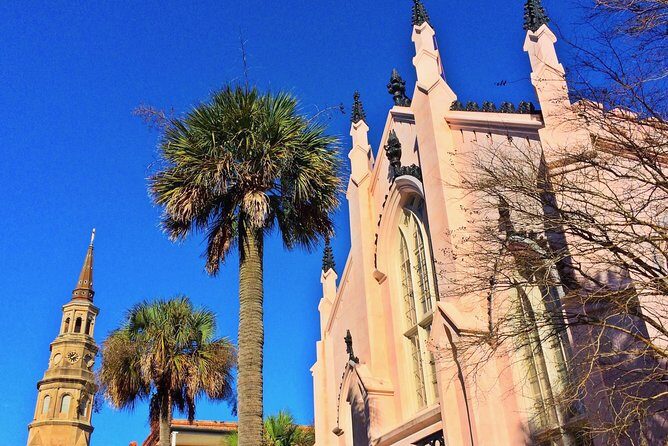
If Charleston has a “story machine” in the middle of downtown, it’s the Old Exchange Building and the Old Exchange and Provost Dungeon. The tour gives this stop about 5 minutes, but it’s a high-impact one.
The Old Exchange is described as South Carolina’s most historic building, and the dungeon component brings in a strong set of themes: a colonial building with a 300-year history involving pirates, patriots, and presidents. That’s a lot of names and eras, and the guide’s job is to tie them together so you don’t walk away with a pile of disconnected facts.
This stop is valuable because it shows Charleston’s double life. The same city that prized architecture and prosperity also ran systems of power and control. The dungeon story points to how conflict and imprisonment fit into the colonial-to-revolution arc, rather than treating history like a museum display behind glass.
Important expectation: this is not a long visit inside a big exhibit. The stop time is brief. The real benefit is the context your guide gives before or alongside whatever you choose to read afterward.
Other guided tours in Charleston




South of Broad and the Battery: Mansions, Sea Walls, and Cooling Breezes
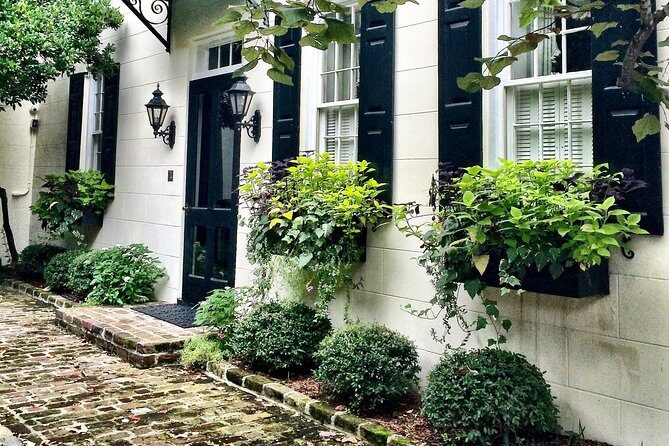
After the Exchange area, the route heads toward the Battery and White Point Gardens. This section is about 15 minutes, and it’s where you get that classic Charleston “stretch your legs and breathe” moment.
You’ll stroll along the seawall and learn about the stately mansions along the Battery. The tour also frames this as part of the residential area South of Broad, including the feel of the French Quarter within the broader historic district route.
What matters for your experience: this part of the tour is naturally more scenic and more forgiving for your feet. You’re not just looking at details at eye level. You’re looking outward—water, gardens, lines of sight—and it’s a nice contrast to the denser civic and institutional stops earlier.
Some reviews mention bathroom and resting planning, and even air-conditioned breaks on hot days. That’s exactly what you want in this section. The tour isn’t marketed as an indoor museum marathon, so smart breaks make a difference.
Also, if you’re visiting in peak humidity, this is where water and shade become your personal priorities. The tour runs in all weather, so you’ll handle what you can.
Powder Magazine Museum: The Included Ticket Worth Timing
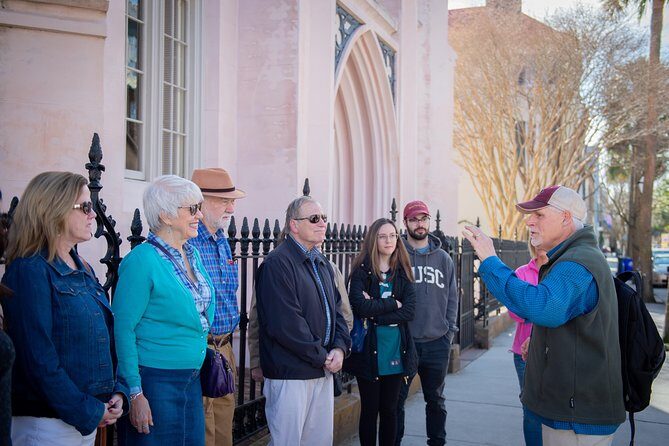
The tour includes entrance to the Powder Magazine Museum, and you can explore it at your leisure after the walking portion. That matters because it turns your day into a two-stage experience: first the guide helps you “read” Charleston in context, then the museum time lets you slow down and absorb the details.
The Powder Magazine fits the tour themes well. Charleston has always been strategic—connected to maritime routes, military pressures, and political events. A powder magazine is a symbol you can understand fast once you’ve heard the surrounding historical setup.
I like that the tour doesn’t lock you into a strict museum timeline. You can adjust depending on your energy level and your interests. If you want to re-focus on architecture or American history themes you heard on the walk, the museum is a logical place to do that.
Price, Value, and How to Decide If It Fits Your Trip
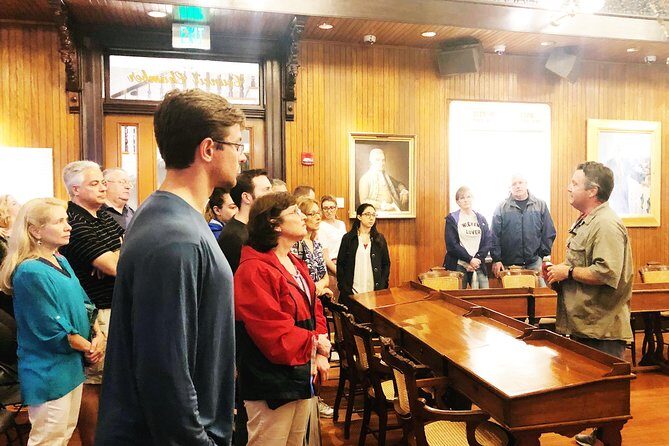
At $28 per person for about 2 hours, this tour is priced in a way that usually works well for travelers who want structure without spending half a day. Your money covers:
- A licensed local guide and the guided route
- Multiple downtown stops (church, civic buildings, iconic houses, and the Exchange area)
- A Powder Magazine Museum entrance ticket
Even if you don’t care about every stop equally, the combination gives you enough variety that you’ll likely find at least a couple of moments that genuinely click. The guide-led explanations are the part you can’t recreate on your own as easily, especially for connecting buildings to bigger American history events.
Group size (max 20) also adds value. In crowded cities, hearing matters. You’re more likely to catch the details that make Charleston feel like more than a set of pretty streets.
Who should book:
- First-timers to Charleston who want orientation and key sights in one loop
- People who like architecture explanations tied to history
- Families and groups who prefer a guided plan but still want freedom after (you can explore the museum later)
Who might skip or choose a different style:
- If you want a long, sit-down museum format only
- If you dislike walking in heat and would rather spend time in enclosed exhibits
- If you need extremely frequent pauses, because the stops are short by design
Booking Timing, Departure Choices, and Getting the Most Out of the Route
The tour offers morning or afternoon departures, which is great when you’re trying to match Charleston’s daily rhythm. Afternoon tours can help if you’re morning-late or if you want a slower start. Morning tours can be nicer for heat management.
It’s also helpful to know that it’s commonly booked about 21 days in advance. That’s a sign it fits a lot of travel schedules, not just rare dates. If your trip dates are fixed, booking sooner is smart.
The meeting point is 80 Broad St, and the end point is 94 Battery Pl. Your exact route can shift slightly depending on your guide and what they choose to emphasize, and the end is described as only a few blocks from the start. If you need help getting back, the guide can walk you back to where you started if requested. That’s a small detail, but it can save you from stress at the end of the walk.
Two simple tips that make the tour better:
- Bring a water bottle and plan to sip during the walk.
- Wear comfortable shoes, because the “about 2 hours” turns into real walking time fast when you add quick stop-and-go moments.
Should You Book This Charleston History and Architecture Tour?
Yes, you should book it if you want a well-paced introduction to Charleston that links buildings to the story. The included Powder Magazine Museum ticket is a practical bonus, and the route hits the big visual anchors—St. Michael’s Church, Rainbow Row, and the Old Exchange area—while also getting you into the residential feel of South of Broad and toward the Battery.
I’d especially recommend it if your travel style is: short walks, frequent viewpoints, and a guide who can explain what you’re looking at without turning it into a lecture. Many guides tied to this tour are praised for pacing and for making serious topics feel handled with care, including how slave history is discussed.
If your main goal is a deep museum-only day, you might prefer other options. But for most visitors, this tour gives you the best kind of value: you leave with places you can recognize, and a better sense of why Charleston looks the way it does.
FAQ
How long is the walking tour?
It lasts about 2 hours.
Where does the tour start?
The meeting point is 80 Broad St, Charleston, SC 29401.
Where does the tour end?
The tour ends near 94 Battery Pl, Charleston, SC 29401, and the route finishes only a few blocks from the start.
Is the Powder Magazine Museum included?
Yes. The tour includes entrance to the Powder Magazine Museum, and you can visit it at your leisure.
Are there morning and afternoon departure times?
Yes. You can choose morning or afternoon departure times.
What is the group size limit?
The tour has a maximum of 20 travelers.
Does the tour operate in bad weather?
It operates in all weather conditions, and you should dress appropriately. If it’s canceled due to poor weather, you’ll be offered a different date or a full refund.
Can children join the tour?
Yes, but children must be accompanied by an adult.
What languages is the tour offered in?
The tour is offered in English.
Is free cancellation available?
Yes. You can cancel for a full refund up to 24 hours in advance. If you cancel less than 24 hours before the start time, the amount paid is not refunded.