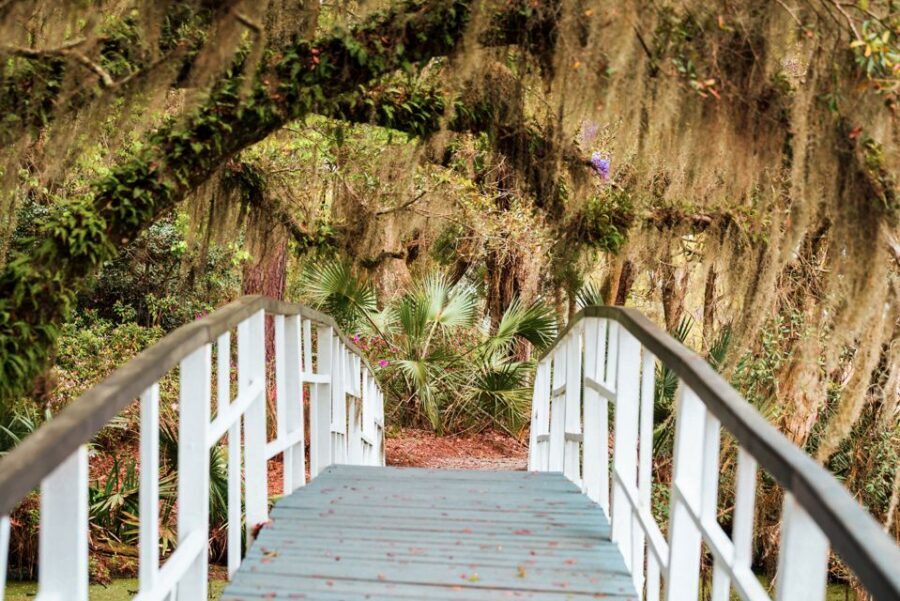
REVIEW · CHARLESTON
Charleston in a Nutshell Private Tours
Book on Viator →Operated by Jeff Zimmerman · Bookable on Viator
Charleston’s best quick orientation by car. You get an easy ride, hotel pickup in downtown, and a local-style route that mixes harbor views with church and civic landmarks. Guide Jeff Zimmerman keeps the pace friendly, with stops built for photos and short walks so you don’t spend your energy fighting Charleston heat.
I especially like the big-picture flow. You see how the peninsula fits together fast, then you can plan the rest of your trip with way less guessing. I also love that the tour feels genuinely private even at 2 hours—your group gets time at the curb, questions are welcome, and you can go at a pace that works for you.
One thing to consider: a small slice of feedback mentions pickup or no-show problems. That doesn’t feel common, but I recommend doing a quick check the day of your tour and keeping the contact number accessible.
In This Review
- Key things to know before you go
- Getting oriented fast in Charleston’s historic core
- Waterfront Park and the Dock Street Theatre: the harbor and the stage set
- The Citadel drive and Rainbow Row: how the city balances military and charm
- Battery and White Point Gardens: the peninsula tip and the big Fort Sumter view
- St. Michael’s Church and the Four Corners of Law: why architecture rules matter
- The 60-acre garden stop and the James Hoban neoclassical building
- Why the 2-hour private car format feels like a win
- What to expect from the pace and timing
- Pickup zones and how to keep the day smooth
- Who this tour is best for
- Should you book Charleston in a Nutshell Private Tours?
- FAQ
- How long is the Charleston in a Nutshell Private Tours experience?
- Is this a private tour?
- Where do you offer hotel pickup and drop-off?
- What language is the tour offered in?
- Are there any stops with free admission?
- What’s the cancellation and weather plan?
Key things to know before you go

- Hotel pickup and drop-off in downtown Charleston keeps this effortless from the start
- Waterfront Park and Battery/White Point Gardens deliver big harbor views without a long trek
- Stops are built for first-time orientation with photo moments at major landmarks
- Air-conditioned comfort and cold water matter on hot days in Charleston
- Jeff Zimmerman’s storytelling uses old-versus-new comparisons to make the city feel real
- Short stop times mean you’ll likely want a second visit to your favorite spots
Getting oriented fast in Charleston’s historic core

Charleston can feel like a maze on your first day. Streets curve, angles change, and every corner looks worth stopping for. This is why a tight 2-hour overview works so well: you get the lay of the land without burning hours walking between distant “must-sees.”
The tone of the tour is practical. You’re not just watching the city slide by from a window—you’re getting context as you drive, then short stops where you can actually look and take photos. It’s a smart way to learn what’s close to what. Even if you’ve read about Charleston, seeing the shape of the peninsula firsthand helps your brain store it correctly.
The “private” part also matters. Instead of being herded, you can ask the questions that pop up as you go—why certain buildings look the way they do, how neighborhoods connect, and what role places like the churchyards and military college play in the city’s identity.
Other private tours in Charleston



Waterfront Park and the Dock Street Theatre: the harbor and the stage set
You start at Waterfront Park, one of the fastest ways to understand Charleston’s postcard view. From here you get a panoramic feel for the harbor and the geography that shapes the city: the Ravenel Bridge, the ships and history around Patriots Point, and the presence of Fort Sumter in the distance. This is the kind of stop that turns a map into something you can picture.
From Waterfront Park, you head toward Dock Street Theatre. This stop is short, but it’s a good reminder that Charleston isn’t only about homes and churches. The Dock Street Theatre opened in 1736 and was the first building in America built exclusively for theatrical performances. That detail is exactly the kind of fact that makes your later sightseeing click—because you start noticing how the city’s civic life, culture, and architecture all tie together.
Also, the tour lists free admission here. That’s rare for a “top sight” and it helps you feel like you’re getting real value for the time you’re spending.
A small practical note: with a quick theatre stop, you’ll want to focus on the exterior and the immediate area unless the schedule at the moment lines up with a deeper visit. The strength here is the orientation and the story, not a long indoor museum moment.
The Citadel drive and Rainbow Row: how the city balances military and charm

Next comes the Citadel area. The Citadel is one of six senior military colleges, tied closely to the South Carolina Corps of Cadets. Even if you’re not a military buff, seeing it slowly from the road gives you a sense of why this institution is such a visible part of Charleston’s public life. One review even noted a slow drive through the Citadel—those are the moments where the tour feels relaxed instead of rushed.
The layout of the campus matters too. The tour information highlights the Citadel’s size and its location along the Ashley River—so you get a quick mental picture of how education and waterfront geography sit side by side in the same city.
Then it’s onto Rainbow Row, the iconic row of intact Georgian houses. The reason this stop works is simple: you get a quick hit of the city’s aesthetic identity. Pastel colors, the long continuous row, and the tight rhythm of the street give you instant “Charleston looks like Charleston” energy. It’s also among the most photographed stretches, so you’ll likely have plenty of chances to frame a good shot.
One consideration here: Rainbow Row can be busy. If you like solitude for photos, it helps to have a guide who knows how to time curb stops and where to pause for the cleanest view.
Battery and White Point Gardens: the peninsula tip and the big Fort Sumter view

The Battery and White Point Gardens sit at the tip of the peninsula—the spot locals describe as where the Ashley and Cooper rivers meet and form the Atlantic Ocean. Translation: this is where the city’s relationship to water becomes obvious, not just theoretical.
You’ll get views toward Fort Sumter and the harbor, plus a sweep of the waterfront that makes Charleston’s “old money” mansion vibe feel grounded in geography. And since the tour notes free admission for this stop, you can treat it as a pure sightseeing win.
This is also a great time to slow down and look past the obvious. The waterfront view is stunning, yes. But this is where you can start noticing patterns: the way the peninsula curves, where the best sightlines are, and how the road and architecture align with the shoreline.
If you’re sensitive to heat or fatigue, this stop is another “reason to do the car tour” moment. You can take in a lot while keeping your feet fresh for later neighborhood exploration.
St. Michael’s Church and the Four Corners of Law: why architecture rules matter
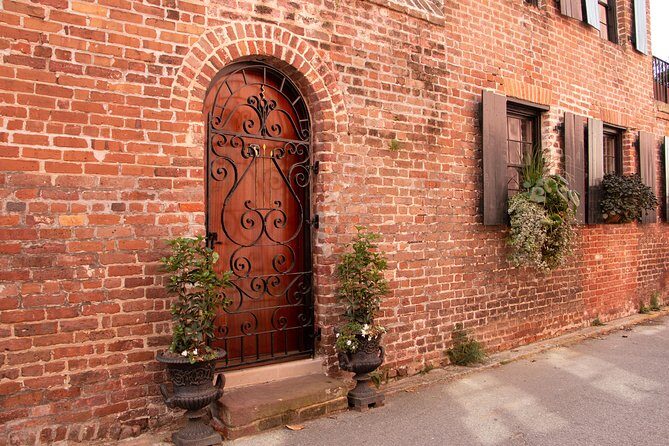
Charleston’s downtown is packed with landmarks that make you stop without trying. St. Michael’s Church, dating to around 1761, is one of the oldest churches in downtown. It’s tied to the idea of ecclesiastical law at the Four Corners of Law, and the churchyard is the resting place of two signers of the U.S. Constitution: John Rutledge and Charles Cotesworth Pinckney.
This stop is important for a different reason than scenery. It’s a reminder that these spaces weren’t built only for looks. They were built for governance, community, and power—often overlapping at the same intersections.
From there, you move through another “Four Corners of Law” landmark: an Adamesque building first serving as the First Bank of the United States, later becoming City Hall in 1818. The tour notes its construction between 1801 and 1804 and connects it to the Grand Modell city plan from the 17th century. This is the kind of chain of details that helps you understand why Charleston’s civic buildings and planning aren’t random. They’re part of an intentional design culture.
The practical benefit for you: once you learn what “Four Corners of Law” refers to, you start recognizing the logic behind the city’s historic layout. Later, when you’re wandering, you’ll feel less lost and more like you’re reading the street map like a story.






The 60-acre garden stop and the James Hoban neoclassical building
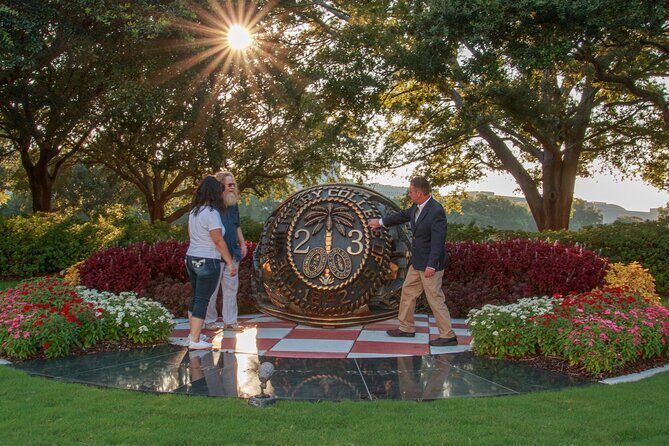
After the civic landmarks, the tour shifts into a more green, breathing space moment: a 60-acre park on the peninsula, described as the largest on the peninsula. It was once the site of the Washington Race Course and today is known for centuries-old live oaks and southern magnolia trees surrounding lush gardens.
That “former race course” detail is worth remembering. It helps you picture Charleston as a living city with layers, not a preserved set. The park doesn’t just look pretty—it carries older uses in its bones. If you’re visiting during a hot season, this stop also gives you shade breaks, which makes the second half of the tour easier.
Then there’s a neoclassical stop connected to Irish architect James Hoban—the same architect known for the model role of the U.S. White House. This tour information also links the design to Leinster House in Dublin. Even without naming the building outright, this is a cool moment because it reminds you Charleston sits in a bigger world of architectural ideas, not just local taste.
If you’re the kind of traveler who likes architecture cross-references, you’ll likely enjoy this stop most. If you’re more focused on pictures and atmosphere, you can keep it simpler: look for symmetry, proportions, and the way these buildings project authority.
Why the 2-hour private car format feels like a win
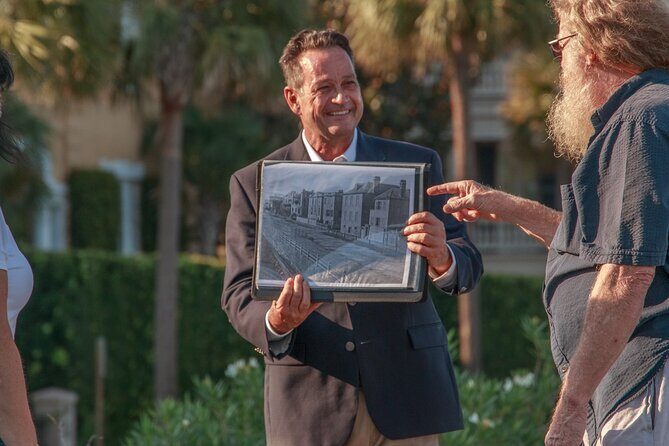
A 2-hour overview can sound like a speed-run. In practice, it’s a Goldilocks length—long enough to hit the major “you need to see this” anchors, short enough to keep your day flexible.
Here’s where this tour format pays off:
- You avoid the classic first-day problem: wandering without context.
- You get rides between locations so walking time stays manageable.
- You can sit down with air-conditioned comfort, which matters when Charleston weather is working against you.
- You get a human guide to explain what you’re looking at while you’re still standing in front of it.
One theme in the feedback is that Jeff Zimmerman’s speaking style is easy to listen to, with lots of concrete detail and clear pacing. Another is that he uses old photos to show how places changed over time. That kind of comparison turns history into something visual, not just facts on a page.
There’s also a small but memorable detail: one review praised cold water on a hot day. That’s not a trivial thing in Charleston. Heat is part of the experience here. Anything that helps you last longer is real value.
What to expect from the pace and timing
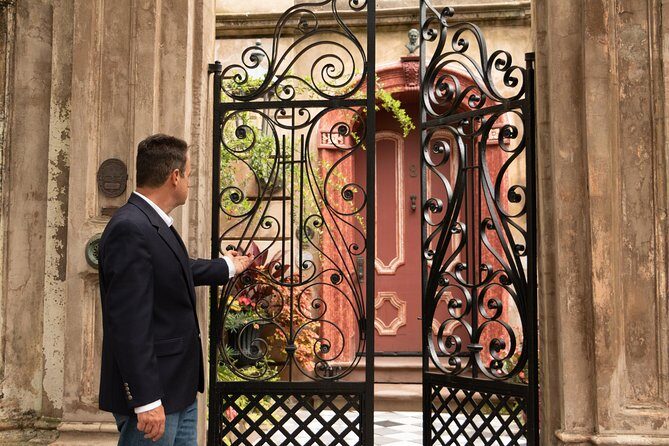
The itinerary is built around short stops—some explicitly around 10 to 15 minutes. That means you won’t linger in museums all morning, and you won’t do long interior visits at every stop.
Instead, expect:
- photo-friendly curb pauses
- quick orientation points with an explanation before you move on
- time to step out, look around, and ask one more question before the car rolls again
This works best if you treat the tour as a foundation. Afterward, you’ll likely want to return to 1–2 places that caught your attention. That might be a churchyard you want to study more calmly, a waterfront spot where you want a second sunset view, or a neighborhood section where the street layout feels especially interesting once you understand where you are.
If you’re the type who hates being rushed, you can still enjoy it. Just tell your guide what you want more of—views, architecture, or stories—so the stop pacing fits your style.
Pickup zones and how to keep the day smooth
Pickup is described as complimentary at downtown Charleston locations. The tour doesn’t offer pickup or drop-off at the Charleston International Airport, North Charleston, Summerville, Folly Beach, Isle of Palms, Sullivan’s Island, Daniel Island, John’s Island, Goose Creek, or Kiawah Island.
So first: make sure your hotel qualifies as downtown for pickup. If you’re staying at the edge of that area, you might need to plan for how you’ll reach a pickup point.
Second: keep an eye on timing. Even the best tour can fall apart if the meeting point isn’t exact. There have been a couple of no-show complaints in the feedback, including one case where a guide wasn’t at the appointed pick-up spot. I can’t predict whether that will affect your trip, but you can reduce risk by confirming the pickup area the day before and having the provided contact number ready on your phone.
Tip that saves headaches: when you get in the car, do a quick “wallet/keys/phone” check before you leave the curb. One review mentioned a cellphone left in the vehicle and returned within a couple of hours—so it happens. If it happens to you, you’ll feel better knowing it’s something your guide can likely help with.
Who this tour is best for
This is a great fit if you:
- are visiting Charleston for the first time
- want a quick understanding of the peninsula’s layout
- prefer car comfort over walking in the heat
- like architecture details and street-level storytelling
- want to choose your next stops with a clearer plan
It’s also a smart choice if you’re short on time—like cruise days, quick weekend trips, or a “one big day” schedule.
If you already know Charleston well and want very specialized interests (only military history, only cemeteries, only interiors, only food), you might feel the 2-hour format is too broad. But for most people, it’s an excellent starting point.
Should you book Charleston in a Nutshell Private Tours?
Yes—if your goal is orientation plus iconic sights without wasting a day on transportation and guesswork. The Waterfront Park + Battery/White Point Gardens combo alone is worth doing early, and the mix of churches and civic landmarks helps you understand why Charleston looks the way it does. Add the comfort factor and the guiding style, and it’s a strong value for a first visit.
I’d book with eyes open for the small risk of pickup snafus. Confirm your pickup location clearly, plan to be ready a little early, and keep the contact info on hand.
If you do that, you’ll come away with what you really want from a short tour: a clear sense of where everything is, what matters, and where you’ll want to return when you have more time.
FAQ
How long is the Charleston in a Nutshell Private Tours experience?
It runs for about 2 hours.
Is this a private tour?
Yes. Only your group participates.
Where do you offer hotel pickup and drop-off?
Pickup and drop-off are complimentary at downtown Charleston locations. There is no pickup or drop-off at Charleston International Airport, North Charleston, Summerville, Folly Beach, Isle of Palms, Sullivan’s Island, Daniel Island, John’s Island, Goose Creek, or Kiawah Island.
What language is the tour offered in?
The tour is offered in English.
Are there any stops with free admission?
The tour lists free admission ticket entries for Dock Street Theater and for Battery & White Point Gardens.
What’s the cancellation and weather plan?
Cancellation is free. You can cancel up to 24 hours in advance for a full refund. The experience requires good weather; if it’s canceled due to poor weather, you’ll be offered a different date or a full refund.