REVIEW · CHARLESTON
Patriot Escape Charleston Scavenger Hunt and Free Museum
Book on Viator →Operated by Native Charleston Tours · Bookable on Viator
A spy mission turns Charleston history into a hunt. You follow mobile clues through key Revolutionary-era sites, trying to slip out of the city as a Patriot Spy. I love how interactive it feels because you move from place to place instead of staring at dates, and I love that free museum admission is built into the experience.
One thing to plan around: the escape style is not for everyone. It’s recommended for adults only, it averages about 2 hours of walking, and it’s not recommended for people under 15—so families with younger kids should look at the separate Pirate Escape option instead.
In This Review
- Key Highlights
- Patriot Escape Charleston: game rules meet real streets
- Price and value: what $12 buys you in Charleston time
- Route walkthrough: from the Powder Magazine to the Provost Dungeon
- Stop 1: The Powder Magazine
- Stop 2: St. Philip’s Church
- Stop 3: Washington Square
- Stop 4: John Rutledge House Inn
- Stop 5: Lewis Timothy Print Shop
- Stop 6: Miles Brewton House
- Stop 7: White Point Garden
- Stop 8: Old Exchange & Provost Dungeon
- Museum admission: use it when it fits your day
- Support and setup: getting the phone clues going
- Walking time, neighborhoods, and how to stay comfortable
- Who should book Patriot Escape, and who should skip it
- Should you book this Charleston Patriot Escape hunt?
- FAQ
- How long is the Patriot Escape Charleston scavenger hunt?
- Where do I start, and where does it end?
- Is this experience self-guided?
- Is the tour in English?
- Does the price include museum admission?
- Is it suitable for children?
- What fitness level do I need?
- What if the weather is bad or the minimum number isn’t met?
- Can I cancel for free?
Key Highlights

- Mobile-first spy hunt with a timed get-away feel
- Free admission to a small, historically significant museum
- A strong mix of Charleston landmarks, from churches to historic houses
- You can visit the museum during the hunt or after you finish
- Adult-focused escape format, with a family-friendly alternative available
Patriot Escape Charleston: game rules meet real streets

This is Charleston history with a phone in your hand and a mission in your head. You’re not just sightseeing. You’re playing a self-guided escape where your success depends on how quickly you finish the clues and make your way out of the city without getting caught.
What I like most is that the structure does the heavy lifting. The route takes you to several major Revolutionary-era sites, including National Historic Landmarks, and you’re guided along the way. That matters in Charleston because some of the best stuff isn’t always obvious from the main roads. This gives you a reason to turn off the usual path and see the city’s bones.
The tone is also specific: the experience is designed for people who enjoy history, including the period when Charleston was under British occupation about 250 years ago. It’s accurate in the way it frames the story, and it doesn’t treat the subject like background noise.
The setup is private, meaning it’s only your group. That tends to make the experience feel calmer and more “yours,” since you’re not sharing clues with strangers drifting in and out.
Other museum experiences in Charleston



Price and value: what $12 buys you in Charleston time
At $12 per person for about two hours, you’re paying for three things: the mobile hunt, the route through multiple landmarks, and free entry to a small historic museum. If you were to pay for a museum visit plus a separate activity on top, this package-style value usually makes a lot of sense.
Here’s the practical angle: the hunt is basically built-in time management. You get an organized way to cover several important stops without needing to plan every turn in advance. That saves effort, and it saves the usual vacation problem where you spend the day “sort of wandering” and still don’t see what you came for.
Also, you can use the included museum admission strategically. The museum visit can work as your warm-up before you start, or as your follow-up after you finish the escape. Either way, your ticket isn’t a one-off you forget about.
Compared with tours that cost much more but mainly add commentary, this one gives you movement plus context. You’ll be walking, using your phone for clues, and stopping at recognizable places along the way. For the price, that’s a pretty solid deal.
Route walkthrough: from the Powder Magazine to the Provost Dungeon

The hunt runs in a clear sequence of stops and then ends back at the start. Expect about two hours on foot on average, and plan on a moderate fitness level. The course leads you through neighborhoods and landmarks that many people would struggle to find on their own, so the time feels purposeful instead of random.
Your route is built around eight key checkpoints:
Stop 1: The Powder Magazine
This is where the mission begins. As the first clue stop, it’s your moment to get your bearings and lock into the game. If you’re the type who likes to understand what you’re looking at, this opening works well as an anchor point for the Revolutionary-era theme.
Practical note: start off steady. If you rush too early, you’ll feel it later when the walking adds up.
Stop 2: St. Philip’s Church
Next up is St. Philip’s Church. Church stops often give you a nice pause in the middle of a walking route, and this one helps the story feel grounded in real places rather than abstract history. It’s also a common kind of Charleston photo target, so expect it to be a good place to slow down.
Possible drawback: if you’re hoping for lots of sitting time, plan for more standing and standing-in-line moments than you’d get in a ticketed museum.






Stop 3: Washington Square
Washington Square is a checkpoint that tends to reset your pace. Open squares work like a natural “breather” between streets, and they help you read the surroundings before you continue hunting.
In game terms, squares are also where your attention naturally shifts from navigation to observations. That makes it easier to stay engaged without getting tired of staring at your phone.
Stop 4: John Rutledge House Inn
At the John Rutledge House Inn stop, you’re moving through another recognizable slice of Charleston’s historic fabric. House and inn checkpoints work well for scavenger hunts because they’re visually distinct. They also keep the route feeling varied instead of repetitive.
If you like taking photos, this is the kind of stop where you’ll probably want a few. In fact, the phone-and-photos element is part of why the hunt feels fun for many people.
Stop 5: Lewis Timothy Print Shop
The Lewis Timothy Print Shop stop adds variety to the mix. A print shop clue checkpoint fits the broader spy-and-Revolution vibe without turning the experience into a single-note parade of landmarks.
This is also a good place to practice patience with the self-guided flow. If you’re troubleshooting your phone or re-reading instructions, it’s easier to do it at a slower-paced stop than while you’re mid-walk.
Stop 6: Miles Brewton House
Miles Brewton House is another major historic building along the route. Stops like this give the hunt a sense of rhythm: you see something substantial, you get your clue checkpoint moment, then you move on.
Drawback to consider: historic sites can mean you’re walking around property boundaries and along pedestrian-friendly routes rather than straight lines. It’s normal, but it’s good to mentally budget that “extra” walking.
Stop 7: White Point Garden
White Point Garden is where the route shifts again. Garden stops feel different from buildings and churches, and they tend to bring lighter energy to a history-focused walk. If you need a visual reset before the final stretch, this is a good point for it.
Also, gardens can be a place to pause and regroup before your last clue push. Just don’t overstay if you’re trying to finish within the game’s timing challenge.
Stop 8: Old Exchange & Provost Dungeon
The final stop is Old Exchange & Provost Dungeon. Ending on a site like this gives the escape game a stronger sense of payoff, because the name alone carries weight. This is your last checkpoint as you work your way out and wrap up at the original meeting point.
By the time you reach the end, you’ll likely have figured out the flow of the hunt: check the clue, move to the next stop, and keep an eye on your timing. If you’re prone to slowing down for photos, this is where you’ll want to balance fun with getting finished.
Museum admission: use it when it fits your day
A big bonus is the included free admission to a small but historically significant museum. The key detail is flexibility. You can explore the museum at the start of the scavenger hunt or come back after the escape.
That flexibility is worth something because Charleston days can be unpredictable. If you want to begin with museum context so the street stops make more sense, start there. If you’d rather go hunt-first and sort out details after, do it your way.
Either option helps you avoid the common problem where you run out of time and skip the museum portion. Here, you’re not guessing whether it will be worth it—you get it covered.
Support and setup: getting the phone clues going
This experience uses a mobile ticket, and it’s offered in English. Because it’s self-guided, you’ll want to arrive ready to use your phone for the hunt. Keep your battery topped up. If you’re traveling with a weak signal spot, consider starting on a fully charged device.
If your group is met by helpful staff such as Bryan and Adam—names that have come up for being fun and supportive—you’ll likely get the human handoff you need to start confidently. Even with a self-guided format, a quick orientation helps you stop second-guessing and start moving.
Since it’s a private activity (only your group), you can ask questions and get unstuck without feeling rushed by strangers.
Walking time, neighborhoods, and how to stay comfortable
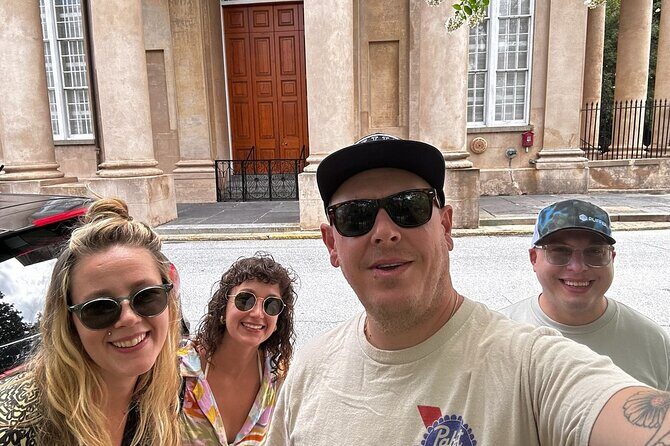
This isn’t a sit-in-a-van tour. It’s about walking. The hunt averages around two hours on foot, and the difficulty level is described as moderate. You should have a moderate physical fitness level for a comfortable day.
Here’s how to make it easier:
- Wear shoes that can handle a full stretch of city walking.
- Plan for a steady pace rather than sprinting between clues.
- Leave a little buffer for photos and short pauses so you don’t feel frantic late in the route.
Also, the experience requires good weather. If conditions are bad, you may be offered a different date or a full refund. So if you’re booking during a season with sudden rain, it’s smart to keep your expectations flexible.
The meeting point is 100 Meeting St, Charleston, SC 29401, and the experience ends back at that same spot. Knowing that round-trip structure makes it easier to plan your meal and rest time after the hunt.
And if you’re relying on public transport, it’s described as near public transportation, which is helpful in a city where parking can be its own adventure.
Who should book Patriot Escape, and who should skip it
This is a great pick if you want:
- A structured, self-guided way to see multiple Revolutionary-era sites in one outing.
- A history-focused activity that feels playful, because it’s framed as an escape game.
- A route that takes you into neighborhoods and landmarks many people would miss without a plan.
It’s also a smart choice if you like phone-based scavenger hunts and don’t mind walking for about two hours.
It’s not the best fit if:
- You’re traveling with someone under 15. This escape format isn’t recommended for that age group.
- You want an escape style designed for kids. For younger travelers, there’s a separate Pirate Escape Scavenger Hunt option that’s positioned for families.
If you’re an adult traveling with another adult and you like history as a live experience—not just a lecture—this mission-style hunt is exactly the right match.
Should you book this Charleston Patriot Escape hunt?
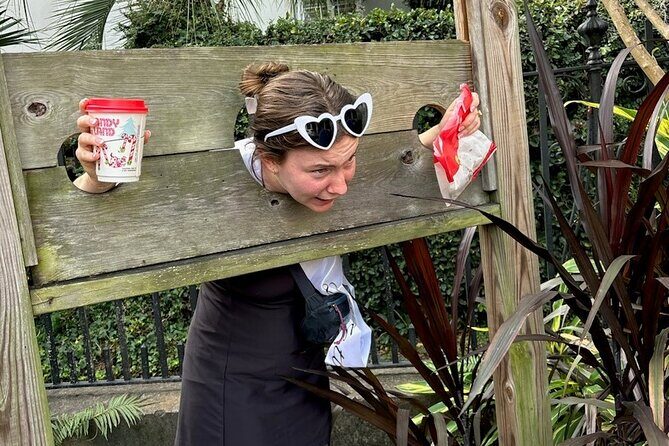
Yes, if you want a fun, game-based way to cover several major Charleston Revolutionary-era checkpoints in a couple hours, and you value the included free museum admission without extra tickets.
Book it especially if you like the idea of following a clue route through streets you might not pick on your own. The route is designed to take you where you’d struggle to find alone, and the “finish the escape” timing gives the walk a sense of momentum.
Skip it if your group includes anyone under 15 or if your priority is a fully guided, lecture-style tour. This one is about you moving, you solving, and you using the city as your puzzle board.
If you want Charleston to feel active instead of just toured, this is a strong use of a half-day.
FAQ
How long is the Patriot Escape Charleston scavenger hunt?
It lasts about 2 hours on average.
Where do I start, and where does it end?
You meet at 100 Meeting St, Charleston, SC 29401, and the activity ends back at the meeting point.
Is this experience self-guided?
Yes. It’s a self-guided escape using a mobile ticket.
Is the tour in English?
The experience is offered in English.
Does the price include museum admission?
Yes. You receive free admission to a small but historically significant museum.
Is it suitable for children?
The escape is not recommended for guests under 15 years old, and the self-guided escape is described as recommended for adults only. Families with kids should check the family-friendly Pirate Escape scavenger hunt option.
What fitness level do I need?
The experience is described as moderate difficulty and requires a moderate physical fitness level, since it averages around 2 hours of walking.
What if the weather is bad or the minimum number isn’t met?
The experience requires good weather. If it’s canceled due to poor weather, you’ll be offered a different date or a full refund. If it’s canceled because the minimum number of travelers isn’t met, you’ll also be offered a different date/experience or a full refund.
Can I cancel for free?
Yes. You can cancel for free up to 24 hours in advance for a full refund.