REVIEW · CHARLESTON
Charleston Historical Walking Tour: Pirates, Patriots, and More
Book on Viator →Operated by Pineapple Tour Group LLC · Bookable on Viator
If Charleston is on your list, start with its feet, not a bus. This 90-minute walk ties together pirates, patriots, and major landmarks you only really understand up close.
I love the leisurely pace (about 2.5 miles) with photo stops, because you get time to look instead of just pass by. I also love that the route is built around downtown streets you can’t fully see from a car, plus it includes big story stops like the Old Exchange and Rainbow Row. One drawback to plan for: it runs in all weather, so you’ll want to dress for sun, wind, or cold and keep moving.
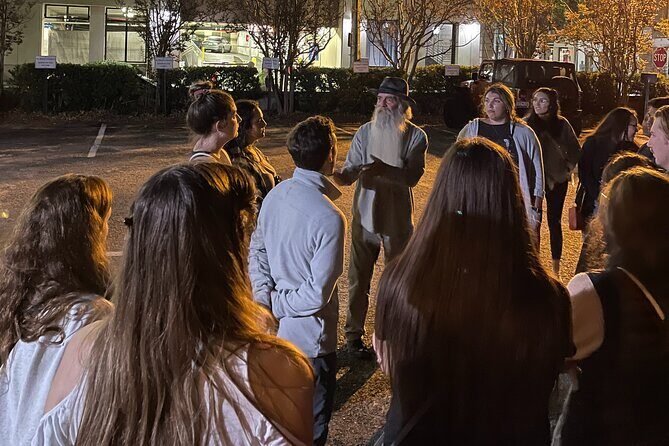
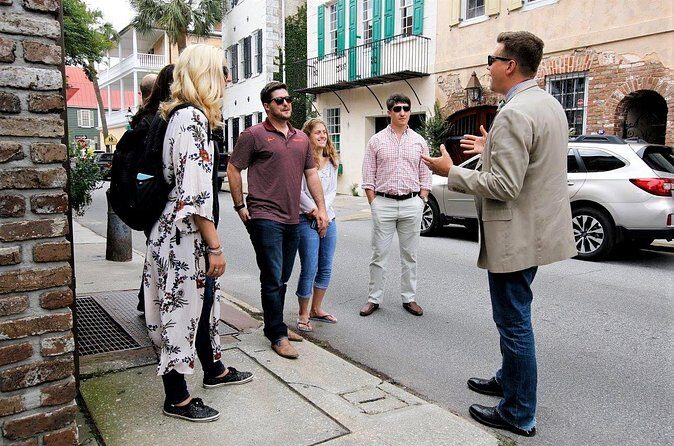
You’ll start near the Waterfront and circle through the most talk-worthy blocks in the Old City, guided by a pro who can connect architecture to the people who lived, fought, and worked here. Expect humor too: guides such as Benjamin are known for making the history feel like a conversation. If you’re very sensitive to walking, it helps to know the “moderate fitness” note, since you’ll still be on your feet for the full loop.
In This Review
- Quick hits worth knowing before you go
- Why this 90-minute walking loop makes Charleston click
- Getting started near the Circular Fountain at Waterfront Park
- Nathaniel Russell House at 51 Meeting Street: where architecture meets ambition
- The Old Exchange and Customs House: patriots, the Constitution, and Washington
- Riley Waterfront Park near the Market: a break that also tells a story
- Rainbow Row: Georgian row houses and the longest picture path
- White Point Gardens and the Battery: the southern edge of the story
- St. Michael’s Church and the “between-the-stops” context
- What you’ll learn from the pirate-to-patriot storyline
- Pace, group size, and weather: the practical stuff that matters
- Who should book this walking tour
- Price and value: what you’re really getting
- Should you book the Charleston Pirates, Patriots, and More tour?
- FAQ
- How long is the Charleston Historical Walking Tour?
- Where does the tour start, and where does it end?
- What’s the start time?
- How far will we walk?
- How many people are in the group?
- Is the tour in English?
- Does it run in bad weather?
Quick hits worth knowing before you go
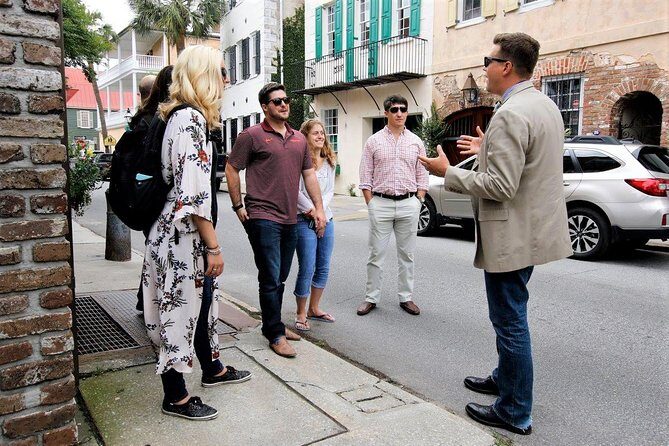
- 2.5 miles at a leisurely pace (about 90 minutes) with time to stop for photos
- Small group size with a maximum of 20 people, so questions are more likely to land
- Historic downtown focus on areas like the Battery, Rainbow Row, and Waterfront Park
- Key political and architectural stops, including the Old Exchange and Customs House
- Neoclassical and Georgian highlights, like the Nathaniel Russell House and Rainbow Row
- Weather-ready format since it operates in all conditions
Why this 90-minute walking loop makes Charleston click
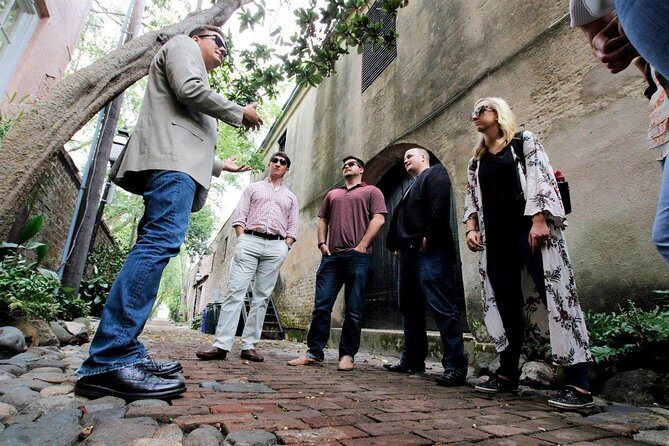
Charleston’s magic is partly about views, but mostly about details. A walking tour is the best way to absorb the scale of the streets, the way buildings line up, and how neighborhoods connect. On this one, you’ll cover about 2.5 miles at a leisurely pace, which is perfect for first-timers who want an orientation tour that still feels like real exploring.
You’re also not stuck watching your feet the whole time. The pace is designed for a calm stroll, with stops for photos and time to listen. That matters in Charleston because the city rewards attention: a doorway, a row of windows, a park edge, or a view from the Battery can change how you understand a story.
And the tour’s theme helps. Pirates, patriots, taverns, antebellum grandeur, and Civil War devastation are the headings, but the real payoff is the way your guide turns those themes into places you can point to. Instead of vague “Charleston was important,” you’ll start connecting why the city mattered politically and economically—then you’ll see the evidence in the streets.
Other walking tours we've reviewed in Charleston



Getting started near the Circular Fountain at Waterfront Park

The tour begins at 1 Vendue Range in downtown Charleston (and it finishes back there). Your start time is 10:15 am, so it’s set up as a daytime anchor for your visit. You’ll begin the guided historic walk through the area around Waterfront Park, starting at a prominent spot called the Circular Fountain.
This is a smart way to start because Waterfront Park gives you a quick mental map. You’re already in a central, recognizable area, and your guide can use that as a launch point for explaining how Charleston grew into a major seaport. Once that “big picture” clicks, the smaller stops feel less random.
Practical tip: this is a walking tour, so if you plan to take photos, wear comfortable shoes and keep water handy. Also, if you’re heat- or wind-sensitive, you might appreciate that a good guide will steer the group to shade when possible. On past tours, guides have been attentive about comfort in hot sunshine.
Nathaniel Russell House at 51 Meeting Street: where architecture meets ambition

One of the main stops is the Nathaniel Russell House Museum at 51 Meeting Street. This is widely recognized as one of America’s most important neoclassical dwellings, and that label matters. Neoclassical usually means order, symmetry, and confidence—and in Charleston, that style wasn’t just decorative. It reflected wealth, status, and the kind of social power that shaped the city’s politics and economy.
On a walking tour, the value here is not only seeing the exterior. It’s getting the story of why a house like this would exist where it does, and what it says about the people who could commission that kind of design. You’ll also likely hear how Charleston’s neighborhoods evolved around wealth and trade, so the buildings feel less like isolated landmarks and more like part of a bigger system.
What to watch for as you stand outside: look for the “calm” of the design—lines, balance, and the way the building holds its presence along the street. If you enjoy architecture, this stop gives you something solid to notice while your guide explains the historical context.
The Old Exchange and Customs House: patriots, the Constitution, and Washington
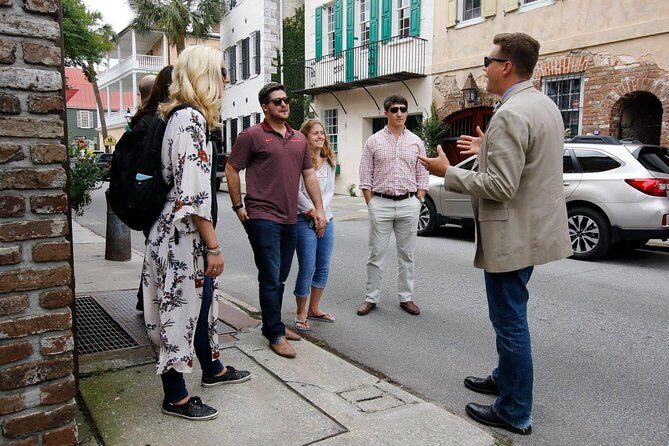
Another anchor stop is the Old Exchange and Customs House, a building completed in 1771. Today it’s recognized as South Carolina’s most historic building, and the tour theme leans hard into why.
Here’s what makes the stop feel unusually “story-forward”:
- Where patriots were imprisoned
- Where the Constitution was ratified
- Where George Washington was entertained
That’s a lot of national-level history tied to one location, and Charleston’s role in early U.S. politics becomes real fast when you can stand where those events were linked. Even if you’re not a constitutional history person, the setting helps. You’re not just reading names; you’re looking at the building that kept showing up in the country’s big moments.
A small caution: the Old Exchange is a key stop, so it can draw your attention the most. If you’re the kind of person who loves every detail equally, plan to slow down just a bit more here so you don’t rush the stories.
Riley Waterfront Park near the Market: a break that also tells a story

From the downtown core, you’ll pass through the Riley Waterfront Park, close to The Market. This park is considered one of the area’s most visited and popular public spaces.
Why it’s a good tour stop: parks are where you feel the city’s layout. You can catch breezes, compare sightlines, and see how the waterfront area fits with the commercial and historic parts of downtown. It also gives your legs a brief reset without ending the momentum of the tour.
If you’re hungry or thinking about lunch, this area is often practical to reach during the walk. The Market vicinity is naturally aligned with food plans later, and Waterfront Park helps you understand how people move through the space between “historic stops” and daily life.
Other historical tours in Charleston





Rainbow Row: Georgian row houses and the longest picture path
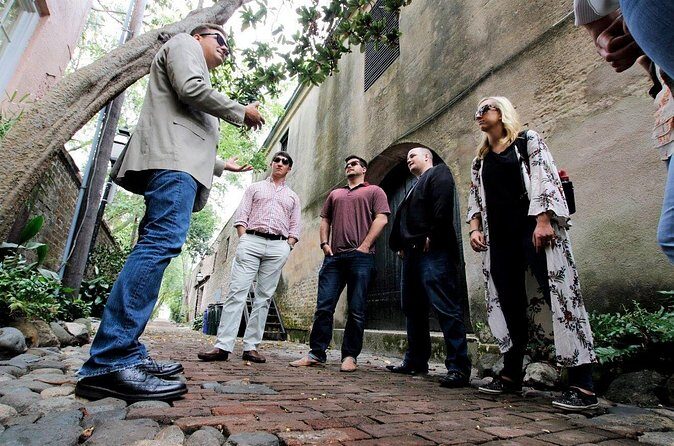
Then you get to Rainbow Row, one of the most popular areas in Charleston. This is known for representing the longest cluster of Georgian row houses in the United States.
Rainbow Row is famous for a reason: it’s visual, it’s colorful, and it works beautifully for photos. But the tour adds value by explaining why the row-house style is important and what it represents about urban development.
Here’s the useful way to think about it while you’re there: row houses show how a city planned and packed housing closely, with a consistent street rhythm. That consistency is part of what makes Rainbow Row so striking. When your guide connects it back to the city’s growth as a seaport and commercial center, you start seeing the architecture as part of daily life and economic reality—not just a scenic lineup.
Photo tip: if you’re taking pictures, arrive at your best angles early in the stop. The views are great from more than one angle, but the crowd usually clusters, so you’ll be happier if you don’t wait until everyone has already positioned themselves.
White Point Gardens and the Battery: the southern edge of the story
Next up is White Point Gardens, a public park about six acres located in the southernmost part of The Battery. The Battery is one of Charleston’s classic waterfront promenades, and that physical location is a big clue to the city’s history.
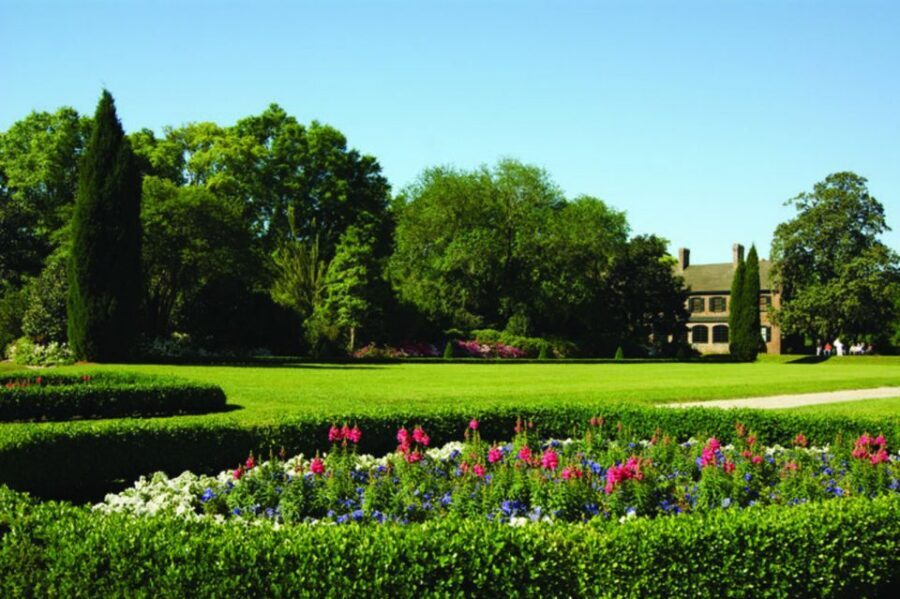
From here, you get a different angle on Charleston. Instead of focusing only on street façades, you can sense the city’s relationship to water—how trade, travel, and defense would naturally connect to this edge of town. It’s also a nice contrast to the denser historic blocks, giving you space to breathe while you hear the guide’s timeline move forward.
If you like scenic breaks that still connect to history, this is one of the best “pause points” on the route. And because the tour is structured with stops, you won’t feel like you’re dragging yourself from landmark to landmark without a reason.
St. Michael’s Church and the “between-the-stops” context

A highlight on this walk includes St. Michael’s Church among the popular stops. In Charleston, churches often act like anchors—spatially and culturally—so they can make the tour’s story feel stitched together rather than a checklist.
Even if you don’t know much about the building’s details, a church stop can help you understand how communities formed, how values got expressed in public space, and how the city’s long timeline kept reshaping neighborhoods.
The best part is what often happens between stops. As you move from place to place, your guide’s job is to connect them—taverns and pirates to civic life, patriots to political change, antebellum architecture to the social world that made it possible, and then the Civil War’s devastation to what changed afterward. It’s the “in-between” narration that turns sites into a story you can remember.
What you’ll learn from the pirate-to-patriot storyline
The tour theme—bawdy taverns & pirates, heroic patriots, antebellum architecture, and Civil War devastation—could sound like it’s just for fun. But the real value is how those themes guide your attention.
- Pirates and taverns push you to think about Charleston as a working seaport and a risky place for trade and politics.
- Patriots bring you into the revolutionary civic side of town.
- Antebellum architecture helps you notice how wealth shaped neighborhoods.
- Civil War devastation gives the timeline a sharper emotional weight.
This kind of thematic framing helps you remember the city. Instead of 10 separate facts, you start sorting what you see into a mental map: economy, power, and change over time.
Also, humor can be more than entertainment. A good guide’s jokes and memorable phrases can make the key points stick, especially for first-time visitors trying to hold onto a lot of information in a short amount of time.
Pace, group size, and weather: the practical stuff that matters
This tour is designed for moderate physical fitness. That doesn’t mean “hard,” but it does mean you should be ready for steady walking for about 90 minutes over roughly 2.5 miles. The good news: the pace is described as leisurely, and the group size is kept small, with a maximum of 20 travelers.
Small group size makes a difference. You’re less likely to feel swallowed by a crowd at photo stops, and it’s easier to hear the guide when you’re not packed shoulder to shoulder.
One more practical point: it operates in all weather conditions, so dress appropriately. In Charleston, that usually means planning for heat and sun, but also for wind (and cooler air when it’s not warm). If you’re coming during a colder season, bring layers. If it’s hot, bring water and wear breathable clothes.
Who should book this walking tour
This is a great choice if:
- you’re in Charleston for the first time and want a clear orientation
- you like history, but you want it explained with places and stories
- you enjoy photography and want scheduled photo time
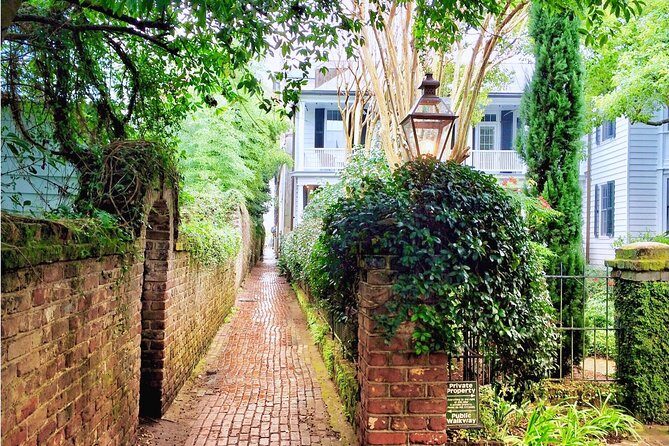
- you’d rather see quiet side streets and pass through walkable downtown than rely on car-only viewpoints
It might be less ideal if:
- you don’t do well with walking for about 90 minutes, even at a leisurely pace
- you need a fully indoor option (this one runs in all weather)
Families can work here too since children must be accompanied by an adult, and a child rate applies only when sharing with two paying adults. It’s also the kind of tour where a curious child can benefit from the pirate-and-patriot storytelling tone, as long as everyone’s ready for the walking time.
Price and value: what you’re really getting
You’re not paying for a generic loop. You’re paying for three types of value that matter in Charleston:
- Access on foot
Cars can’t show you the same street-level rhythm, the small turns, or the “hidden nooks” feel that comes with walking.
- A professional guide who connects the dots
A big part of the satisfaction comes from the guide’s ability to link architecture and civic events to what you’re seeing. Guides such as Benjamin are noted for being both funny and very engaging, which helps the history land without feeling like a lecture.
- Major landmarks plus context
Stops include major drawcards like the Old Exchange, Rainbow Row, and White Point Gardens, but you’re also guided through what they mean: patriots and the Constitution, neoclassical confidence at 51 Meeting Street, and the Georgian row-house story behind Rainbow Row.
Even without digging into exact costs here, the structure is built for value: 90 minutes, about 2.5 miles, major stops, and a professional guide handling the storytelling so you don’t have to research every block yourself.
Should you book the Charleston Pirates, Patriots, and More tour?
Yes, if you want a high-impact first walk through downtown Charleston. This tour gives you the kinds of stops that become your reference points for the rest of your trip—Battery views, Rainbow Row’s Georgian rows, the Old Exchange’s political weight, and the neoclassical presence of the Nathaniel Russell House.
Book it if you like history explained with energy and a bit of humor, and if you’re ready for about 90 minutes of walking. If weather is rough or your walking tolerance is limited, consider adjusting your day and dress plan—but otherwise, it’s the type of tour that helps you understand Charleston fast and remember it longer.
FAQ
How long is the Charleston Historical Walking Tour?
The tour lasts about 1 hour 30 minutes.
Where does the tour start, and where does it end?
It starts at 1 Vendue Range, Charleston, SC 29401, USA and ends back at the meeting point.
What’s the start time?
The start time listed is 10:15 am.
How far will we walk?
The route covers roughly 2.5 miles at a leisurely pace.
How many people are in the group?
The maximum group size is 20 travelers.
Is the tour in English?
Yes, the tour is offered in English.
Does it run in bad weather?
It operates in all weather conditions, so you should dress appropriately.