REVIEW · CHARLESTON
Charleston historical walking tour with a Professor of History at The Citadel
Book on Viator →Operated by Charleston History Walk by Eric Lager, Ph.D. · Bookable on Viator
Charleston history walks, not lectures. This 3-hour Charleston historical walking tour led by Dr. Eric Lager, a Ph.D. historian at The Citadel, turns famous streets into a story you can follow. The group stays small, up to 12 people, which means you actually hear the details and can ask questions as you go.
I especially love the way he connects buildings to the people who used them—politics, religion, and everyday life all in one walking loop. I also like that the pace is structured enough to cover a lot of ground without feeling rushed into trivia. You’ll get a memorable sweep from early Colonial Charleston all the way through the Revolution and Civil War.
One thing to consider: the schedule is packed. You’ll hit about 13 stops in roughly 3 hours, so plan on solid walking and bring sensible shoes. Also, bottled water isn’t included, so stop before you meet if you’re the type who gets thirsty easily.
In This Review
- Key Highlights
- Meet Dr. Eric Lager: A Citadel Professor With a Street-Level Lens
- Price and What You’re Really Paying For
- The Route Logic: Start at Meeting Street, Finish by the Battery
- Stop 1: Mills House Charleston (Civil War Connections You’ll Notice)
- Stop 2: Dock Street Theater (North America’s First Theatre Built)
- Stop 3: Pink House Gallery (One Building, a Whole Timeline)
- Stop 4: Washington Square (Monuments and the Meaning Behind Them)
- Stop 5: Charleston City Hall (From Meat Market and Bank to City Hall)
- Stop 6: Charleston County Courthouse (The Old South Carolina Statehouse Angle)
- Stop 7: St. Michael’s Church (Completed in 1761)
- Stop 8: Heyward-Washington House (George Washington Stayed Here, 1791)
- Stop 9: Old Exchange & Provost Dungeon (British Public Building and Constitution Ratification)
- Stop 10: French Huguenot Church (Gothic Revival, First of Its Kind in the Tour)
- Stop 11: French Quarter (Charm With a Purpose)
- Stop 12: Hibernian Hall (Disunion Seeds and Greek Revival Connections)
- Stop 13: Fort Sumter National Monument (No Boat Ride, Battery View Instead)
- Who This Tour Suits Best (And Who Might Prefer Something Else)
- Practical Tips so Your 3 Hours Feel Easy
- Should You Book This Charleston History Walk?
- FAQ
- How long is the Charleston historical walking tour?
- How many people are in the group?
- Is the tour offered in English?
- What kind of tickets or entry fees should I expect?
- Do you visit Fort Sumter itself?
- What if the weather is bad or I need to cancel?
Key Highlights
- Dr. Eric Lager from The Citadel brings academic depth to street-level storytelling
- Small group (max 12) keeps it interactive, not lecture-in-a-crowd
- Landmarks from multiple centuries you can see and connect to real events
- Good mix of free stops and optional paid entries at a few key sites
- Fort Sumter from the Battery gives the Civil War angle without a boat ride
Meet Dr. Eric Lager: A Citadel Professor With a Street-Level Lens
This is the kind of tour where you quickly notice the guide isn’t just tossing facts. Dr. Eric Lager walks with you and uses what’s right in front of you—churches, squares, courthouses, and old buildings—as evidence. That makes the history easier to remember because you’re tying it to a real place, not a slide deck.
You also get a more natural back-and-forth. With a small group capped at 12, questions don’t feel awkward or like you’re interrupting. If you’re the type who wonders about why a building looks a certain way, or what a particular event actually changed, you’ll have room to ask.
And yes, the tone tends to be relaxed. Expect serious content delivered with humor and the kind of confidence that comes from years of teaching. It’s not a museum tour voice; it’s a walking conversation with a historian who knows Charleston’s past like it’s part of his job description.
Other walking tours we've reviewed in Charleston



Price and What You’re Really Paying For
At $40 per person for about 3 hours, you’re paying for three things: time, access, and context. The “access” here is the guide himself—Dr. Lager’s training and ability to explain the how and why behind what you’re seeing.
The structure also helps the value. Many stops are marked as no separate ticket needed, so you’re not constantly paying extra to keep moving. Then there are a few big-name sites where entry is not included, like Heyward-Washington House, Old Exchange & Provost Dungeon, and Hibernian Hall. If you want to go inside at those, you’ll need to plan for that on your own.
Bottom line: if you want to see Charleston’s highlights but also understand what mattered—who held power, what changed over time, and why the architecture looks the way it does—this price makes sense. If you only want a photo stop and don’t care about historical context, you might feel it’s more than you need.
The Route Logic: Start at Meeting Street, Finish by the Battery
The tour begins at 108 Meeting St and ends on the Battery near Rainbow Row (at 39 E Battery). That matters because it sets you up to explore after the walk. When you finish near the Battery, you can keep going on foot into that iconic waterfront-and-colonial-streets vibe.
Also, this route is designed for gradual “story stacking.” You won’t just bounce randomly around town. You move from early Civil War-era connections, to cultural landmarks, to civic and religious institutions, and then toward the French Quarter and the harbor view. The sequence helps you build a mental map.
It’s offered in English, and you’ll use a mobile ticket. The tour runs outdoors, so you’ll want decent weather on your side.
Stop 1: Mills House Charleston (Civil War Connections You’ll Notice)
You’ll start at the Mills House Charleston, Curio Collection by Hilton. This stop is tied to Charleston’s early Civil War period, and the payoff is that the hotel setting doesn’t hide the history—you’ll learn how the location fits into that bigger conflict-era story.
Even if you’re not planning to go inside, you’ll walk away seeing how Charleston’s later architecture and street layout grew out of earlier eras of power and change. It’s a strong opener because it reminds you right away: Charleston’s past isn’t just old buildings—it’s also conflict, decisions, and consequences.
What to watch for: listen for how your guide links buildings to events rather than just listing dates.
Stop 2: Dock Street Theater (North America’s First Theatre Built)

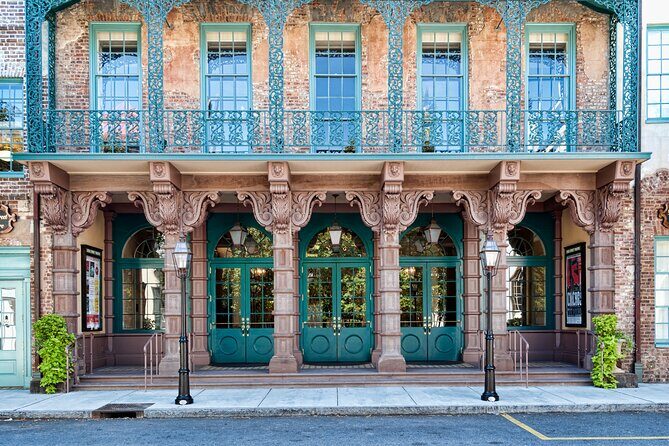
Next up is Dock Street Theater. This is a “wait, really?” kind of stop because the tour focuses on the first theatre built in North America and the colorful characters connected to its story. Charleston has a knack for mixing culture with political and social undercurrents, and this is a prime example.
The nice thing about starting here early is that it gives you a lens for later stops. You’ll start thinking about public life: where people gathered, what entertainment meant, and how institutions reflected the values of the time.
Other historical tours in Charleston





Stop 3: Pink House Gallery (One Building, a Whole Timeline)
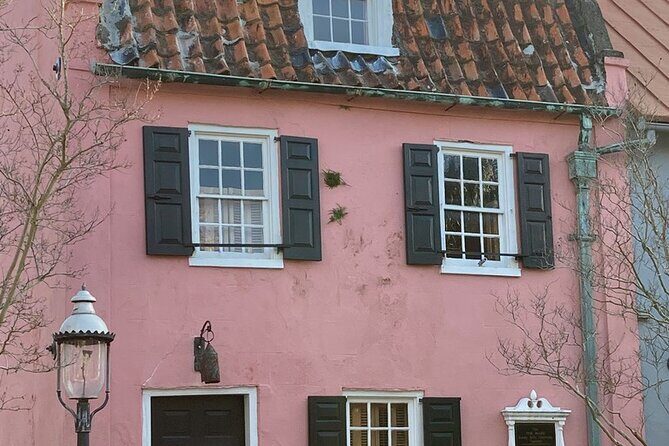
Then you’ll see the Pink House Gallery, one of the oldest buildings in Charleston dating to around 1712. This stop is short, but that’s the point: you get the big takeaway fast—how long the city’s built environment has been standing and evolving.
Buildings like this are also a reminder that Charleston wasn’t built in a single era. It grew, adapted, and re-used space over centuries. That theme keeps showing up throughout the tour.
Stop 4: Washington Square (Monuments and the Meaning Behind Them)
Washington Square is a historic square with multiple monuments. What makes it interesting on a walking tour is the way monuments turn into arguments in stone. Your guide ties them back to the period when they were created and what people wanted to emphasize.
If you like history that’s not just chronological but interpretive, this is a good stop. It’s also a good break point—about 15 minutes—so you can settle your pace and take in the layout.
Stop 5: Charleston City Hall (From Meat Market and Bank to City Hall)
Charleston City Hall is one of those buildings where you’d never guess the earlier uses unless someone explains. You’ll hear about how it evolved over time—once serving as a meat market and a bank before becoming City Hall.
That kind of history is gold because it shows how a city uses space like a living system. Buildings change roles as the needs of the community shift, and Charleston is a place where those changes are visible if you know what to look for.
Stop 6: Charleston County Courthouse (The Old South Carolina Statehouse Angle)
Then you’ll move to the Charleston County Courthouse, tied to what used to be the old South Carolina statehouse. This stop helps you understand the machinery of government—where decisions were made and how power was represented.
The “courthouse” setting also brings the Revolution-and-beyond story into focus. Even if you’re not a law-history person, this is where the tour helps you connect everyday civic structures to big national events.
Stop 7: St. Michael’s Church (Completed in 1761)
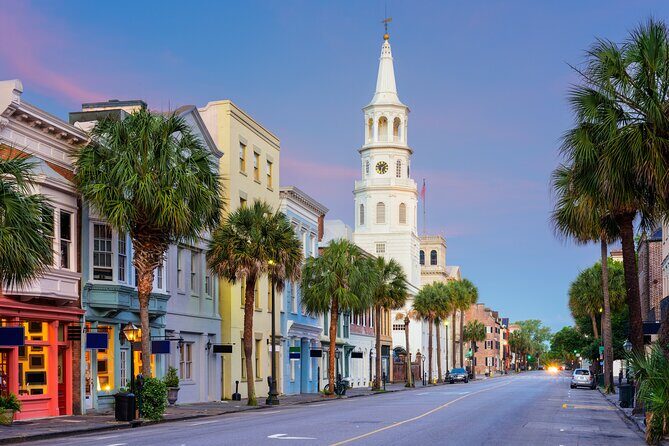
St. Michael’s Church is Charleston’s oldest church edifice, completed in 1761. This stop is special because churches in Charleston often function as more than worship spaces—they’re landmarks of community identity, social structure, and long-term continuity.
You’ll learn why this church matters in the city’s timeline, and you’ll likely start noticing the architecture language the guide references as you move into the next religious stop.
Tip for this stop: if you’re photographing, be mindful of where you stand. Keep moving when your guide signals the next leg so you don’t slow the group.
Stop 8: Heyward-Washington House (George Washington Stayed Here, 1791)
Heyward-Washington House is a standout because it’s directly tied to George Washington’s visit to Charleston in 1791. This stop’s admission isn’t included, so think of it as a “plan for entry or just enjoy the context from outside” moment.
Either way, the Washington connection turns Charleston’s Revolutionary-era role into something tangible. It’s not just that Washington mattered—it’s that this city mattered too.
Stop 9: Old Exchange & Provost Dungeon (British Public Building and Constitution Ratification)
Old Exchange & Provost Dungeon is where the tour sharpens into national significance. You’ll see the last public building built by the British in North America and where the Constitution was ratified in 1788.
This is one of the most serious stops on the walk, and it helps explain why Charleston’s history isn’t just local. It’s tied to the building blocks of the United States.
Because admission isn’t included here, you’ll have to decide if you want to go deeper inside. The tour can still make the outside context feel complete, but if you love primary-site details, you may want to budget extra time and entry cost.
Stop 10: French Huguenot Church (Gothic Revival, First of Its Kind in the Tour)
The French Huguenot Church brings an international thread to the story. You’ll learn about the French Huguenots in Charleston and the first church built in the Gothic Revival style.
This is a great contrast stop after the civic and Revolutionary material. It shifts the focus toward immigrant community impact and how culture shows up in architecture.
If you’re into religious history or architectural change, this is where the tour gives you something you might not get from a quick walk-only itinerary.
Stop 11: French Quarter (Charm With a Purpose)
Then you step into the French Quarter. You’ll take in the beauty and charm, but the guide doesn’t treat it as a postcard stop only. You’ll connect what you see to the earlier stories you heard—community roots, institutional change, and how Charleston’s districts developed.
This is also a morale stop. After the denser civic-history moments, it’s nice to slow down and enjoy the streets for a bit. You’ll get around 15 minutes here, which is enough time to reset your brain and spot details you’d otherwise miss.
Stop 12: Hibernian Hall (Disunion Seeds and Greek Revival Connections)
Hibernian Hall is another “listen closely” stop because the tour ties it to seeds of disunion and to America’s connection to Greek Revival architecture. Admission isn’t included, so same idea: you can enjoy the story you’re given and decide what level of site access you want.
Greek Revival shows up in lots of American civic imagery, usually tied to ideas about democracy and classic ideals. Here, the lesson gets more complicated because the story is about division and political fracture, not just a pretty style.
Stop 13: Fort Sumter National Monument (No Boat Ride, Battery View Instead)
Finally, you’ll reach the harbor view of Fort Sumter National Monument. The tour makes it clear: you don’t go out to the fort. Instead, you take a look from the Battery on Charleston Harbor.
You’ll learn about where the first shots of the Civil War were fired, and the framing from the Battery is practical. It gives you the big event connection without requiring extra time on a ferry or dealing with Fort access logistics.
This ending is smart because you’re finishing near Rainbow Row. You can carry the Civil War context with you into the rest of your day.
Who This Tour Suits Best (And Who Might Prefer Something Else)
You’ll likely love this tour if you:
- like history that connects buildings to real choices and conflict
- care about architecture details and how styles reflect society
- enjoy asking questions and getting answers that don’t feel generic
It’s also a solid fit for first-timers in Charleston who want their bearings fast. In a few hours, you’ll walk through multiple eras and end where lots of people naturally like to spend more time.
You might choose a different style if you want a light, shopping-and-photo focus with minimal talking, or if you dislike walking schedules that are packed into a short time window.
Practical Tips so Your 3 Hours Feel Easy
First, wear shoes you’re comfortable in for several hours of walking. The group stays together and the stops are frequent, so quick shoe discomfort can snowball.
Second, bring water or plan to buy it before you start. Bottled water isn’t included, and Charleston weather can turn fast—hot mornings become humid afternoons, even when forecasts look tame.
Third, arrive ready to participate. This is designed for interaction. If you ask even one or two questions, the value jumps because you’re getting personal explanations tied to what you notice.
Fourth, for best results, do this early in your visit. You’ll return to streets and buildings later with context in your head, which makes the rest of Charleston feel less like you’re repeating yourself.
Also, note that this tour is often booked ahead (on average about 22 days). If you’re traveling during peak season, grab a time that fits your schedule rather than hoping for flexibility.
Should You Book This Charleston History Walk?
If you want a Charleston tour that treats history as more than facts on a sidewalk, I’d book it. Dr. Eric Lager’s combination of formal training and street-ready storytelling is the whole point here, and the small group cap makes it more than a standard walking tour.
Choose this one especially if you want to understand why Charleston’s buildings look the way they do, how different communities shaped the city, and how the Revolutionary and Civil War periods connect to specific places you can see. It’s one of those experiences that makes the rest of your trip click.
If you’d like, tell me your travel month and what you care about most—architecture, Civil War sites, churches, or early Colonial life—and I can suggest what to pair with this walk the same day.
FAQ
How long is the Charleston historical walking tour?
It runs about 3 hours.
How many people are in the group?
The tour has a maximum of 12 travelers, keeping it intimate.
Is the tour offered in English?
Yes, it’s offered in English.
What kind of tickets or entry fees should I expect?
Fees and taxes are included. Some stops are marked as admission free, while other stops have admission tickets not included, such as Heyward-Washington House, Old Exchange & Provost Dungeon, and Hibernian Hall.
Do you visit Fort Sumter itself?
No. You view Fort Sumter from the Battery on Charleston Harbor, so you do not go out to the fort.
What if the weather is bad or I need to cancel?
The tour requires good weather. If it’s canceled due to poor weather, you’ll be offered a different date or a full refund. You can cancel for a full refund up to 24 hours in advance.