REVIEW · CHARLESTON
Charleston History: Battery, Rainbow Row, St. Michael Church
Book on GetYourGuide →Operated by Tours by Foot · Bookable on GetYourGuide
Pastel houses, harbor guns, and church doors. This 2-hour walk by Eric strings together Charleston’s big eras from colonial days to Civil War and modern preservation, with stops that are actually fun to look at—especially Rainbow Row and the Battery.
I especially like Eric’s storytelling, because he connects the sites to real moments and makes you feel like you’re walking through chapters, not just posing for photos. I also like the tour’s focus on places you can sometimes enter in real life, with working churches and theaters where doors may be open.
The one catch is access: building entrances are subject to availability. So even though you’ll see a lot up close, you should be ready for some stops to be outside-only if doors aren’t available that day, and plan for a real walking route with cobblestones.
In This Review
- Quick hits before you go
- A 2-hour Charleston history walk with Eric as your guide
- Starting inside Washington Square Park (98 Meeting Street)
- Rainbow Row and the French Quarter on foot
- Four Corners of Law, working churches, and the lore thread
- Old Exchange & Provost and Dock Street Theater entrances
- The Battery, Fort Sumter views from afar, and Civil War context
- Old Slave Mart Museum and Phillip Simmons ironwork details
- Price, pace, and who this tour fits best
- Should you book this Charleston History walking tour?
- FAQ
- How long is the tour?
- Where does the tour meet?
- What does the $39 price include?
- Are building entrances guaranteed?
- What are the main stops on the tour?
- Is free cancellation or pay-later available?
Quick hits before you go
- Eric’s local voice ties colonial times, the Civil War, and modern preservation into one clean story line
- Rainbow Row delivers pastel facades that are easy to admire and photograph without rushing
- The Battery + Fort Sumter views from afar connect harbor scenery to the first shots of the Civil War
- Old Exchange & Provost is the oldest surviving public building in South Carolina
- Old Slave Mart Museum and Phillip Simmons ironwork add weight and craft, not just pretty streets
A 2-hour Charleston history walk with Eric as your guide
This tour is built for people who want the city’s center, not just a checklist. You meet inside Washington Square Park and then move at a pace that lets you actually register what you’re seeing—colorful homes, stately mansions, and stone-and-brick churches along the way.
You’re also with a professional licensed guide, and the local knowledge matters here. Eric is the kind of guide who keeps making connections, so one stop helps you understand the next one. That’s how Charleston starts to click: you see architecture, then you learn what those walls and streets were for.
At $39 per person for about 2 hours, the value comes from two things you don’t get on self-guided walking: guidance that keeps you oriented, and the chance to go inside 1–3 historic buildings when openings are available. If you only care about exterior views, it can feel like you’d get similar photos on your own—but once the stories land, the walking starts paying off.
Other historical tours in Charleston



Starting inside Washington Square Park (98 Meeting Street)
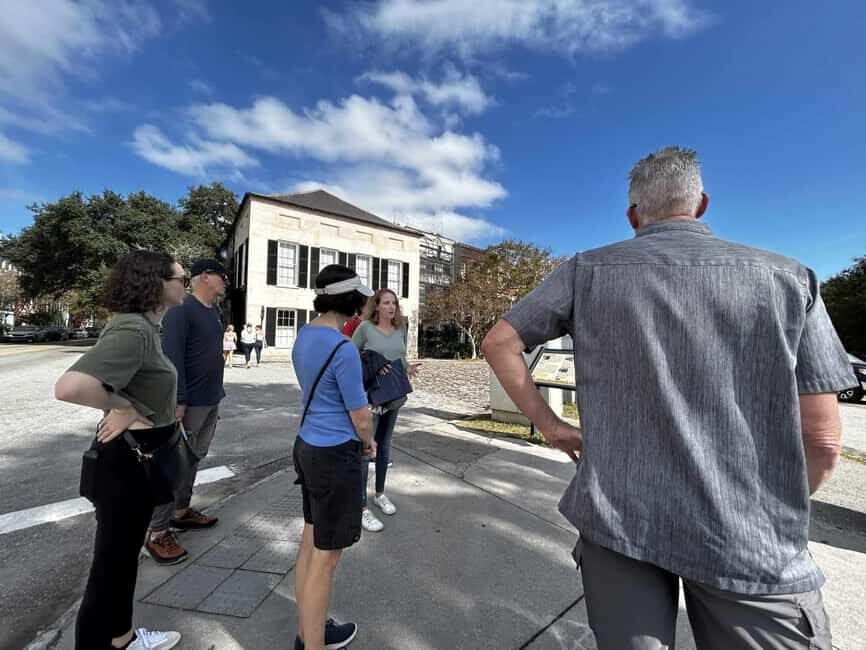
Your tour starts inside Washington Square Park at 98 Meeting Street, with the guide posted next to the George Washington statue. That detail helps a lot because the historic district has multiple tour groups, and you want a clear visual target.
The park itself sets the tone. You get a calm moment first—live oaks, statues, and plaques—before the pace shifts back into the busy, historic street grid. It’s a smart opener because it gives you orientation, so later stops feel connected instead of random.
From there, you’ll walk through Charleston’s historic center, crossing cobblestone streets and cutting through back alleys. Those shortcuts can be the difference between a slow day and a productive one, especially if you only have a short time in town.
And since you may see a few graveyards along the route, starting in a park helps you mentally shift gears: this isn’t only about beauty. It’s about the layers—good, complicated, and still part of the city today.
Rainbow Row and the French Quarter on foot
Rainbow Row is the kind of stop that can look like a postcard—until you hear the context. The homes are pastel-colored historic residences, and they’re undeniably photogenic, but the tour helps you see them as part of a larger urban story.
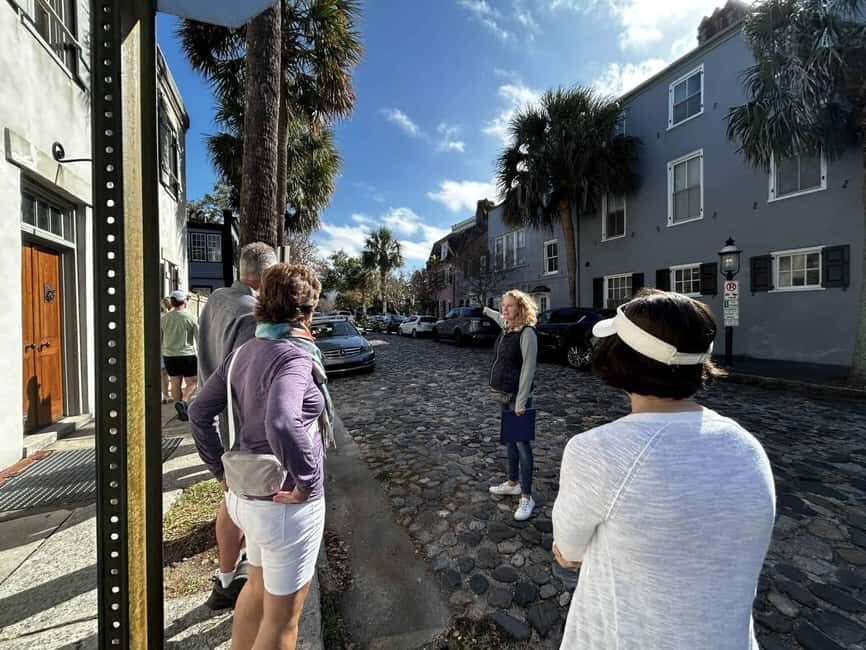
You’ll also spend time in the French Quarter area, where the charm is in the details. Think cobblestones, colorful buildings, and tight streets that make Charleston feel lived-in. Walking here matters because you notice small shifts in scale and design that a car window hides.
One of my favorite parts of routes like this is that you’re not just staring straight ahead. The back-alleys and side streets force you to slow down just enough to understand how the district is laid out—and why certain corners became important.
If you’re hoping for a purely scenic walk, you’ll get it. If you want the photos, but also want meaning behind them, this is where the guide’s connecting habit starts to pay off.
Four Corners of Law, working churches, and the lore thread
Charleston has places where rules, power, and religion all intersect. One of the standout moments is the Four Corners of Law, described as an intersection where local, state, federal, and church laws meet. Even if you don’t nerd out on legal history, it helps you understand why the city’s layout and institutions mattered.
Then you hit the church stops—places that are still active today. St. Michael Church is one of the key named sites, and the tour also includes St. Phillip’s Episcopal Church and the French Huguenot Church. You might be able to enter some buildings, but entrances are subject to availability, because they’re functioning congregations.
This matters more than it sounds. When doors are open, you’re not looking at history behind glass. You’re walking into the same kinds of spaces that locals have used across generations. When doors aren’t open, the tour still works because the exterior architecture and the guide’s stories hold the experience together.
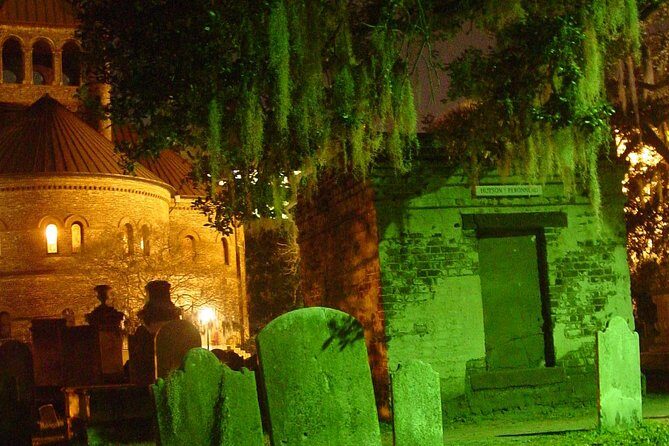
One more theme runs through the walk: haunted history and legends. The tour includes a local historian who knows the lore, so you’ll hear ghost stories and eerie anecdotes alongside the factual spine of the tour. It’s the kind of contrast Charleston does well—mood alongside meaning.
Old Exchange & Provost and Dock Street Theater entrances
If you want one stop that feels like stepping into a different time period, it’s the Old Exchange & Provost. It’s highlighted as the oldest surviving public building in South Carolina, which is a huge deal for anyone who likes old structures that are still physically present.
The tour positions this building as a key American-history stop. Even without going deep into dates, just seeing how the building holds its role gives you something tangible to connect with the stories you’ve been hearing.
Another special inclusion is Dock Street Theater (also referred to as Dock Theatre). It’s described as America’s first building designed for theater performances, and the tour tries to get you inside when it’s open. That’s a rare kind of stop on a walking itinerary—because theaters aren’t usually easy to access from the sidewalk.
The practical takeaway: you may only enter a few buildings total (the tour includes entrance access for 1–3 historic buildings), and those entrances depend on opening availability. So your best move is to treat interiors as a bonus, not a guaranteed right, and focus on what’s visible from outside when needed.



The Battery, Fort Sumter views from afar, and Civil War context
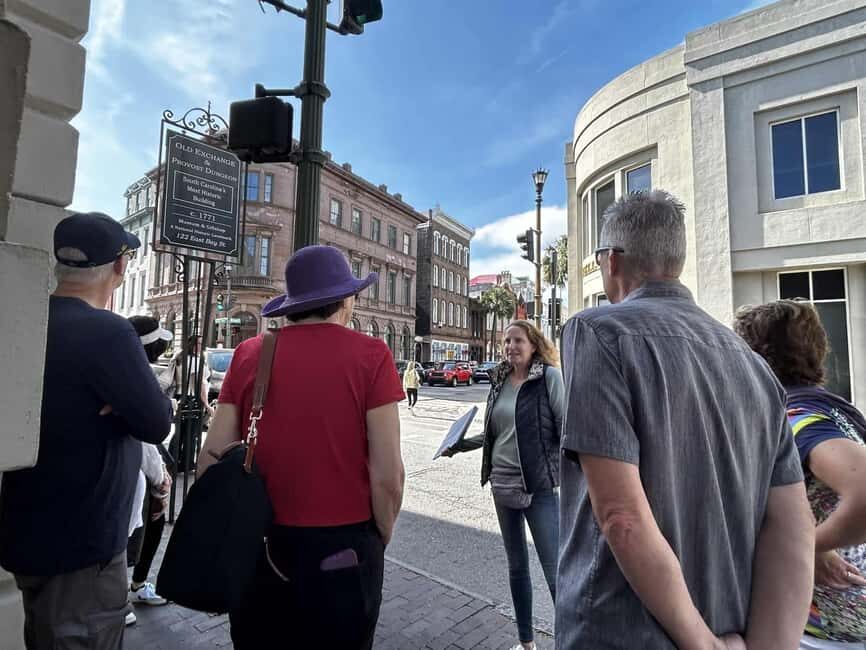
The Battery is one of those Charleston places you understand instantly: water views, historic artillery, and mansions lined along a promenade. Here, the harbor isn’t background; it becomes part of the story.
The tour also brings in the Civil War connection, including Fort Sumter from afar. You won’t be riding out to the fort on this walk, but you’ll learn about why the site mattered as the first shots of the Civil War were fired. Seeing the harbor first makes that context land faster than a museum lecture ever could.
It’s also where the guide’s habit of linking eras shows up again. The Battery isn’t only about warfare. It’s a scenic stretch that survived shifting chapters of American life, which is exactly the point of this kind of walking tour.
One more detail that helps: you’ll be moving on foot along the Battery area, not just stopping for one quick view. That gives you a better feel for how locals might have experienced the waterfront in different periods.
If you love big-picture history, this is the part that turns scenery into context. If you just want to relax and look, it still delivers because the views are hard to top.
Old Slave Mart Museum and Phillip Simmons ironwork details
The tour doesn’t avoid heavy history. It includes the Old Slave Mart Museum, described as a poignant reminder of a troubled past. You’ll get insight into the lives of enslaved people and their resilience, and how this shaped Charleston and the larger American narrative.
That inclusion changes the tone of the walk in the best way. Charleston can be all prettiness if you let it. This stop keeps the day honest, and it also gives you language and framing for the rest of what you’re seeing.
Then you swing to something more hands-on and craft-focused: Phillip Simmons iron work. The tour includes a chance to see some of his masterpieces up close and learn how his contribution shaped Charleston’s architectural charm. That pairing is smart because it reminds you that history isn’t only about politics and war—it’s also about what people built, repaired, and decorated over time.
If you’re traveling with someone who likes architecture but worries history walks can turn into lectures, this is your compromise. The museum brings weight, and the ironwork gives visual satisfaction.
And if you’re a photographer, these are also practical stops. The ironwork and church architecture tend to reward slow, close viewing.
Price, pace, and who this tour fits best
Let’s talk value honestly. $39 for a 2-hour guided walking tour is reasonable for a route that includes a professional licensed guide and potential entrances to 1–3 historic buildings. The entrance part is where you get the most “ticket-like” value—you’re not just walking past doors.
The pace is designed for a small-group experience, with stops that let you ask questions. The cobblestones and back-alleys mean you should wear comfortable shoes. This is not a sit-and-scroll kind of tour.
Who will enjoy it most:
- First-timers in Charleston who want a strong overview without a full-day commitment
- People who like architecture and want the stories tied to what they see
- Anyone who wants both lighter charm (Rainbow Row, Battery views) and serious stops (Old Slave Mart Museum)
If you already know Charleston deeply and hate group pacing, you might find the walk a bit general. If you’re short on time, though, this format is efficient in a good way—you cover the center and leave with a clearer map of how the city connects.
Should you book this Charleston History walking tour?
I’d book it if you want Charleston’s main highlights—Rainbow Row, the Battery, and St. Michael Church—with a local guide who connects the dots and keeps the day moving. The price is fair for what you get, especially since there’s a real chance to enter historic buildings, not just look from the sidewalk.
I’d think twice if you’re only interested in guaranteed indoor access, because entrances depend on availability at working churches and theaters. I’d also plan your expectations if you hate walking: cobblestones are part of the deal.
If you’re here for a first taste of Charleston that mixes beauty, real institutions, and the harder parts of the story, this is a solid choice.
FAQ
How long is the tour?
The tour lasts about 2 hours.
Where does the tour meet?
It meets inside Washington Square Park at 98 Meeting Street, and you should look for your guide next to the George Washington statue.
What does the $39 price include?
You get a professional, licensed tour guide, a 2-hour walking tour, and entrance inside 1–3 historic buildings, depending on availability.
Are building entrances guaranteed?
No. Entrances are subject to availability because some stops are working churches and theaters.
What are the main stops on the tour?
You’ll see sites including Washington Square, Rainbow Row, the Battery, and Fort Sumter from afar, along with other historic locations such as Old Exchange & Provost, St. Michael Church (when open), and Dock Street Theater (when open).
Is free cancellation or pay-later available?
Yes. You can cancel up to 24 hours in advance for a full refund, and you can reserve now & pay later.