REVIEW · CHARLESTON
Charleston History Tour – Small Groups Only – History & Alleyways
Book on Viator →Operated by Tour Charleston With Adam · Bookable on Viator
Follow Charleston’s stories through its alleys and landmarks. This small-group walking tour with guide Adam links major sights to the people and power behind them, from early pirate tales to Revolutionary-era clues. You’ll spend about two hours on foot, with history storytelling built into the route.
I love the 10-person max setup. It stays conversational, so you can ask questions without shouting, and the pace feels practical for a city walk. I also like the mix of famous stops and side streets, plus the added use of photos to make the past easier to picture.
One thing to plan for: this is weather-dependent and it involves solid walking on uneven streets. You’ll want comfy shoes and a rain plan, because Charleston rain is common and the tour is designed to run outdoors.
In This Review
- Key things I’d put on your radar
- A 10-person walk that makes Charleston history feel talkable
- Start at 151 Meeting St, end by the harbor’s Pineapple Fountain
- Stop 1: The Powder Magazine (1713) and pirate-era Charleston
- Stop 2: The French Quarter walk and the French Huguenot Church
- Stop 3: Dock Street Theatre (1736), the first in the Colonies
- Stop 4: Chalmers Street and the Pink House on cobblestone history
- Stop 5: Old Slave Mart Museum area—what slavery did to Charleston
- Stop 6–8: Broad Street commerce, Rainbow Row, and the Exchange Building (1771)
- Stop 9: Waterfront Park and Harbor views to close the loop
- Value check: why $28 can feel like a bargain here
- Who this tour is perfect for (and who might want something else)
- Should you book this Charleston history walk?
- FAQ
- How long is the Charleston History Tour?
- How many people are in a group?
- Where does the tour start and end?
- What language is the tour offered in?
- Do I need to pay for admission at the stops?
- What should I bring for the walk?
- Is the tour suitable for everyone physically?
- Is there an indoor stop during the tour?
- Is the tour affected by weather?
- What is the cancellation policy?
Key things I’d put on your radar
- 10 travelers max keeps the tour easy to hear and more personal
- Landmark-to-landmark storytelling covers commerce, religion, slavery, and revolution
- Alleyways and lesser-seen streets help you understand the city shape, not just the postcard spots
- A fast-but-manageable pace so you cover a lot without feeling rushed off
- A guide who answers questions instead of sticking only to a script
- Practical photo support that helps you connect details to what you see
A 10-person walk that makes Charleston history feel talkable
The big reason this tour works is its size. With a maximum of 10 travelers, you don’t get the factory-line feeling that larger tours can bring. Adam runs the group like a small circle on foot: you can ask questions, and his answers usually lead to a better story for everyone.
I also like how he mixes facts with humor. It’s not jokes for attention—it’s the kind of light touch that keeps heavier topics from turning into a lecture. You’ll hear stories tied to the buildings you pass, and that means the tour feels more like putting together a puzzle than memorizing dates.
Add in that the route includes narrow lanes, not only wide sidewalks. You’ll get a sense of how Charleston’s layout shapes daily life—where people moved, where commerce clustered, and how neighborhoods connected.
Other historical tours in Charleston


Start at 151 Meeting St, end by the harbor’s Pineapple Fountain

The tour starts at 151 Meeting St and ends on the waterfront near Waterfront Park, close to the Pineapple Fountain. That ending matters. You get a little payoff view—Charleston Harbor air, open space, and a natural place to wrap up your questions.
You’ll also be glad it runs as a simple walking plan. The duration is listed as about 2 hours, and the experience is designed for a moderate fitness level. It’s not a slow stroll where you stop every minute. It’s more like a steady, story-led walk where each stop gives you context and then you move.
Practical notes you should take seriously:
- Bring water—you’ll be outside for the better part of the tour.
- Bug spray helps, especially in warmer months.
- Bring an umbrella or rain coat. Rain is common here, and the tour depends on decent weather.
- You’ll want comfortable walking shoes for cobblestones and uneven surfaces.
Stop 1: The Powder Magazine (1713) and pirate-era Charleston
You begin with a landmark that sets the tone: the Powder Magazine, built in 1713 and described as the oldest public building of its kind in South Carolina. Even from the outside, it’s the sort of stop that makes you ask, Why here? Why this building?
Then Adam connects the site to a swashbuckling theme—pirates. That angle isn’t random. Charleston’s coastal position made it part of wider Atlantic stories, where trade, danger, and opportunists all moved together. If you’ve only seen the city as pretty streets and historic façades, this first stop helps you see the city as a working port with risk built in.
Because the stop is quick, the goal isn’t deep museum time. It’s a strong “chapter opener” so the rest of your walk has a backbone.
Stop 2: The French Quarter walk and the French Huguenot Church
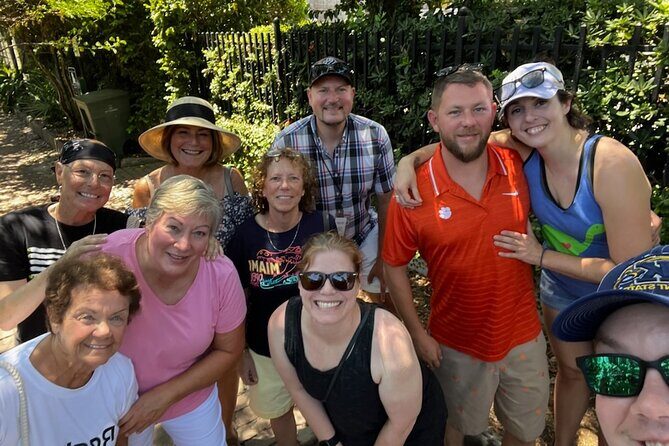
Next you take a walk into the French Quarter, then pass by the French Huguenot Church. This is where you start noticing Charleston as a patchwork of communities, not a single uniform story.
Even if you’re not an architecture specialist, church exteriors and street context teach you a lot. You’ll see how the neighborhood feels different from the busiest blocks—more intimate, more layered, and easier to imagine as people moved between faith, work, and daily life.
This is also a good pause for photos. The route at this stage helps you reset your bearings so the next stops feel easier to track on foot.
Stop 3: Dock Street Theatre (1736), the first in the Colonies
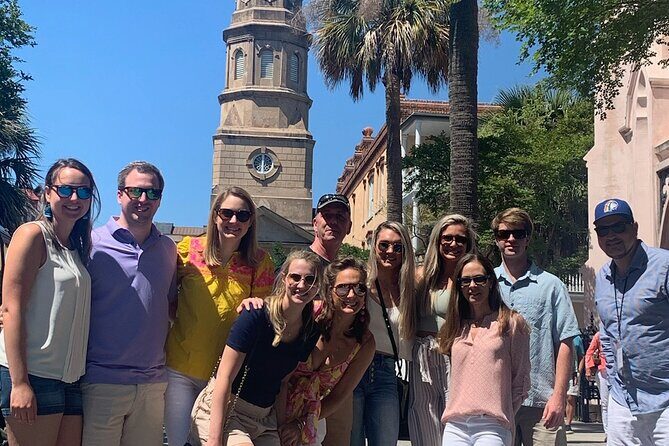
At Dock Street Theater, you’ll hear how the building was constructed in 1736 and is considered the first theatre in the Colonies. Theater buildings are useful clues in history walks. They show who had leisure time, who funded culture, and what kinds of gatherings shaped community life.
One benefit from this stop: Adam’s approach often includes a chance to go inside a historic building during the tour. If that’s offered on your date, it can change how you experience the story—suddenly the place doesn’t feel like a shell. It feels like it held audiences.
Drawback to consider here: this is still a walking tour with a tight schedule. You’ll get enough time to understand the importance, but it’s not set up like a long theater tour with hours of exhibits.



Stop 4: Chalmers Street and the Pink House on cobblestone history
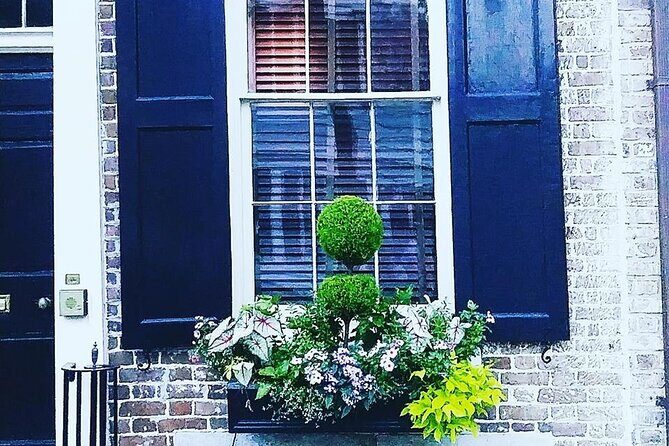
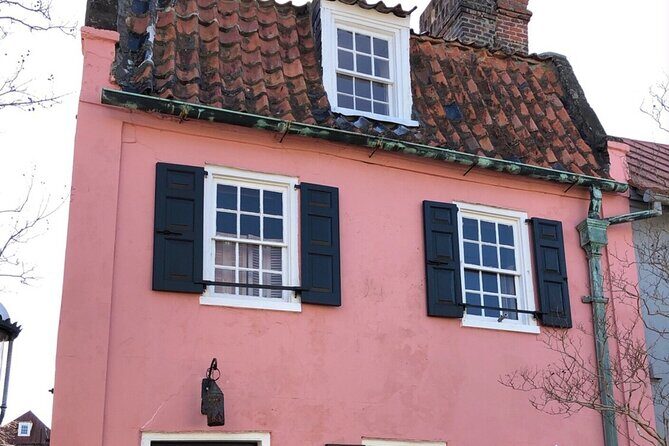
Chalmers Street is part of the charm—and Adam uses that charm for context. You’ll talk about the Pink House, described as one of Charleston’s oldest buildings, and you’ll be walking along cobblestone streets lined with palmetto trees and crepe myrtle trees.
This stop is valuable because it helps you see why people kept choosing Charleston in the first place. The architecture isn’t just decoration. It’s built into the city’s identity, and it tells you what materials, wealth, and local craftsmanship looked like over time.
Also, it’s a strong stretch for quick photos. If you want pictures that don’t feel like everyone else’s, this is the part of the walk that often surprises people.
Stop 5: Old Slave Mart Museum area—what slavery did to Charleston
The emotional weight of the tour rises at the Old Slave Mart Museum. You’ll stand outside and discuss the massive impact slavery had on the city and on the people who lived here.
This isn’t a “walk past” kind of stop where the guide avoids the topic. Adam’s style leans toward honest storytelling—covering the hard parts without turning away. For many visitors, this is one of the most important moments of the route because it connects physical locations to human consequences.
A practical consideration: since you’re outside, you won’t get an indoor museum experience unless the tour format on your date provides extra time. But even as an exterior discussion, it gives you context you’ll carry into any later museum visit.
Stop 6–8: Broad Street commerce, Rainbow Row, and the Exchange Building (1771)
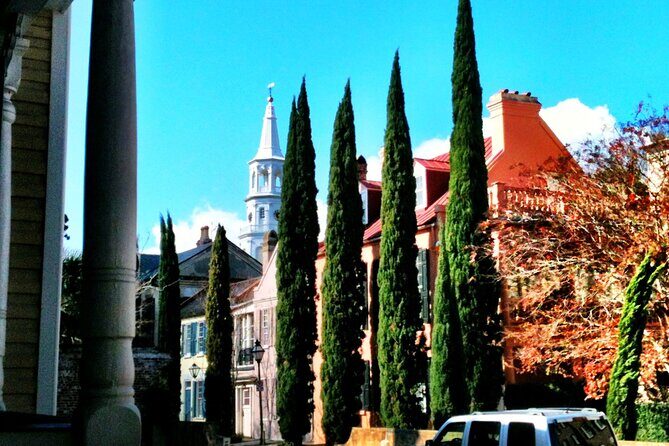
After Chalmers Street, you move into the city’s power corridors.
Broad Street is next, described as laid out in 1680 and the center of commerce in Charleston—then and still in spirit. This is a turning point in the story from community and culture back to trade, money, and influence. It helps you understand why the city’s layout makes sense: commerce pulls people and wealth into a few key lines, and those lines shape everything else.
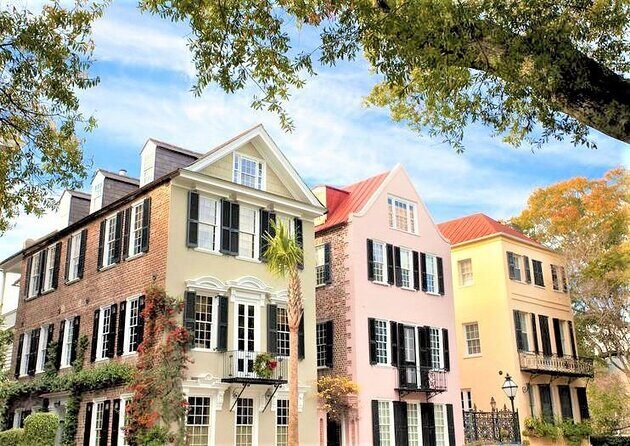
Then you pass Rainbow Row, the famous row of colorful homes. Adam uses it to remind you that beauty in Charleston is tied to history, not just aesthetics. You’ll get a few quick framing ideas so you can look at the buildings and imagine what life around them would have meant.
Finally, you reach the Exchange Building, dating to 1771, where you talk about Charleston’s role in the American Revolution. This kind of stop works best if you pay attention to the street-level clues. Exchange buildings weren’t abstract symbols; they were connected to negotiation, goods, and the flow of information in real time.
Stop 9: Waterfront Park and Harbor views to close the loop
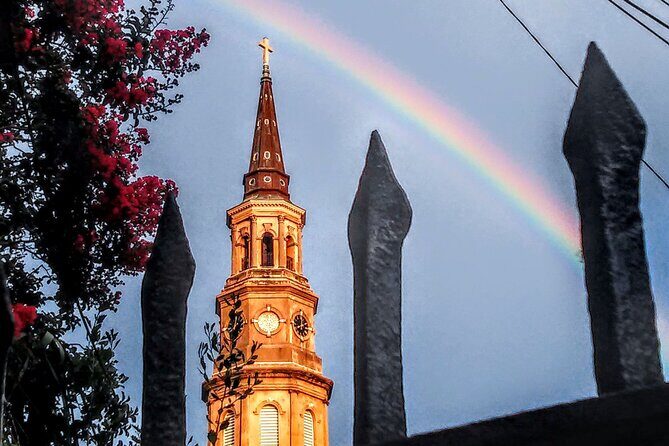
Your walk finishes at Waterfront Park, overlooking Charleston Harbor and near the Pineapple Fountain. This is a smart ending point because it gives you a visual exhale after the tight streets and historical focus.
You’ll see the harbor from a perspective that makes the earlier pirate-and-port stories feel more grounded. Even if you’re not into ship details, the view helps you remember why Charleston’s coastal position mattered so much.
If you’d like to keep going afterward, this ending is also practical. It’s a logical place to pivot to a meal, a self-guided stroll, or a relaxed break before the evening.
Value check: why $28 can feel like a bargain here
At $28 per person, this tour is priced like an intro experience—but it covers a lot of ground in about 2 hours. The value isn’t just the number of stops. It’s the fact that the tour combines:
- recognizable landmarks (like Dock Street Theater, Rainbow Row, and Exchange Building),
- heavier context (the Old Slave Mart Museum area),
- and the in-between streets that help the whole city make sense.
Another value point: many stops list free admission tickets, so you’re not paying additional site fees in the middle of the walk. The real “cost” is time and your comfort with walking.
One more practical signal: the tour is commonly booked ahead (on average, about 29 days in advance). That’s often a sign that the dates fill up. If you’re set on a first-day overview of Charleston, booking sooner usually gives you more options.
Who this tour is perfect for (and who might want something else)
This is ideal if you:
- want a first visit to Charleston to feel organized fast,
- like guided context rather than doing everything solo,
- enjoy stories that connect sites to the people behind them,
- and prefer a group that stays under 10 so you can actually hear and ask.
It can also work for families. I saw multiple comments highlighting that the pace and storytelling held up even with kids in the group. Just be honest with yourself about walking time and street conditions.
If you dislike walking, or if you’re sensitive to uneven cobblestones and short outdoor segments, you might find this less comfortable than a car tour or a shorter stop-based plan. The schedule is designed for movement.
Should you book this Charleston history walk?
Yes, if your goal is an efficient, story-led introduction to Charleston with small-group access and a guide who connects the city’s landmarks to what really happened there.
Book it especially if:
- you like your history with a human voice (including humor and question time),
- you want both big-name sights and the alley-and-street texture that makes Charleston feel like a real place,
- and you’re the type who likes to leave with names, dates, and a clearer mental map.
Hold off if you’re not comfortable with about two hours of walking and you’re visiting during a period where weather is likely to disrupt outdoor plans. When the sky cooperates, this route delivers a lot of understanding for the money.
FAQ
How long is the Charleston History Tour?
The tour runs for about 2 hours (approx.).
How many people are in a group?
The tour has a maximum of 10 travelers.
Where does the tour start and end?
It starts at 151 Meeting St, Charleston, SC 29401 and ends at Waterfront Park near the Pineapple Fountain.
What language is the tour offered in?
The tour is offered in English.
Do I need to pay for admission at the stops?
The tour lists free admission tickets for the stops.
What should I bring for the walk?
Bring footwear you enjoy walking in, water, bug spray, and an umbrella or rain coat.
Is the tour suitable for everyone physically?
The tour recommends a moderate physical fitness level.
Is there an indoor stop during the tour?
The route includes Dock Street Theater, and the tour format often includes time to go inside historic buildings.
Is the tour affected by weather?
Yes. The experience requires good weather. If canceled due to poor weather, you’ll be offered a different date or a full refund.
What is the cancellation policy?
You can cancel for a full refund up to 24 hours in advance. Within 24 hours, refunds aren’t available.