REVIEW · CHARLESTON
Charleston: Savor the Flavors Upper King Street Food Tour
Book on GetYourGuide →Operated by Bulldog Tours · Bookable on GetYourGuide
Charleston has a way of making food part of the story. On this Upper King Street walking tour, you get multiple tastings in about 150 minutes, plus a local guide’s take on how Lowcountry dining developed and how locals actually eat.
I like that the lineup typically covers a wide slice of Charleston and South Carolina flavor—think tea sandwiches, deviled eggs, benne sweets, and the seafood-and-peppery comfort foods people order here. I also like that you’re not just grazing in random spots; you’re learning the customs and traditions that shape what shows up on tables in this part of the state.
One thing to consider: quality can vary by stop and by dish. One past booking flagged bland notes in a seafood soup and clams, even while praising certain other places—so come hungry, but keep expectations flexible.
In This Review
- Key Things You Should Notice Before You Go
- Upper King Street Is the Main Character Here
- What You’ll Actually Taste (And Why It Works)
- The seafood-heavy moments
- The benne and pimento cheese stops
- Dessert and the sweet finish
- How the Tour Keeps Moving (Without Feeling Rushed)
- Shoes and comfort
- How you’ll experience the neighborhood
- Stop by Stop: What Each Part Is Usually About
- Start: tea sandwiches and deviled eggs to set the tone
- Middle: benne and sweet tea for a local signature
- Second half: fried green tomatoes and classic seafood comfort
- Final bite: pimento cheese and/or dessert to close strong
- The Guide Matters More Than You Think
- Price and Value: Is $110 Worth It?
- Who This Tour Fits Best (And Who Should Skip)
- Tips to Get the Most From Your 2.5 Hours
- Should You Book This Charleston Food Tour?
- FAQ
- How long is the Charleston Savor the Flavors Upper King Street Food Tour?
- How much does the tour cost?
- What’s included in the tour?
- Is hotel pickup or drop-off included?
- Will the tour run in bad weather?
- Is the tour wheelchair accessible?
- What are the age limits?
- How many people are needed for the tour to run?
- What languages are available for the tour guide?
Key Things You Should Notice Before You Go
- 4 to 5 tastings in 150 minutes means you’ll sample enough to compare, not just nibble.
- Upper King Street is the real set: restaurants are close enough to keep the pace steady.
- Local guide stories are part of the value, not just a recap of menus.
- Lowcountry favorites show up repeatedly: seafood, pimento cheese, benne (sesame) cookies, and sweet tea.
- Rain or shine keeps your plan alive, but wear grippy shoes.
- It’s a walking tour with a leisurely pace, yet it’s still time on your feet.
Upper King Street Is the Main Character Here
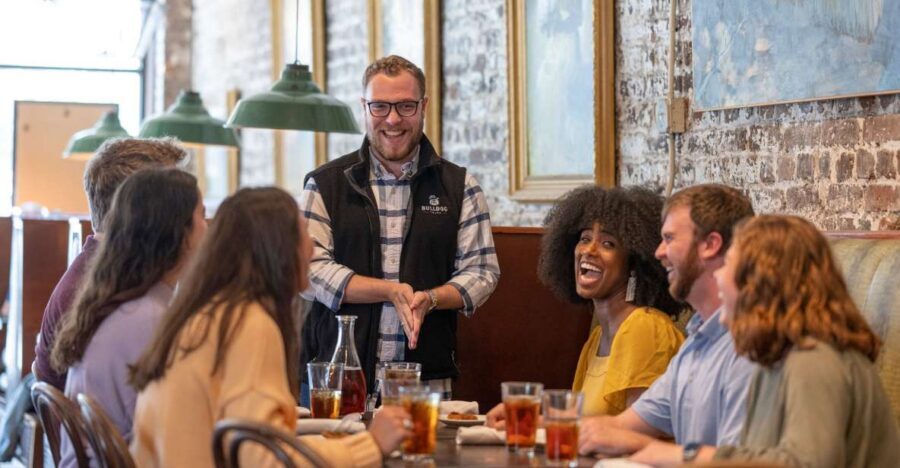
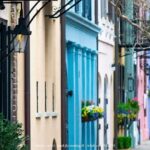
This tour is built around the famous Upper King Street district. That matters because you get the energy of Charleston without needing a car, and the walk itself becomes part of the experience: you’re moving between local restaurants while the guide ties dishes to the place.
You’ll spend about 2.5 hours walking a few blocks at a time, with breaks built into the tastings. The pace is described as leisurely, so this isn’t a marathon-through-downtown kind of outing. Still, it’s not “stop-and-stare” either. Plan to be on sidewalks for the full window.
If you want Charleston at its most social and food-focused, this is a smart format. You’ll end up learning where people line up, what they order when they’re hungry, and which classics are treated like everyday comfort—or special occasion food.
Other food & drink experiences in Charleston
What You’ll Actually Taste (And Why It Works)
The heart of the tour is 4 to 5 tastings at several restaurants. The exact dishes can vary by stop, but you should expect Lowcountry staples such as:
- tea sandwiches and deviled eggs
- benne wafers and sweet tea
- fried green tomatoes
- shrimp and grits
- she-crab soup
- pimento cheese
That mix is a big part of why this tour is good value. You’re not only sampling seafood and then moving on. You also get contrast: creamy vs. crunchy, rich vs. bright, savory vs. sweet. Even if you’re a picky eater, there’s usually something that hits.
And you’ll likely encounter the “Charleston idea” of a meal—food that feels social. In one set of feedback, a guide encouraged conversation about regional food backgrounds, which is exactly the kind of thing that makes tastings land harder. You’re tasting more than flavors; you’re hearing what those flavors mean locally.
The seafood-heavy moments
Lowcountry cuisine in Charleston often centers seafood, and the tour’s tastings reflect that. She-crab soup is a common highlight on this kind of itinerary, and shrimp-and-grits shows up as a classic comfort order. In one firsthand report, a seafood soup and clams were disappointing at a specific stop, which is the downside of restaurant variety: one place’s signature dish can be another place’s miss.
If you really care about seafood quality, ask your guide what’s most popular among locals during this season. A good guide will steer you toward the items that are landing best that day.
The benne and pimento cheese stops
Benne (sesame) sweets are a real Charleston/South Carolina identifier. If you’ve never had benne cookies or benne wafers, these tastings are worth it on their own. They’re nutty, a little buttery, and they taste like you’re eating something that belongs here.
Pimento cheese is another Charleston classic that’s easy to judge quickly: is it creamy and balanced, or does it taste flat? One booking specifically recommended one stop for its pimento, which suggests some restaurants nail the texture and seasoning more than others. On this tour, you’ll get the chance to compare rather than committing to one restaurant blindly.
Dessert and the sweet finish
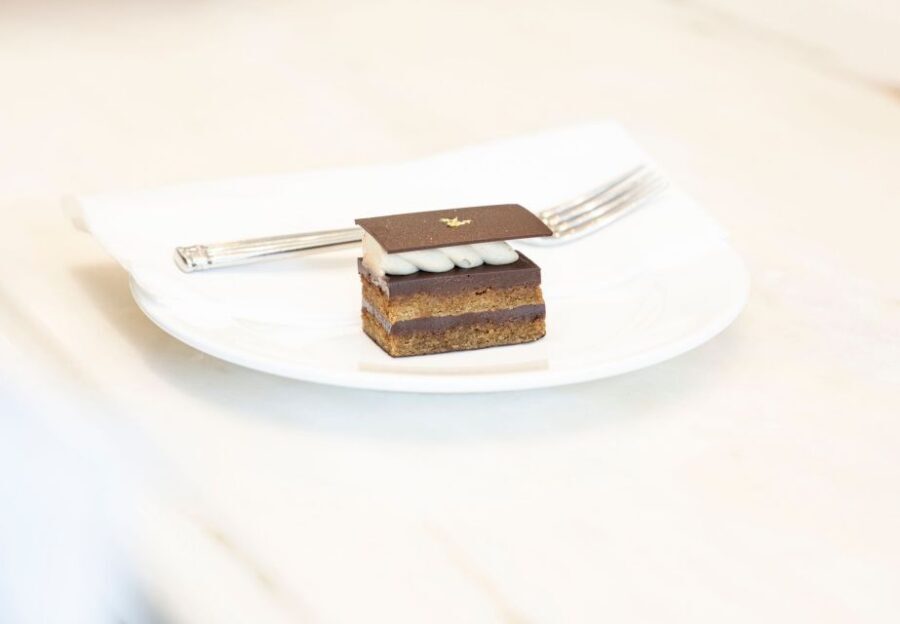
You can also end on something sweet. One guide wrap-up included opera cake in a final slice. That matters because Lowcountry dining often balances savory heaviness with sweet, comforting finishes. If you tend to skip dessert, I’d still try the final bite—you’ll understand why locals treat certain cakes as a finishing ritual.
If you're still narrowing it down, here are other tours in Charleston we've reviewed

How the Tour Keeps Moving (Without Feeling Rushed)
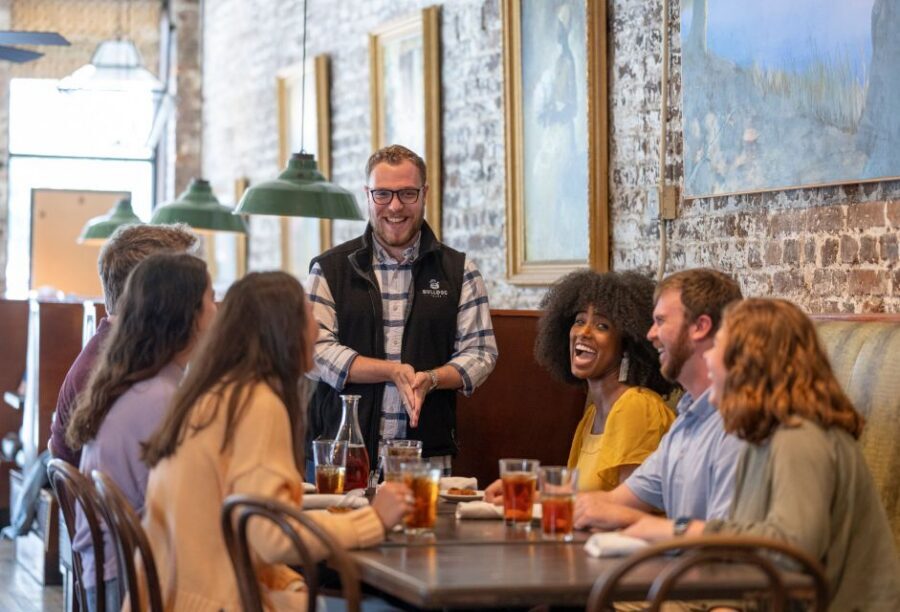
This is a walking tour, rain or shine. The pace is described as leisurely, but it’s still a schedule: you’ll be moving between locations and you’ll get food during those transitions. That’s why it’s recommended that you eat something light in the morning.
I’d follow that advice. If you show up starving, you might get so full you can’t enjoy the later tastings. If you show up too full, the tour becomes a slow slog and you’ll taste less. The sweet spot is a small breakfast—something simple—then let the tastings do the work.
Shoes and comfort
Because you’re walking blocks on uneven sidewalks, wear comfortable shoes with grip. Rain or shine means slick patches are possible, and you’ll appreciate not thinking about your feet every 30 seconds.
How you’ll experience the neighborhood
Upper King Street is famous for a reason: it’s dense with restaurants and you can feel the restaurant culture right outside your door. This tour uses that density to keep your time effective. You get multiple flavors without spending half your trip in transit.
Stop by Stop: What Each Part Is Usually About
Since specific restaurants and exact order can shift, I’ll describe the flow based on what this tour typically serves and what’s shown up in real experiences.
Start: tea sandwiches and deviled eggs to set the tone
Many Lowcountry food tours begin with the flavors of tradition: tea sandwiches and deviled eggs are a strong opening because they’re easy to eat quickly and they preview the “old-school Charleston” style. Expect creamy textures, gentle seasoning, and a comfort-food feel that isn’t trying too hard.
This part is useful because it helps you calibrate your palate early. Once you’ve had the lighter bites, the later seafood or cheese moments make more sense.
Middle: benne and sweet tea for a local signature
Then you hit a distinctly Charleston/South Carolina flavor lane. Benne sweets (wafers or cookies) and sweet tea are a natural pairing: one brings nutty richness, the other brings a classic sweetness that people here treat like a companion to meals.
This is also where you learn the customs. Lowcountry food isn’t just about ingredients; it’s about how food shows up around gatherings, porch moments, and restaurant rituals. A good guide helps you notice that without making it feel like a lecture.
Second half: fried green tomatoes and classic seafood comfort
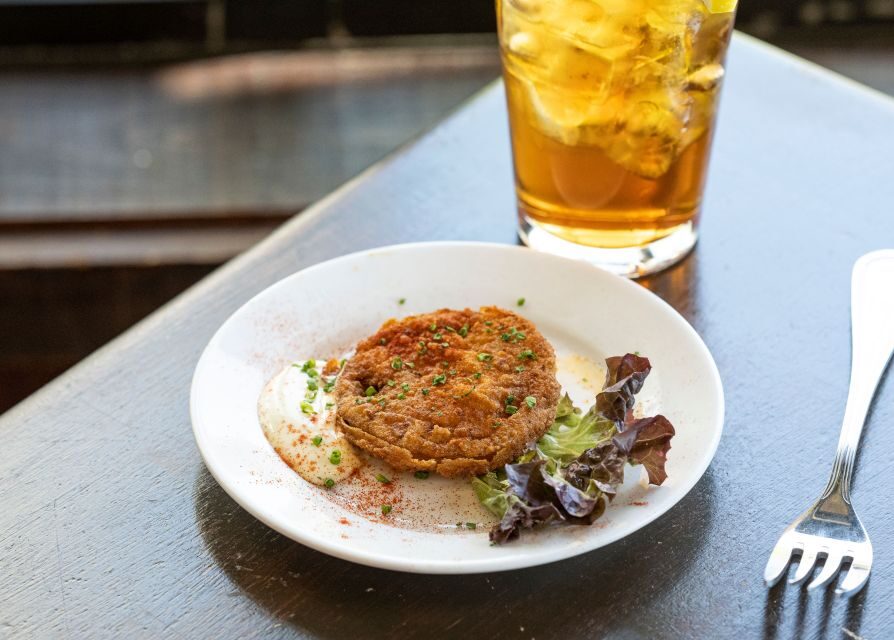
Fried green tomatoes and other savory bites tend to come when the tour ramps up toward heartier flavors. Fried green tomatoes can be tangy and crisp, and they provide a contrast to the creaminess of soup or the softness of grits.
Then come the seafood classics. Shrimp and grits is a centerpiece in this region for good reason—comforting, filling, and very “order it and don’t overthink it.” She-crab soup (when served) is another moment that tells you this cuisine isn’t shy about richness.
One caution: if you’re sensitive to blandness or if you’re comparing across places, seafood soup quality can vary by restaurant. If you care most about this category, try to focus your attention on texture and seasoning as you eat, not just the novelty of the dish.
Final bite: pimento cheese and/or dessert to close strong
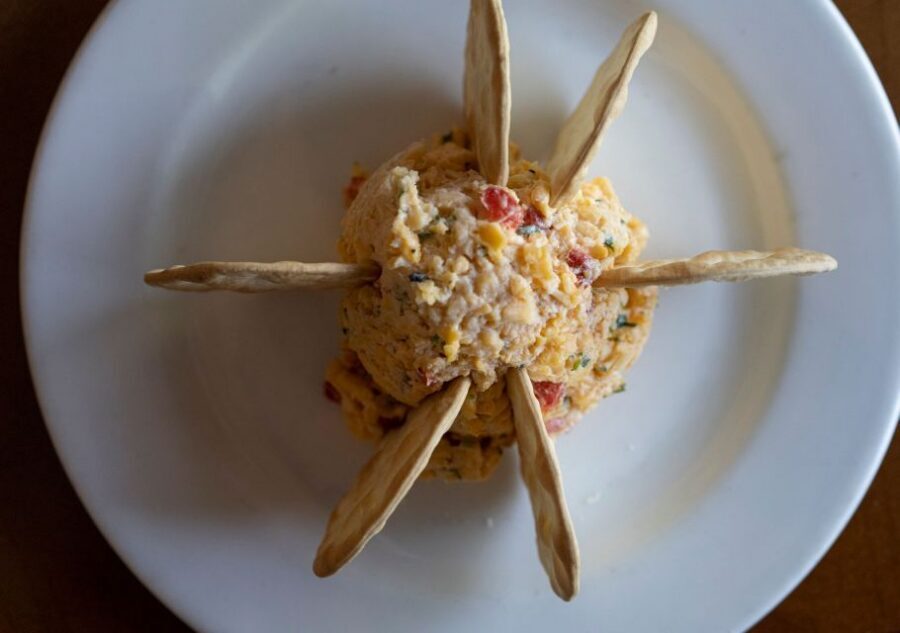
Many tours end with pimento cheese and a final sweet finish. Pimento cheese gives you that punchy, tangy, creamy flavor that Charleston treats like it belongs everywhere—sandwiches, crackers, and party tables.
Then, if opera cake or another dessert shows up, it usually lands as the “we finished the story” moment. That’s a nice way to end a tour where you’ve sampled both savory and sweet staples.
The Guide Matters More Than You Think
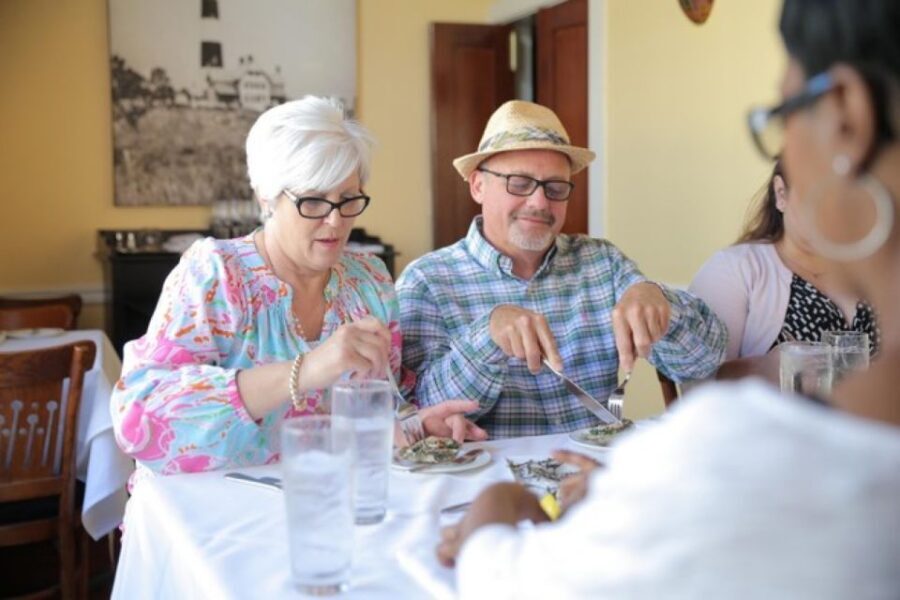
This is the part that can make or break your experience. When the guide is great, the tour feels like a conversation and a tasting at the same time. In feedback, guides such as Nancy and Fran were singled out for being interesting, friendly, and strong at connecting food to regional stories.
And that’s more than personality. A guide who knows the local patterns can help you understand why certain dishes are treated like standards. They can also steer you toward the best portions and explain what to watch for as you taste.
The downside? If you get a guide who isn’t a strong storyteller—or if something goes wrong with dietary needs—you’ll feel it fast. One reported issue involved an allergy request not being handled as expected, which is a reminder to be proactive and clear when you book and when you arrive.
Price and Value: Is $110 Worth It?
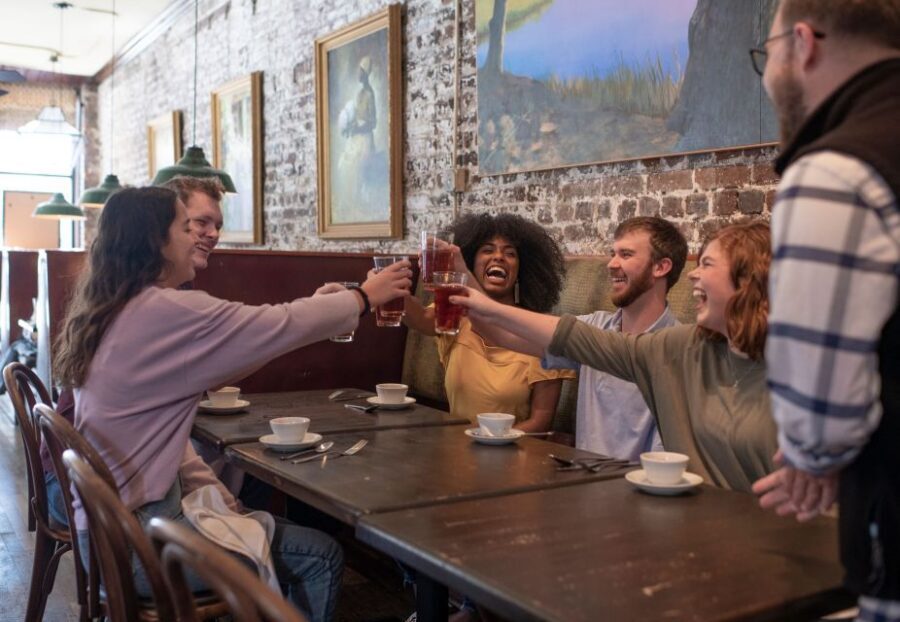
For $110 per person, you’re paying for a short walking tour plus 4 to 5 tastings and a live English guide. That’s not cheap, but it’s also not just paying for food. You’re paying for the structure: multiple restaurants, a guide’s context, and the convenience of tasting across the Upper King Street cluster.
Where the value shows up for me:
- You’re comparing dishes without committing to full meals at multiple spots.
- You’re learning why these items matter in Charleston dining traditions.
- The tasting range covers both classics and signature regional items like benne and pimento cheese.
Where you might question the value:
- If a stop serves a dish you don’t love, you can’t undo it once you’ve spent the time walking there.
- If you’re expecting a single “best dish” outcome every time, the restaurant-to-restaurant variation can be a reality.
My practical take: if you like food and want a guided sampler rather than a DIY crawl, this price can feel fair. If you only care about one or two specific foods, you might be better off picking a couple of restaurants and skipping the tour—unless the guide’s context is a must-have for you.
Who This Tour Fits Best (And Who Should Skip)
This tour is not recommended for children under 14, and children under 6 aren’t permitted. It also isn’t wheelchair accessible. If you need step-free access or extra mobility support, you’ll want a different plan.
It suits best if you:
- like trying multiple Charleston staples in one go
- enjoy walking through a well-known district
- want a local guide to explain dining customs and food history
It may be less ideal if you:
- have strict dietary allergies and need high confidence in handling
- hate walking outdoors even at a leisurely pace
- want a fully customized menu (this tour centers on pre-set tastings)
If you do have allergy concerns, don’t assume things will be perfect just because you mentioned them once. You’ll want to communicate clearly during booking and again on the day, and be ready to adapt if a dish can’t be served as expected.
Tips to Get the Most From Your 2.5 Hours
A few practical moves help your experience feel smoother:
- Eat something light beforehand, so you can taste everything later.
- Wear comfortable shoes with grip for rain or shine.
- Bring a water bottle or plan to sip between tastings if you tend to get thirsty while walking.
- If there’s a dish you’re curious about most—like she-crab soup or pimento cheese—ask the guide what to pay attention to in that course.
Also, keep your mindset flexible. This is a restaurant sampler across multiple stops. One dish can miss while another shines.
Should You Book This Charleston Food Tour?
If your ideal Charleston day includes a guided food walk with multiple tastings, learning the local dining customs, and spending time in the Upper King Street restaurant zone, this tour is a strong bet. The best versions of this experience hinge on the guide, and when guides like Nancy or Fran are at the helm, the tour can feel fun, social, and informative.
I’d book it if you:
- want a structured way to try Lowcountry classics
- like comparing flavors across several restaurants
- don’t mind that restaurant quality can vary stop to stop
I’d think twice if:
- you’re highly sensitive to how seafood soups or fried seafood are seasoned
- you have complex allergies and need very dependable substitutions
- you want a fully accessible, minimal-walking outing
If that all sounds like you, grab a spot and plan your morning accordingly. You’ll get a useful snapshot of Charleston eating habits in one tight, 2.5-hour stretch.
FAQ
How long is the Charleston Savor the Flavors Upper King Street Food Tour?
The tour duration is 150 minutes (about 2.5 hours).
How much does the tour cost?
It costs $110 per person.
What’s included in the tour?
You get a live guide and 4 to 5 food tastings during the 2.5-hour walking tour.
Is hotel pickup or drop-off included?
No, hotel pickup and drop-off are not included.
Will the tour run in bad weather?
Yes. The tour operates rain or shine.
Is the tour wheelchair accessible?
No, it is not wheelchair accessible.
What are the age limits?
The tour is not recommended for children under 14. Children under 6 years old are not permitted.
How many people are needed for the tour to run?
The tour requires a minimum of 2 people to run.
What languages are available for the tour guide?
The tour guide provides the tour in English.