REVIEW · CHARLESTON
Charleston walking tour with a Citadel history professor
Book on GetYourGuide →Operated by Charleston History Walk, Eric Lager PhD · Bookable on GetYourGuide
Charleston history hides in plain sight. This walk, led by Citadel professor Eric Lager, turns ordinary streets into a story you can actually follow. I especially loved the small group feel and the way Eric tells the past like it’s happening again, not just recited dates. One consideration: this tour is not suitable for wheelchair users.
Eric’s approach makes Charleston’s evolution—from the city’s 1670 founding to the Civil War era—feel connected, not like separate chapters. You’ll move through the historic district at an easy walking pace, with stops that range from old alleys and graveyards to well-known landmarks like the Dock Street Theater and the French Huguenot Church. Wear comfortable shoes and bring water, because it’s a three-hour outdoors experience.
In This Review
- Key things I’d bet on before you book
- Why Eric Lager Turns Charleston Side Streets Into a Timeline
- What $40 Gets You: A 3-Hour, Small-Group History Walk
- Meeting on Meeting Street: Find the Ionic Columns and Plan Your Start
- Walking the Old Alleys and Graveyards Without Feeling Lost
- Dock Street Theater: Turning a Famous Building Into a Real Story
- French Huguenot Church and Faith in the Holy City
- The Four Corners of Law and Washington Park: Rules, Power, and Everyday Life
- How the Three-Hour Pace Feels Manageable (Even When You Have Questions)
- Who This Tour Is For (and Who Might Want a Different Option)
- Should You Book Charleston History Walk with Eric Lager?
- FAQ
- How long is the Charleston history walking tour?
- How big is the group?
- Where do I meet the guide?
- Is the tour wheelchair accessible?
- What should I bring?
- Are house museum entries included?
- Does the tour run in rain?
- Are pets allowed?
- What language is the tour in?
Key things I’d bet on before you book

- No more than 12 people: more questions, more eye contact, less crowd noise.
- A professor’s storytelling style: clear context plus humor that keeps pace lively.
- Alleys and graveyards: you’ll see the parts of Charleston most first-timers skip.
- Religion, architecture, and politics in one walk: not just one angle of history.
- Built for real questions: Eric answers and keeps the conversation moving.
- Rain or shine: plan for weather, not for the forecast to save you.
Why Eric Lager Turns Charleston Side Streets Into a Timeline

The thing that makes this tour work is the guide. Eric Lager is a PhD historian and a professor at the Citadel, so you can feel the difference between someone reciting facts and someone teaching a topic. He isn’t just naming buildings; he’s explaining why Charleston looked the way it did, how people lived, and how power and belief shaped the streets you’re standing on.
What you’ll notice quickly is the blend of eras. The walk covers Charleston from its early settlement in 1670 through the American Revolution, the antebellum period, and into the Civil War. Instead of treating each era like a separate attraction, Eric ties themes together: who held influence, what rules governed daily life, and how communities formed around faith, work, and survival.
And yes, he keeps it fun. Several comments I read emphasized his sense of humor and his ability to keep information flowing without it turning into a lecture. That matters on a walking tour. If the guide can’t make the story easy to follow, the route becomes just exercise. Here, you’re walking while learning how to look at what you see.
Other walking tours we've reviewed in Charleston



What $40 Gets You: A 3-Hour, Small-Group History Walk
At $40 per person for about three hours, this is priced like the better end of walking tours in Charleston. The value isn’t the discount. It’s the structure: a guided, historically focused route through the historic district led by a trained professor.
Most Charleston tours you’ll run across can pack in larger groups. This one is guaranteed to have no more than 12 people, and that changes everything. With fewer people, Eric can slow down when you want a specific detail—architecture, religious influence, politics, or why a site matters. That one-on-one feel is a real reason the tour earns its repeat bookings and high scores.
Also, you’re not just paying to “see stuff.” The tour is built to teach you a method for interpreting Charleston. You’ll learn how to connect a landmark to its social setting—who built it, what it signaled, and how the city’s history shows up in the street layout and building choices.
Two notes that help you budget:
- Entry into house museums is not included, so you’ll enjoy the exterior and surrounding context, then decide later if you want museum tickets.
- Food and drinks aren’t included, so plan for water during the walk and eat before or after.
Meeting on Meeting Street: Find the Ionic Columns and Plan Your Start

You’ll meet at a building on Meeting Street that has four small white Ionic Greek columns out front. It’s currently used as a graphic design center and isn’t open to the public, so don’t look for an interior check-in. The meeting spot is along the brick wall on the sidewalk in front of the building.
Your orientation points are simple:
- It’s directly across the street from Hibernian Hall.
- It’s also across from the pink Mills House Hotel.
One small practical heads-up: there are restrooms at the Mills House Hotel, but none at 108 Meeting Street (the actual meeting location). If you need facilities, build in a quick stop at the hotel before the walk begins.
Since there’s no hotel pickup or drop-off, arrive under your own steam. This is a walking tour, so it works best when you treat it like part of your day, not a last-minute add-on.
Walking the Old Alleys and Graveyards Without Feeling Lost
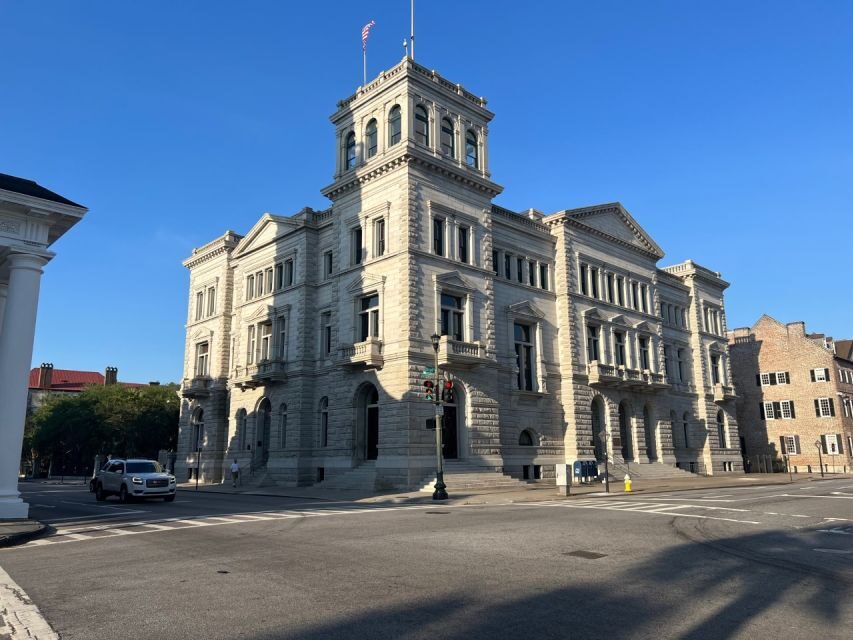
Charleston’s historic district can feel like a museum you’re walking through on autopilot. Eric’s job is to stop that. Early in the tour, you’ll be guided into the quieter parts of the city—old alleys and graveyards—so you can see what’s underneath the postcards.
Why those places matter: alleys and burial grounds reveal the city’s daily logic. They show how movement happened between spaces, how neighborhoods organized, and how communities marked memory. When a guide links these areas to real social patterns, the city stops being just pretty and becomes legible.
Another reason graveyards and side streets work well on this tour: they create contrast. You’ll compare the solemn and the everyday, then later see how civic life, churches, theaters, and formal public spaces sit within the same historical machine.
A couple of practical points for this portion of the walk:
- Comfortable shoes aren’t optional. The tour is three hours outdoors.
- Bring water. Charleston can feel demanding even when the pace is easy.
If you like history that’s grounded in real places instead of big lecture halls, this is where the tour starts paying off.
Dock Street Theater: Turning a Famous Building Into a Real Story
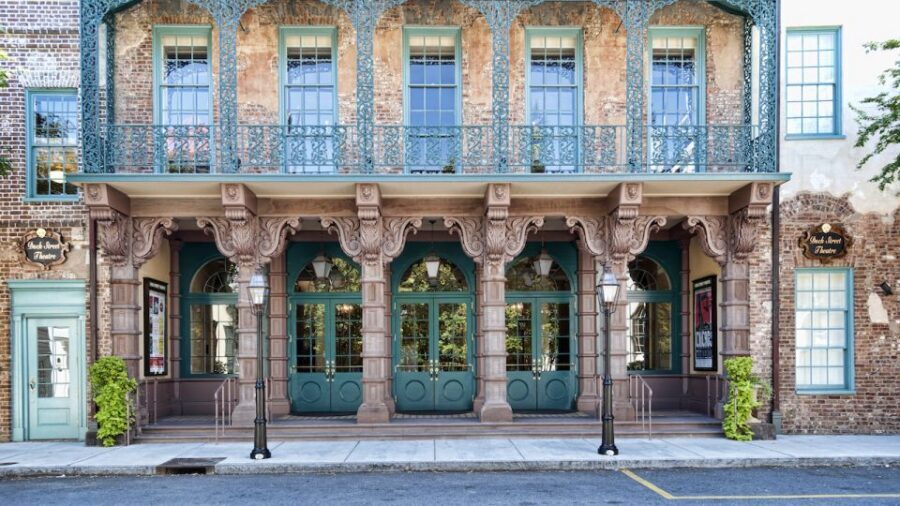
You’ll encounter the Dock Street Theater during the walk. It’s the kind of landmark most people recognize by name, but Eric’s focus is on what those cultural institutions meant in Charleston’s life.
The key idea here is context. A theater isn’t just entertainment; it’s a window into community identity, public assembly, and what people valued enough to fund and attend. When you hear how cultural spaces fit into Charleston’s broader story—colonial growth, shifting power, social change—you start seeing the city differently.
The value for you is that the stop isn’t only about the building itself. Eric uses places like this to show you how history expresses itself through architecture and institutions, not just through battle dates and political headlines. That approach makes the tour feel balanced: you get military and political history, but it doesn’t swallow everything else.
And because the group is capped at a small number, it’s easy to ask follow-up questions. If you’re the type who wonders what a building’s design says about the era, this tour gives you room to ask.
Other historical tours in Charleston





French Huguenot Church and Faith in the Holy City

Another standout stop is the French Huguenot Church. This is where the tour’s attention to religion and immigration themes becomes obvious.
Charleston’s religious history isn’t an accessory. It shaped who felt at home, who built institutions, and how communities organized. When you learn how faith communities formed and endured, the streets around you stop being background and start acting like evidence.
Eric’s teaching style tends to connect the architectural and cultural dots. So instead of just hearing a brief description of the church, you’re more likely to understand why a site like this matters to the story of Charleston as a whole—especially across the eras covered on the walk.
If you’re interested in how belief systems influenced civic life, this stop is one of the reasons the tour keeps earning top marks.
The Four Corners of Law and Washington Park: Rules, Power, and Everyday Life

Two other specific stops you’ll learn from are the Four Corners of Law and Washington Park. These aren’t the flashiest sights in the historic district, but they’re exactly the kind of locations that show how societies worked.
The idea of the Four Corners of Law is about regulation—how authority was organized and what rules meant in daily life. When Eric explains the site through a historical lens, you get the practical side of government and justice: who enforced rules, what those rules protected, and why that structure mattered for stability.
Then Washington Park helps you see how public space supports civic identity. Parks, squares, and meeting areas are where the city’s social life becomes visible. Put these together and you get a stronger sense of how Charleston balanced order with community activity.
This is a good reminder that history isn’t only about what happened. It’s also about how people lived under systems—legal systems, social systems, and community habits that made the city function.
How the Three-Hour Pace Feels Manageable (Even When You Have Questions)
A three-hour walking tour can either feel smooth or exhausting. Here, the small-group size helps the most. With no more than 12 people, Eric can manage timing without turning the tour into a sprint.
You should expect an easy walking pace, but also a dense flow of information. The best part is that it doesn’t feel one-way. Multiple comments emphasized that Eric welcomed questions and answered them clearly. That’s huge if you’re traveling with curiosity—like you want to know why buildings face the way they do, how architecture connects to social status, or what religious and cultural influences shaped the city.
One extra detail that stands out from the way people describe the experience: Eric doesn’t rely on reading from notes during the walk. That keeps the tone conversational and helps the tour feel more like guided discussion than timed sightseeing.
Also, the tour runs rain or shine unless unsafe. So check your footwear and pack for weather. If it’s raining, you won’t be stuck waiting around for cancellation logic—you’ll be moving, listening, and learning.
Who This Tour Is For (and Who Might Want a Different Option)

This tour fits you if:
- you want Charleston history from someone teaching at the college level
- you like learning through walking, not sitting
- you care about how architecture and religion connect to real history
- you enjoy asking questions and getting direct answers
- you prefer a small group to a crowded bus-style experience
It might not be your best match if:
- you need wheelchair accessibility (the tour is not suitable for wheelchair users)
- you want a purely casual, minimal-history stroll with lots of free time per stop
- you’re hoping for indoor museum entries (entry into house museums isn’t included)
It also helps if you’re there for more than one “big name” attraction. Charleston is full of landmarks, but this tour teaches you how to link them into a coherent story.
Should You Book Charleston History Walk with Eric Lager?
Yes, you should book it if you want your Charleston to make sense. This is one of the better values in town because you’re not just buying a route—you’re buying a teaching mindset. The combination of a PhD historian, a small group capped at 12, and a route that includes alleys, graveyards, and major landmarks like Dock Street Theater and the French Huguenot Church means you come away with a clearer picture of how Charleston became Charleston.
If you’re short on time and you want depth without crowds, this is a strong choice. Just plan for the reality of a three-hour outdoor walk: comfortable shoes, water, and weather-ready clothing.
And if you’re the type who loves asking why a city works the way it does, Eric Lager is the kind of guide who actually answers.
FAQ
How long is the Charleston history walking tour?
It lasts about 3 hours.
How big is the group?
The tour is guaranteed to have no more than 12 people.
Where do I meet the guide?
You meet along the brick wall on the sidewalk in front of the building with four small white Ionic Greek columns. It’s across from Hibernian Hall and the pink Mills House Hotel.
Is the tour wheelchair accessible?
No. The tour is not suitable for wheelchair users.
What should I bring?
Bring comfortable shoes and water.
Are house museum entries included?
No. Entry into the house museums is not included.
Does the tour run in rain?
Yes, it runs rain or shine unless conditions make it unsafe.
Are pets allowed?
Pets are not allowed, but assistance dogs are allowed.
What language is the tour in?
The tour is offered in English.