REVIEW · CHARLESTON
Historic Charleston Walking Tour: Rainbow Row, Churches, and More
Book on Viator →Operated by Bulldog Tours · Bookable on Viator
Charleston reads like a storybook. This guided walk strings together famous sights and quieter corners of the Historic District with an entertaining local guide. I love the photo-ready stop at Rainbow Row, and I also like the leisurely pacing that still covers a solid chunk of downtown.
One thing to plan for: you’re on your feet for about 2 hours, and Charleston’s sidewalks can be uneven, especially around cobblestones.
In This Review
- Key things to know before you go
- Why Rainbow Row is the perfect first real taste of Charleston
- The Meeting St, route, and why the walking style matters
- Waterfront Battery: cannons, palmettos, and views toward Fort Sumter
- Powder Magazine Museum: the included stop that adds real context
- Cobblestones, iron gates, and the Charleston single-house layout
- Hidden gardens and courtyards: the city’s private rhythm
- Historic churches and graveyards: honesty with respect
- Churches, waterfront, and war connections that make the city click
- Price and time: getting value from a $40.50, 2-hour plan
- What to wear, what to bring, and how to handle heat and photos
- Who this tour suits best
- Should you book Historic Charleston Walking Tour with Rainbow Row, churches, and more?
- FAQ
- How long is the walking tour?
- How much does the tour cost?
- Is the tour offered in the morning or afternoon?
- What’s included in the ticket price?
- Do I need to buy a ticket for the Powder Magazine Museum?
- Where does the tour start and end?
- What pace should I expect?
- Is transportation included?
- What happens if weather is poor?
- What is the cancellation refund window?
Key things to know before you go

- Rainbow Row in full view: 13 colorful, 18th-century houses that make for one of Charleston’s most recognizable scenes
- Waterfront Battery photo stops: cannons, cannonballs, palmettos, and strong sightlines toward Fort Sumter
- Powder Magazine Museum included: you get admission as part of your tour purchase
- Hidden gardens and courtyards: you’ll see private-looking spaces that explain how Charleston homes work
- Historic churches and graveyards: the tour connects architecture to the city’s wars and losses
- Small group feel: up to 20 people, so the guide can answer questions and keep momentum
Why Rainbow Row is the perfect first real taste of Charleston

Rainbow Row is the kind of place you think you already know—then you see it in person and it hits harder. Along this long stretch of 18th-century homes, the colors aren’t just decoration; they’re part of the story of how Charleston put personality into its historic streetscape.
What makes it work early in the tour is simple: you get an instant visual anchor. Once you’ve seen Rainbow Row, you start spotting the patterns around it—how Charleston single houses line up, how street-level entrances work, and why the architecture feels so deliberate.
And since the tour is designed at a leisurely walking pace, that first stop doesn’t feel rushed. You’ll have time to take in the long façade and snap photos without the scramble vibe.
Other walking tours we've reviewed in Charleston



The Meeting St, route, and why the walking style matters
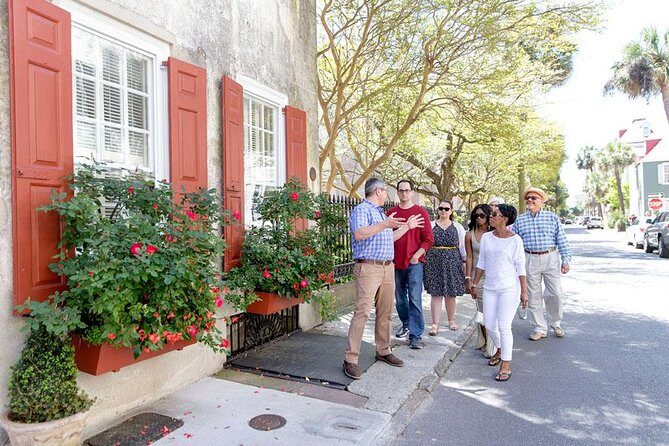
The tour meets at 115 Meeting St, right in the heart of downtown, and it returns you to the same spot. That matters because you can build the rest of your day around it—lunch, a museum visit, or just wandering farther on your own without a complicated commute.
You should expect about 2 hours on foot, not an armchair history show. The pacing is described as leisurely, and guides often build in shade and short breaks, which can be a big deal in Charleston’s summer heat.
I also think the small group size makes a difference. With a maximum of 20 people, it’s easier to hear the guide and easier to stop for a question or a photo moment without derailing the route.
Waterfront Battery: cannons, palmettos, and views toward Fort Sumter
After you’ve taken in Rainbow Row, the tour steers toward the Charleston Waterfront Park area and the Historic Waterfront Battery. This is one of those stops where the scenery is doing two jobs at once: it’s scenic, and it’s interpretive.
You’ll see photo-friendly details like cannons and cannonballs, plus palmettos and the broader waterfront views. The point isn’t just to look—it’s to understand why this coastline mattered so much, especially when the city was tied to wars and maritime power.
Fort Sumter is part of the story here too. You won’t necessarily be boarding anything, but the tour includes a visual tour of Fort Sumter, which means you’ll get the viewpoint context that ties Charleston to the larger conflict story.
Practical note: if you like photos, this is a great moment to slow down and frame shots before you move on. The waterfront tends to offer better light and wider sightlines than tight residential streets.
Powder Magazine Museum: the included stop that adds real context

One stop can make a walking tour feel like more than just “look at buildings.” For this one, that’s the Powder Magazine Museum, with admission included.
Even if you only skim for a short time, a museum stop gives you a vocabulary boost. Instead of hearing history as broad events, you start connecting it to materials, preparation, and the hard realities behind wartime decisions.
It’s also a useful energy reset. Walking tours can make your brain speed up—museum time helps you settle in and process what you just saw around the city.
If you’re traveling with teens or family members who get restless when there’s too much narration, this included museum stop often helps. It gives people something to focus on besides the next corner.
Cobblestones, iron gates, and the Charleston single-house layout
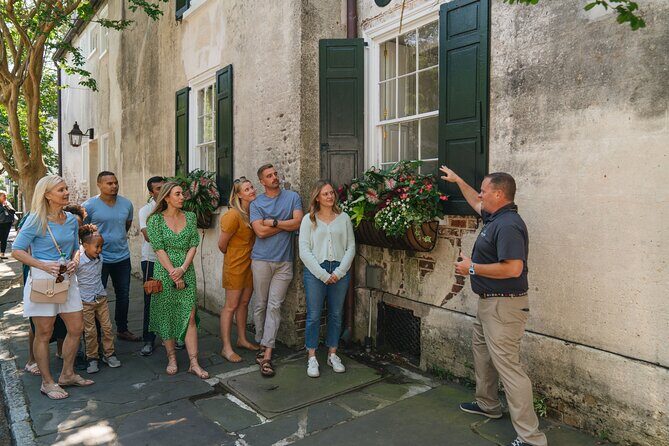
Charleston has a “street feel” that you only understand by walking it. The tour route passes cobblestone streets and custom iron gates, and that’s not just aesthetic. Those details show you how the city organized private space against the public street.
You’ll also get a close-up look at the Charleston single houses—structures that are typically one room deep. They’re oriented so the short access faces the street, while the entrance sits on a long side that opens into an alley.
Once you know that layout, you start noticing things everywhere: why entrances seem a little offset, why side spaces matter, and why courtyards and gardens show up like architectural “lungs” for the home.
This is the kind of architecture explanation that pays off later, too. After your walk, you’ll recognize patterns when you’re wandering solo or spotting houses in photos.
Other historical tours in Charleston





Hidden gardens and courtyards: the city’s private rhythm

Some of the most memorable parts of Charleston aren’t on the grandest street corners—they’re in the spaces between. This tour includes hidden gardens and courtyards, which help explain the logic of Charleston homes and neighborhood living.
Courtyards are also a built-in way to cool off. Even if you’re not trying to escape heat, shaded outdoor spaces can make the tour feel comfortable instead of tiring.
And there’s a storytelling angle here. When a guide explains how families used these outdoor areas—light, airflow, privacy—you start seeing the city as more than postcard views.
If you like architecture, this segment adds meaning. If you just like atmosphere, it gives you that “wait, this place is even nicer than I expected” feeling.
Historic churches and graveyards: honesty with respect

Charleston’s churches and graveyards aren’t about spectacle. They’re about memory, and the tour handles the themes tied to the Revolutionary and Civil War era.
When you walk by historic churches and graveyards as part of a route, you’re not stuck with one era floating in the air. Instead, the guide connects the dots: where conflict left its mark, how the city carried forward, and how the architecture reflects that long timeline.
A good walking tour keeps this kind of subject grounded. From the way guides have paced and handled difficult material, the aim is respectful interpretation, not shock value.
If your trip includes other history stops—like plantations or museums—this walk helps you place everything in the right geographic and emotional context.
Churches, waterfront, and war connections that make the city click

What I like about this tour is how it treats Charleston as one connected system. You see residential architecture, then you see the waterfront, then you hit wartime material and memorial spaces—and the city starts to make sense as a whole.
The Revolutionary and Civil War themes aren’t handled as separate “chapters.” They show up through where you’re standing, what you’re looking at, and why a particular street or landmark matters.
That’s why the fort-adjacent stops feel valuable, even if you’re not doing a boat trip. The guide’s commentary is meant to give you the visual and historical anchors you need.
Price and time: getting value from a $40.50, 2-hour plan
At $40.50 per person for about 2 hours, this is priced in the midrange for a walking tour—but the value comes from what’s included. You’re not paying just for narration; you’re also paying for Rainbow Row access on the route, Waterfront Battery time, and admission to the Powder Magazine Museum.
That included museum ticket is the key “math check.” If you like to pack a day full of sights, getting museum admission inside a short walking plan can save time later.
Also, the pace is leisurely, which means you’re not just sprinting to hit highlights. You’ll get enough time at major points to take photos and absorb details, without turning your day into an endurance event.
One more value factor: small group size. With up to 20 people, the experience tends to feel more like a guided walk with room for questions, rather than a rapid herd-moving operation.
What to wear, what to bring, and how to handle heat and photos
This tour includes free outdoor walking plus at least one indoor museum stop. So dress for both: breathable clothes for the sidewalks, and something you don’t mind wearing while you walk in shade and sun.
Wear comfortable shoes. Cobblestones and uneven historic sidewalks are part of the charm, but your feet will feel it if you show up in anything stiff or slippery.
If you care about photos, bring a charged phone or camera and be ready to slow down at the waterfront. The Battery area is one of the best places for wide shots and details like cannons and cannonballs.
And if you need a moment to rest or adjust your pace, guides have been seen pausing in shaded areas and working with questions. That’s a great reason to arrive a bit early so you’re not rushed at the start.
Who this tour suits best
This walk fits best if you want a guided “map in your head.” It’s ideal for first-time visitors who need orientation fast—especially the placement of Rainbow Row, the waterfront, and the historic district’s architecture.
It also works well for people who like history told through physical places: streets, houses, gates, courtyards, churches, and graveyards. If you’re the type who notices details and asks questions, the group size and guide style make that easier.
If you dislike standing for long stretches, this may still work because the pace is described as leisurely—but you’ll still be walking. Plan your day around it, and don’t schedule back-to-back activities that require lots of hiking right afterward.
Should you book Historic Charleston Walking Tour with Rainbow Row, churches, and more?
Yes, if you want a well-timed introduction to downtown Charleston that covers the big names and the smaller story spaces. You’ll get the signature photo moment at Rainbow Row, strong waterfront views near Fort Sumter, and an included museum stop that adds substance beyond architecture sightseeing.
Skip it only if you want a purely scenic tour with no wartime context or if you’re trying to avoid all standing/walking. Otherwise, this is the kind of guided walk that helps you understand the city quickly—and then enjoy the rest of your Charleston time more.
FAQ
How long is the walking tour?
It runs about 2 hours.
How much does the tour cost?
The price is $40.50 per person.
Is the tour offered in the morning or afternoon?
Yes, you can choose a morning or afternoon tour.
What’s included in the ticket price?
The tour includes Rainbow Row, the Historic Waterfront Battery area, antebellum mansions (viewed along the route), a visual tour of Fort Sumter, hidden gardens and courtyards, historic churches and graveyards, and admission to the Powder Magazine Museum.
Do I need to buy a ticket for the Powder Magazine Museum?
No. Admission to the Powder Magazine Museum is included with your tour purchase.
Where does the tour start and end?
It starts at 115 Meeting St, Charleston, SC 29401, and ends back at the same meeting point.
What pace should I expect?
The pace is described as leisurely.
Is transportation included?
No, transportation is not included.
What happens if weather is poor?
The experience requires good weather. If it’s canceled due to poor weather, you’ll be offered a different date or a full refund.
What is the cancellation refund window?
You can cancel for a full refund up to 24 hours in advance of the experience start time. After that point, the amount paid is not refunded.