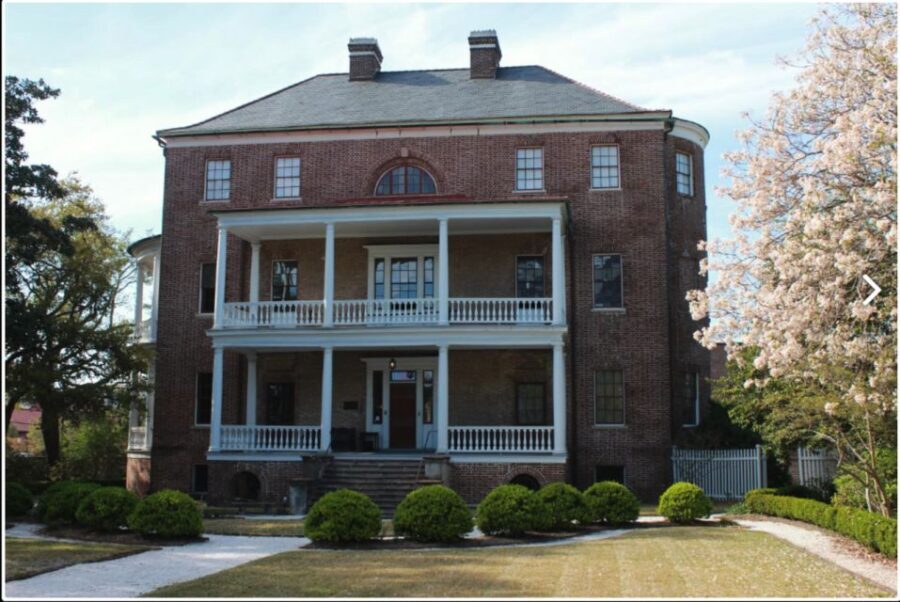
REVIEW · CHARLESTON
Revolutionary Charleston Walks – History Walking Tour
Book on Viator →Operated by Revolutionary Charleston: Ghost & History Walking Tours · Bookable on Viator
A walk that turns postcards into people. This Charleston history walking tour strings together the big names you see in photos and adds the real reasons they matter, from Rainbow Row to Battery views of Fort Sumter.
I like two things a lot. First, the guide approach is interactive, with room for questions instead of a one-way lecture, and some guides like Paul (and Ben) are especially good at bringing details to life, including talk of local plants and how buildings connect to daily life. Second, for $36 you get a tight 2-hour route built around major landmarks where the admission is listed as free, so your money mostly goes to the storytelling and pacing.
One thing to plan around: this is a walk-and-look tour. You get views from the sea wall and you’ll visit some sites only from outside, so if you’re hoping for lots of interior entry or museum time, you’ll want a different kind of stop.
In This Review
- Key Highlights at a Glance
- Price and Logistics: What $36 Really Buys You
- Starting at Washington Square: Getting Your Bearings Fast
- Rainbow Row and the Battery: Iconic Views With Context
- Charleston City Market: Four Blocks of Everyday Life
- Fort Sumter National Monument: Sea-Wall Views Without the Ferry Plan
- Ryan’s Mart: The Difficult Stories You Stand Near
- Circular Congregational Church: Long-Running Faith, Outside the Doors
- Battery and White Point Gardens: Where the City Points at the Sea
- What You’ll Walk Away With
- Should You Book This Charleston Walk?
- FAQ
- How long is the Revolutionary Charleston walk?
- Where do I meet the guide?
- What time does the tour start?
- Is the tour in English?
- Do I need to pay admission to see the stops?
- How many people are in the group?
- FAQ
- Is there free cancellation?
Key Highlights at a Glance

- Small group size (max 20) keeps the tour from feeling crowded
- Free admission stops at the landmarks you’re seeing from the street and harbor
- Fort Sumter sea-wall viewing gives you the payoff without the ferry plan
- Ryan’s Mart story outside-only connects the city’s past to places you can actually stand near
- Battery & White Point Gardens harbor viewpoints show you the geography behind the defenses
- Interactive guide style encourages questions, not just listening
Price and Logistics: What $36 Really Buys You
At $36 per person for about 2 hours, you’re not paying for ticketed attractions. Instead, you’re paying for someone to connect the dots while you’re walking, including why each location earned its place in Charleston’s story. That matters because downtown Charleston can feel like a photo set unless someone explains what you’re looking at.
The tour also runs with a manageable group size, up to 20 people, and it uses a mobile ticket. That combination makes it easier to hear the guide and keep your bearings as you move through a compact historic area. It starts at 11:00 am at Washington Square, 80 Broad St, Charleston, SC 29401, and it ends back there, which is handy if you plan a later meal or a walk on your own.
You’ll also want to treat this like a real outdoor walk: bring comfortable shoes, water, plus bug spray and sunscreen. Even in milder weather, Charleston’s sun and insects can turn a history walk into a survival test if you show up unprepared.
Other walking tours we've reviewed in Charleston



Starting at Washington Square: Getting Your Bearings Fast
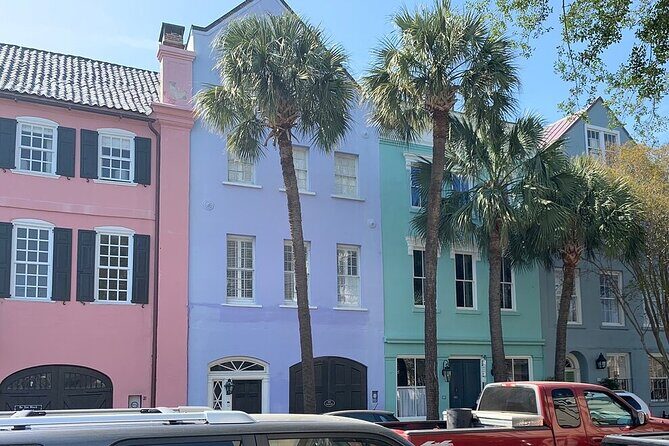
Most people arrive in Charleston already familiar with a few names, like Rainbow Row and the City Market. The smart part of this tour is that it begins you at a point where the rest of the route makes sense. You’re set up near the center of downtown action, and the guide helps you understand how the historic district pieces connect.
Because the tour is in English and runs as a conversation, you can ask basic questions early and get better answers later as you spot details for yourself. Some guides, such as Paul, lean into dialogue and even bring in local context like native flora and what you might notice outdoors. That kind of tone helps you stop treating the city like a list and start treating it like a place you can read.
It’s also useful that the tour is designed for most travelers and allows service animals. The walking is the main activity, so the biggest variable is your comfort level on sidewalks and curbs—especially if you’re visiting in heat.
Rainbow Row and the Battery: Iconic Views With Context
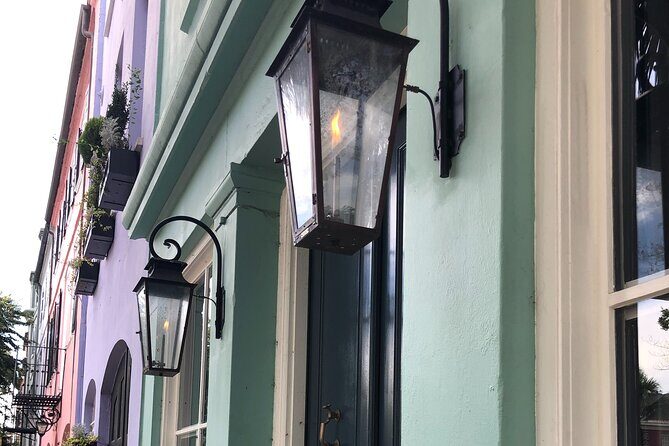
Rainbow Row is the kind of place where you can technically visit anytime. But the value here is what you learn while you’re there. These pastel-colored historic homes along East Bay Street, just near the Battery, aren’t only pretty backdrops. They’re part of why Charleston became a city people brag about—and why that prosperity came with complexity.
As you look at the row, you’ll also notice the modern layers: engagement photos, wedding pictures, and tourists chasing the perfect angle. The guide’s job is to help you see both at once. You can enjoy the charm and still understand the older story tied to the street and the harbor-facing neighborhood.
Then you move toward the Battery & White Point Gardens, where the big payoff shifts from buildings to the view. The Battery is a prime vantage point for Fort Sumter and Charleston Harbor, and the guide points out the harbor geography—how the Ashley and Cooper rivers empty into the Atlantic Ocean. That water layout is not trivia. It explains why Fort Sumter mattered so much in times of conflict and why this area became a frontline space.
The harbor scenery also turns this section into a natural pause in the tour. You can look, take photos, and let the guide’s context settle in without feeling like you’re sprinting to the next stop.
Charleston City Market: Four Blocks of Everyday Life
The Charleston City Market dates to the late 18th century and spans four city blocks—not just one quick storefront strip. What makes the stop especially worthwhile on a history walk is that it shows how Charleston’s public life has continued alongside its historic buildings.
The market is home to more than 300 daily vendors, which means you’re seeing commerce in motion, not a staged reenactment. If you care about how cities work, this part of the tour answers a key question: how did people trade, gather, and live in the same spaces that later became tourist icons?
This is one of those stops where you can choose your pace. You can listen to the guide, but you can also step slightly off to check what’s being sold or how vendors set up. Even if you don’t buy anything, you’ll come away with a clearer sense of the market as an ongoing institution rather than a single attraction.
And since the market is listed as admission free, you don’t have to feel like you’re wasting money if you spend five minutes or twenty. The tour gives you the context, and you get to decide how you want to use it.
Fort Sumter National Monument: Sea-Wall Views Without the Ferry Plan

This is where the tour gets smart about time. You don’t board a boat or enter the fort. Instead, you’ll look from the sea wall, which still gives you a strong sense of the fort’s setting in Charleston Harbor.
Fort Sumter is described as a sea fort built on an artificial island that protected Charleston from naval invasion. The story goes even further back than the Civil War. The origin is tied to the War of 1812, including the British invading Washington by sea. And then it’s connected to the Civil War because the fort was incomplete in 1861, when the Battle of Fort Sumter began.
Why does that matter to you on a walk? Because when you see the fort from the harbor edge, those dates turn into a physical sense of place. It’s not just a name on a map. You start understanding how geography, defense, and national events all intersected here.
If you want interior fort tours and museum time, this won’t be that experience. But if you want the key context fast—paired with actual viewing—it’s a good trade.
Other historical tours in Charleston





Ryan’s Mart: The Difficult Stories You Stand Near
Not every part of Charleston history is cheerful, and this tour doesn’t dodge that. You’ll learn about the site that once belonged to a complex known as Ryan’s Mart. The complex had a brick wall enclosed yard and a four-story building, including a barracoon (a slave jail), plus a kitchen and a morgue.
You’ll visit and hear the stories, but you won’t enter the buildings. That’s important because it shapes what you should expect emotionally: you’re absorbing history through explanation and proximity rather than through an indoor interpretive exhibit.
This is also a spot where the guide’s tone matters. The best outcome is not shock for shock’s sake, but clarity—how these structures fit into the city’s economy and how the physical design supported that system. If you want to understand Charleston in a way that goes past the glossy postcard layer, this is one of the stops that helps you do it.
Circular Congregational Church: Long-Running Faith, Outside the Doors

Another outside-only stop is the Circular Congregational Church of Charleston, SC, founded in 1681. The key detail here is that it’s described as one of the oldest continuously worshipping congregations in the South.
You’ll walk past it, not enter. That might sound like a limitation at first, but it can actually sharpen the experience. When you see the church as part of the street scene—right alongside homes, gardens, and market activity—you get a sense of how long community institutions have shaped the city’s identity.
The guide also helps you notice how religion shows up in Charleston’s public life. In a city where so much is old, this is one more way to understand continuity: places of worship aren’t just architecture. They’re living communities that have persisted for centuries.
Battery and White Point Gardens: Where the City Points at the Sea
The Battery and White Point Gardens are built for views, and this tour uses that fact well. This section helps you connect what you saw earlier—houses and streets—with the reason the harbor mattered in the first place.
The gardens were first used as a public garden in 1837, and then, with the outbreak of the Civil War, the area was turned into fortification for the city. That shift—from public space to defensive space—tells you something essential about Charleston’s priorities during conflict.
It also gives you an easy way to end a walking tour feeling like you understand the city’s geography. When you look toward Fort Sumter from this area, you can picture the rivers, the harbor, and why defending this coastline wasn’t optional.
This is also a good place to ask one last question. Because the guide is set up for interaction, you can often get answers that connect the last stop to the bigger storyline you’ve been hearing all along.
What You’ll Walk Away With
A good walking history tour changes how you look at buildings. This one leans into that outcome by pairing major landmarks with the stories that explain their role in Charleston’s past.
You should come away with a stronger sense of:
- how Charleston’s signature photo spots connect to real historical forces
- why the harbor and Fort Sumter are tied to national conflicts
- how public spaces like the market and gardens reflect shifting eras
- why places tied to slavery demand attention, even when you only see them from outside
- how faith communities and civic life have been present for hundreds of years
And if you’re someone who likes to ask questions, this tour’s tone helps. Guides like Paul are described as more dialogue than lecture, and guides like Ben are described as making Charleston history feel like it belongs to the buildings themselves. Either way, the format is built to keep you thinking instead of just listening.
Should You Book This Charleston Walk?
Book it if you want a 2-hour Charleston history walking tour that hits the city’s most famous downtown anchors and gives you context for why they exist. It’s a strong choice for first-timers who want a guided overview without a complicated logistics day, and it’s also a solid option if you’ve been to some sites before but want a guide to connect them in a smarter way.
Skip it if you specifically want interior visits, museum galleries, or a long stop at any one location. This is a walking route with outside-only viewing at several points, including Fort Sumter (sea-wall viewing only), Ryan’s Mart, and the circular church.
If you like your history with a human guide, a manageable group size, and plenty of time to look around, this one is an easy yes.
FAQ
How long is the Revolutionary Charleston walk?
The tour runs for about 2 hours.
Where do I meet the guide?
You meet at Washington Square, 80 Broad St, Charleston, SC 29401, and the activity ends back at the meeting point.
What time does the tour start?
The start time is 11:00 am.
Is the tour in English?
Yes, the tour is offered in English.
Do I need to pay admission to see the stops?
The listed sights are marked as free admission. You will view Fort Sumter from the sea wall (not enter the fort), and you will not enter Ryan’s Mart or the Circular Congregational Church.
How many people are in the group?
The tour has a maximum of 20 travelers.
FAQ
Is there free cancellation?
Yes. You can get a full refund if you cancel up to 24 hours before the experience’s start time. If you cancel less than 24 hours before, the amount paid is not refunded.