REVIEW · CHARLESTON
Small Group Ghost Tour Charleston: 60min of True Haunted History
Book on Viator →Operated by Ghosts of the South · Bookable on Viator
Charleston gets spookier after sundown. This 60–70 minute ghost-and-history walk threads you through real, old places—graveyards, a judge’s house, Blackbeard-linked rooms—while your guide keeps the pace friendly and the stories grounded in what’s known. I especially like the easy meetup and lantern-led vibe at City Market, and the fact that the tour leans on documented Charleston history instead of cheesy skits.
One thing to consider: it’s more dark-history story time than a hands-on ghost-hunting session. You should come for atmosphere, proven locations, and guided storytelling—some nights feel scarier than others, and you may not get clear paranormal proof.
In This Review
- Key Highlights You’ll Care About
- Entering Charleston’s Haunted Zone: Lanterns, Legends, and a Tight Time Budget
- Stop 1: City Market (80 N Market St) and the Colonial Lantern Meet-Up
- Stop 2: Circular Congregational Church Graveyard (1691) and the Outer Banks Connection
- Stop 3: The Judge’s Cursed Home (83 Cumberland St) and the Pirates He Condemned
- Stop 4: Blackbeard’s Hideout (145 Church St) and the Taste of Gunpowder Lore
- Stop 5: St. Philip’s Church Area and the 1987 Ghost Photo Site
- Stop 6: St. Philip’s Cemetery (1681) and the Lady in Black Cold-Spot Energy
- Stop 7: The Haunted Hotel at 115 Meeting St and Room 10
- How to Get the Best Results: Timing, Photography, and Asking the Right Questions
- Walk Comfort, Group Dynamics, and Who This Tour Fits
- Value Check: Included Access, Lantern Vibe, and What You’re Not Paying For
- Should You Book This Charleston Ghost Tour?
- FAQ
- Where does the tour start?
- How long is the tour?
- How many people are in the group?
- Is there a lot of walking?
- Are tickets mobile?
- Is the tour in English?
- Does the tour include ghost photography tips?
- Is food or drinks included?
- Do I need ghost hunting equipment?
- What if I need to cancel?
- Are service animals allowed?
Key Highlights You’ll Care About
- Small-group size (max 15) keeps you close to the guide and lets you actually hear the details.
- Easy walking route: about 3–4 blocks total, flat ground, light steps, slow pace, and rest stops.
- Colonial lantern meet-up at City Market, with the guide setting the mood right away.
- St. Philip’s ghost-photo spot connected to a globally famous image and photography guidance.
- Real Charleston landmarks tied to notorious events, from pirates to infamous judges to Blackbeard’s presence.
- Guides with real storytelling chops, including names you’ll hear referenced like Kevin, Nathan, and Jim, each with a different style.
Entering Charleston’s Haunted Zone: Lanterns, Legends, and a Tight Time Budget
This is a short tour by design, and that’s part of the value. You get a full sweep of some of Charleston’s most storied corners without turning the evening into a marathon. The pacing is built for a calm stroll: a few blocks of walking, flat surfaces, frequent stops, and a slow rhythm that still keeps the story moving.
The tour also works because it doesn’t treat ghosts as the only point. You’re learning how this city was built—who lived here, what happened here, and why certain places became part of local lore. That blend is why the experience feels more satisfying than the classic “stand in one spooky spot and listen to generic tales” format.
And yes, you’ll get plenty of spooky energy. The key is that it’s anchored to specific locations: graveyards founded in the late 1600s, houses tied to trials and piracy, and churchyard sites connected to famous ghost photography.
Other historical tours in Charleston

Stop 1: City Market (80 N Market St) and the Colonial Lantern Meet-Up
Your night starts at City Market’s historic edge, at 80 N Market St, where merchants have traded for more than 200 years. The guide carries an authentic colonial lantern, which instantly changes the feel of the streets. Day crowds fade, and the city looks and sounds different—exactly what you want from a night tour.
This isn’t just “go meet your guide somewhere.” The departure point matters. City Market is central, recognizable, and easy to find, so you don’t spend your best early minutes hunting for a meeting sign. The plan is to gather near T’Bonz and begin before the streets feel fully empty—just enough transition to set the mood.
What I like here for you: the lantern-led start is both practical and theatrical. Practically, it helps you keep track of the group at dusk. Theatrically, it gives you that immediate shift from sightseeing to story time.
Stop 2: Circular Congregational Church Graveyard (1691) and the Outer Banks Connection
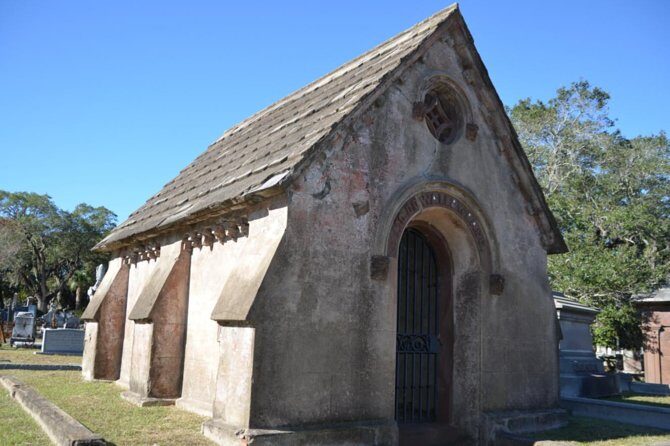
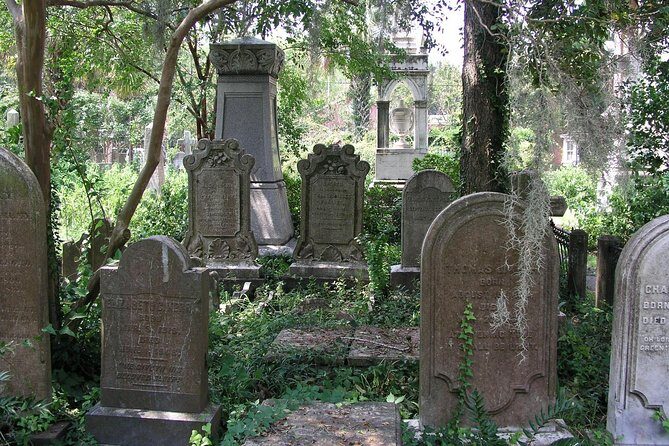
Next comes Charleston’s oldest graveyard area, founded in 1691: the Circular Congregational Church Graveyard. It’s one of those stops where you don’t need props. The age alone makes the atmosphere heavier, and the guide’s job is to connect names, families, and events to why the place became part of the city’s eerie reputation.
A fun twist is that this location has also shown up in pop culture. The filming team for Netflix’s Outer Banks Season 4 reported problems and strange visual moments during production, including equipment issues and unexplained shadows. You’re not asked to treat this like proof of anything scientific. Instead, it adds a modern layer of “this place keeps producing the same kind of stories.”
Tradeoff to keep in mind: this stop is brief. It’s a quick immersion into a very old place, not an extended cemetery visit with long conversations at every grave marker. If you love slow, sit-and-stare cemetery time, you’ll want this tour for the broad sweep, then do a longer independent walk after.
Stop 3: The Judge’s Cursed Home (83 Cumberland St) and the Pirates He Condemned
At 83 Cumberland St, you hear about Judge Nicholas Trott and his 1709 mansion—connected to Charleston’s darkest judicial legacy. Trott sentenced 98 pirates to hang, which is described as the largest mass execution in colonial America. That number is a big deal here because the stories keep returning to it: the history isn’t vague, and the guide uses that specificity to make the haunting claims feel tied to real events.
This is also one of the stops where the tour leans hard into recurring phenomena in the local lore: doors slamming at 3 AM, shadows in tricorn hats, and what’s described as 98 voices counting toward dawn. The guide will point out which windows to watch, and it’s at this kind of location that “no ghost equipment needed” becomes important. Even without gadgets, there’s a sense of expectation created by the setting and the way the guide frames it.
One caution for your mindset: the stories are intentionally intense. If you’re looking for gentle spooky vibes, this may be the most emotionally heavy stop on the route. If you love dark history and courtroom-era facts, this is likely one of your favorite moments.
Stop 4: Blackbeard’s Hideout (145 Church St) and the Taste of Gunpowder Lore
Then you shift from the courthouse horror angle to pirate legend with 145 Church St, described as a hideout connected to Edward Teach—Blackbeard—who rented rooms here in 1718 while holding Charleston hostage. This stop works because it combines fear with sensory detail: witnesses reported a massive bearded shadow in windows, plus smells of gunpowder and rum.
The tour adds a modern angle too, with EVP recordings described as capturing the word revenge in a gravelly voice. The guide also points out where Blackbeard is believed to have slept and why treasure rumors persist around the area.
What you’ll get from this stop: a clear storyline. You’re not just told “pirates!” You’re told how Blackbeard fit into Charleston at that specific time, and why certain rooms or corridors stay tied to the legend. If you enjoy hearing “how the story got built,” this is a strong stop.
If you’re curious about treasure: the tour treats it as rumor and possibility, not a guaranteed find. That keeps the tone fun, not scammy.

Stop 5: St. Philip’s Church Area and the 1987 Ghost Photo Site
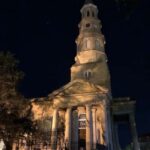
This is one of the most interesting stops for photo lovers: the 1987 ghost photo site tied to local photographer Harry. The story goes that his image showed a translucent Victorian woman, and Kodak supposedly verified it as untampered. MIT scientists are described as not finding an explanation, and the photo became a global headline that’s still analyzed.
The guide helps you more than just by telling the legend. They position you at the exact spot connected to the photo so you can understand the angle. The tour also includes ghost photography tips, and many people try taking their own evidence at this location.
Quick practical thought: don’t expect every image to turn into a viral “proof” photo. The value here is in learning why this shot became famous and how light, framing, and perspective play into the legend. Even if your photo doesn’t show a figure, you’ll still leave with a neat, story-anchored understanding of the site.
Stop 6: St. Philip’s Cemetery (1681) and the Lady in Black Cold-Spot Energy
Now you step into St. Philip’s Cemetery, established in 1681, where over 10,000 souls are described as buried—pirates, plague victims, soldiers, and more. This is where the tone goes from spooky story to full-on atmosphere.
The guide directs you to the most active section and asks you to pay attention to physical sensations mentioned in the lore: unnatural coldness that moves, cold spots that follow visitors, and Spanish moss moving without wind. The stop also includes the Lady in Black story: a weeping figure tied to a child’s grave.
Cameras and invisible orbs are part of the folklore too, and the guide encourages observation without requiring equipment. If you’re sensitive to “cold spot” talk, keep that in mind. If you love being asked to notice what you’re feeling, this stop is built for you.
One downside for some people: it can feel intense even when nothing happens. That’s the nature of old burial grounds after dark. The tour manages time well here, keeping it short enough that you don’t lose energy, but it still lands emotionally.
Stop 7: The Haunted Hotel at 115 Meeting St and Room 10
The final major stop is 115 Meeting St, described as a haunted hotel. It survived the 1861 fire thanks to General Robert E. Lee’s intervention, and since then guests have reported mirror apparitions that supposedly send people running through lobbies. The most active area is described as Room 10.
This location adds another layer because it includes the claim of security footage showing doors opening alone and shadows moving. The guide also shares recent police reports about guests fleeing in terror, which makes it feel less like only a campfire tale.
Here’s the balancing point for you: the hotel stop is about stories attached to a building that still stands and still functions. The goal is not to “break rules” or demand proof. Instead, you’re listening to a guided account of how the building’s history and reputation created the hauntings people talk about.
If you’re the type who likes eerie stories tied to real addresses and specific rooms, you’ll enjoy this stop the most. If you want more open-air cemetery drama, you might find it a bit more contained than the churchyard stops.
How to Get the Best Results: Timing, Photography, and Asking the Right Questions
This tour moves at a slow walking pace, and that helps your attention. Because you’re only covering a few blocks, you can actually look up, take in the architecture, and focus on what the guide is pointing out at each site.
For photography, the biggest help is that you aren’t flying blind. You’ll get ghost photography tips and a guided “stand here” moment at the 1987 photo location. If you want to try capturing something, go in with patience and basic expectations. You’re trying angles and low-light framing, not hunting a guaranteed apparition.
Two habits that improve the experience:
- Ask questions that connect history to haunting claims. For example: how the pirate story ties to the building layout, or why a cemetery became a hotspot for modern stories.
- Pay attention to the guide’s suggested observation points, like the windows at the judge’s house.
Also, the group size matters. With a maximum of 15 people, your guide can keep the flow. In practice, that means you’re less likely to feel lost in a crowd where you can’t hear.
Walk Comfort, Group Dynamics, and Who This Tour Fits
The walking is light: about 3–4 blocks with flat surfaces. Rest stops are frequent, and the pace is slow. That’s a big deal in Charleston, where a lot of evening tours turn into constant uphill or long stretches of uneven sidewalk. This one is designed to be doable for many people, and it’s also useful if you’re traveling with kids, older family members, or anyone who doesn’t want to overdo it.
The group is capped at 15 travelers, which should feel “small group” in a real way, not “small on the brochure.” You’ll hear the story as a conversation, not a lecture from far away.
Who it suits best:
- If you like dark history with spooky flavor and real-world locations.
- If you enjoy ghost lore that’s anchored to events like pirate hangings, fires, and infamous trials.
- If you want a short evening activity that doesn’t eat half your day.
If you want a tour where ghosts appear on cue, this isn’t that style. It’s a storytelling walk with optional photography. The fun comes from the blend.
Value Check: Included Access, Lantern Vibe, and What You’re Not Paying For
There are a few value points built in:
- You get access to exclusive haunted locations (not just public roadside stops).
- You receive ghost photography tips so you can try the photo angles you came for.
- All fees and taxes are included.
- You get a local historian guide rather than scripted actors.
The biggest cost-saving element for you is what you don’t have to plan. You’re not coordinating transport between scattered sites. The tour is a tight route, and it’s already timed for an evening window.
What you’ll still need to bring:
- You bring your curiosity and any camera you want to use.
- Food and drinks aren’t included, so plan to grab dinner before you go.
- Ghost hunting equipment isn’t included, so don’t expect the tour to hand out gadgets.
Also, the tour is in English and uses a mobile ticket, which keeps it simple once you’re there.
Should You Book This Charleston Ghost Tour?
Book it if you want a short, friendly evening that pairs Charleston’s written-in-stone history with a carefully guided spooky vibe. I’d especially recommend it if you’re the kind of traveler who likes your hauntings with addresses, dates, and specific stories—graveyards founded in the late 1600s, Blackbeard lore tied to a real building, and that 1987 photo location you can actually stand on.
Skip it (or at least set lower expectations) if you’re mainly after big, obvious paranormal events or an equipment-heavy ghost hunt. This tour’s strength is storytelling + place-based atmosphere, not guaranteed proof.
If you book, go in ready to look up, listen closely, and enjoy the night shift of Charleston—streets that feel quieter, older, and a little less willing to explain themselves.
FAQ
Where does the tour start?
It starts at 80 N Market St, Charleston, SC 29401, at the City Market area near T’Bonz.
How long is the tour?
The tour runs about 1 hour 10 minutes, and the pace is slow with frequent rest stops.
How many people are in the group?
The tour has a maximum of 15 travelers.
Is there a lot of walking?
No. It’s described as a 3–4 block walk with flat surfaces and extremely light walking, plus rest stops.
Are tickets mobile?
Yes. The tour uses a mobile ticket.
Is the tour in English?
Yes, it’s offered in English.
Does the tour include ghost photography tips?
Yes. Photography tips are included as part of the experience.
Is food or drinks included?
No. Food and drinks are not included.
Do I need ghost hunting equipment?
Ghost hunting equipment is not included. The tour does include tips, but you don’t need to bring special gear based on the listed inclusions.
What if I need to cancel?
You can cancel for a full refund up to 24 hours before the experience’s start time. After that window, refunds aren’t available.
Are service animals allowed?
Yes, service animals are allowed.