REVIEW · CHARLESTON
300 Years of War and Peacetime in Charleston: A Self-Guided Audio Tour
Book on Viator →Operated by VoiceMap Audio Tours · Bookable on Viator
One hour, on your own time, and suddenly Charleston makes sense. This self-guided audio tour strings together 300 years of war and peacetime as you walk past the city’s most important historic stops.
I like that it pairs famous landmarks with story-first context, so you’re not just reading plaques. I also like that the VoiceMap app works offline, which matters in a walking city.
The big thing to consider is that you’re responsible for pacing and navigation. If you prefer a guide herding the group, a self-guided route may feel less structured than you want.
In This Review
- Key highlights worth planning for
- A self-guided audio walk that turns streets into a timeline
- Price and value: $14.99 with lifetime access beats most “one-and-done” tours
- Getting set up with VoiceMap (and why offline matters in Charleston)
- The walk starts at Market Hall and the City Market story kicks in
- From the Custom House to a bigger picture of trade and power
- High Cotton Charleston and the Notebook connection (yes, it’s part of the story)
- Pineapple Fountain: learning a southern symbol while you stroll
- Old Slave Mart Museum area: where the walking gets heavier
- Old Exchange and Provost Dungeon: law, punishment, and control
- Rainbow Row: turning a postcard street into an origin story
- The Battery: views, history, and a built-in photo pause
- Dubose Heyward House and literary/Charleston connections
- Dock Street Theatre: a historic building that sounds better than it looks
- St. Philip’s Church: ending a cultural thread before the finale
- Finish at the Powder Magazine Museum area
- Who should book this audio tour (and who might skip)
- Quick FAQ
- FAQ
- How long is the Charleston self-guided audio tour?
- Where does the tour start and end?
- Is the tour only available in English?
- Do I need a ticket to visit museums on the route?
- Does VoiceMap work offline?
- What’s included in the price?
- Can I cancel if my plans change?
- Should you book it?
Key highlights worth planning for

- Old Slave Mart Museum area storytelling that puts Charleston’s slave trade in the frame
- Pineapple Fountain and why pineapples matter in the South
- Rainbow Row told as something with an origin story, not just a postcard row
- The Battery with built-in chances to pause for views and photos
- Old Exchange & Provost Dungeon explanations as you walk by the building
- Dock Street Theatre and the run-up to St. Philip’s Church, all in one smooth stroll
A self-guided audio walk that turns streets into a timeline
Charleston can feel like you’re surrounded by history, but sometimes it stays frozen in place. This audio tour fixes that by giving you a timeline as you move—so the city reads like a story instead of a list of sights. You start downtown, then keep rolling past key buildings, churches, and “look, remember this” points all the way to the Powder Magazine area.
What makes this format work is the route logic. You’re not bouncing between far-flung neighborhoods. Instead, you walk a compact loop through the historic core, where war, commerce, slavery, law, and daily life all overlap in a few blocks.
If you’re a history buff who wants to linger when something catches your eye, this setup is a good match. And because you’re on your own schedule, you can stop for a view, snap a picture, or grab a water break without worrying about where the group is.
Other guided tours in Charleston



Price and value: $14.99 with lifetime access beats most “one-and-done” tours
At $14.99 per person, this is priced like an add-on you can try even on a tight trip budget. The value jumps because you get lifetime access to the tour and it’s delivered through the VoiceMap app. That means you can reuse it on another visit or re-walk parts if you want more time with a specific stop.
You should think of it like paying for a good audio guide, not a ticket to a museum. The tour includes the audio and the app features (including offline content). It does not include museum entry or anything that requires a separate paid ticket, so you’ll still need to plan those separately if you want to go inside.
Timing-wise, it typically takes about 1 hour 30 minutes to 2 hours, which is perfect for fitting into a sightseeing day without stealing your whole afternoon.
Getting set up with VoiceMap (and why offline matters in Charleston)
This tour runs through VoiceMap on Android and iOS. The included offline access is a practical win: you can download the audio, maps, and geodata so you’re not stuck hunting for signal mid-walk.
Here’s the simple way to use it well:
- Plan to start at the meeting point location and begin walking right away.
- Keep your phone charged. Offline audio still uses battery.
- Treat it like guided walking, even though you’re steering. When you reach the next landmark, start the next segment.
The tour is also listed as private for your group. That’s small, but it matters if you’re traveling with friends or family and want the experience to feel tailored to your pace rather than a timed bus rhythm.
The walk starts at Market Hall and the City Market story kicks in

Your route begins outside the Historic Charleston City Market area, with the official meeting point at The Museum at Market Hall, 188 Meeting St, Charleston, SC 29401. From here, you get a quick orientation: what the market is, why it matters, and how to use the app while you walk.
This opening segment matters more than it sounds. Charleston’s downtown landmarks are close together, and the streets can blur if you’re not anchoring your understanding early. Starting at the market gives you a mental map fast—commerce first, then politics, then power.
One practical tip: arrive a few minutes early if you can. That way you’re not speeding through setup and you can let the first audio section land while the area is still fresh in your mind.
From the Custom House to a bigger picture of trade and power
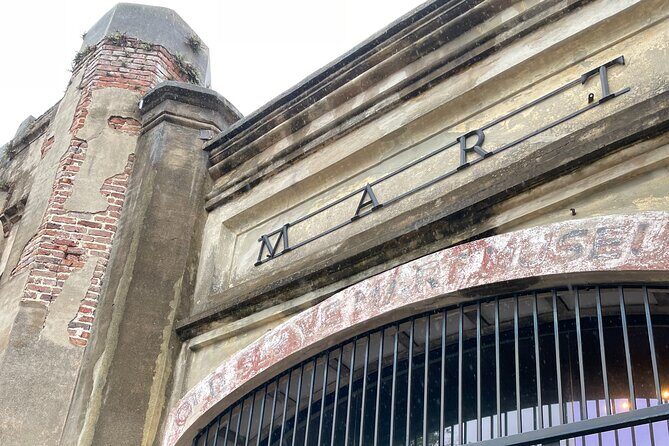
As you walk, you pass the United States Custom House and hear it explained. Even without stepping inside, the building is a strong way to connect Charleston to the systems that moved goods and money—then tied those systems to the economic reality of the era.
This part is useful if you like understanding why a place looks the way it does. Custom Houses weren’t just offices. They were checkpoints for trade and authority. When you learn what the building represented, you start noticing details you might otherwise ignore.
If you’re the type who loves architecture, this segment can feel like a quick crash course—how government, commerce, and the movement of people were stitched together.
If you're still narrowing it down, here are other tours in Charleston we've reviewed






High Cotton Charleston and the Notebook connection (yes, it’s part of the story)
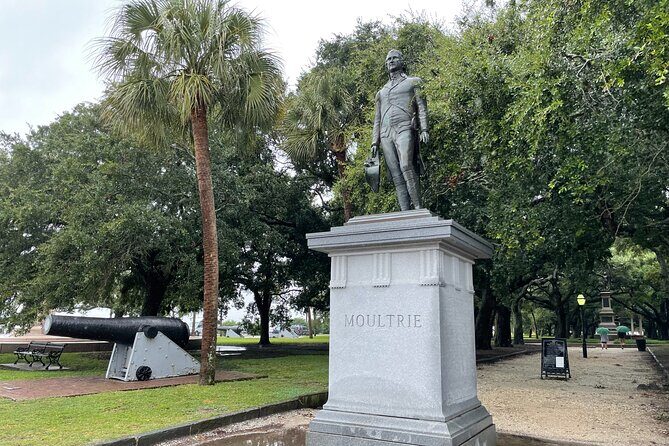
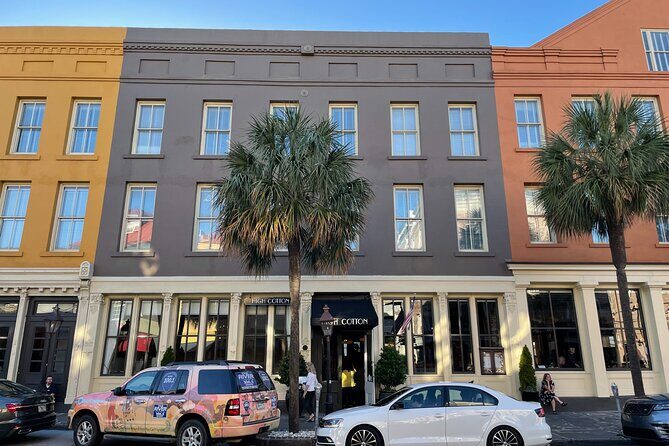
Next you pass High Cotton Charleston Restaurant, and the audio ties the spot to the movie The Notebook. This isn’t just trivia. It helps you understand how Charleston’s historic imagery gets reused in modern storytelling.
If you’ve ever watched a film and later wanted to see how the real city shaped the look, this is exactly the kind of moment that makes the walk feel more alive. You get a bridge between past and present: a historic-looking setting that people recognize instantly from pop culture.
One caution: if you’re visiting only for strictly academic history, you might find this portion lighter. But it’s short, and it does its job—showing how Charleston remains a visual character in the wider world.
Pineapple Fountain: learning a southern symbol while you stroll

Then comes the Pineapple Fountain, with audio about why pineapples are so prominent in the South and what the fountain represents.
This stop is one of the most “Charleston-specific” moments on the route. Pineapples have a long association with hospitality and status in American southern symbolism, and the tour helps you connect that idea to what you’re seeing right there on the street.
It’s a good example of how the tour balances big events with everyday symbols. Not every lesson is about war or law. Some are about how culture marketed itself—and how certain symbols stuck around long after the original meanings changed.
Old Slave Mart Museum area: where the walking gets heavier
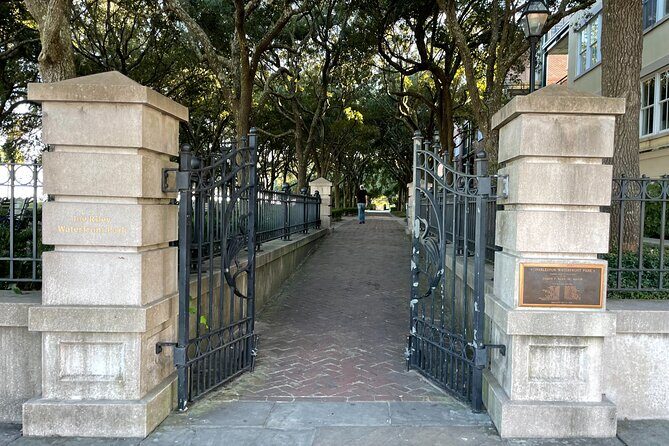
As you continue, you pass by the Old Slave Mart Museum and hear about Charleston’s connection to slavery while you walk.
This is the segment where the tone turns serious, because the location itself is part of the story. When audio is tied to a specific site like this, it helps you connect the abstract to the exact geography of the city.
I appreciate that this doesn’t only treat slavery as background context. It frames Charleston’s history as something that includes human suffering and the mechanisms that enabled it—so you’re not leaving the topic to your own research after the fact.
If you want to handle heavy history responsibly, go in with a little mental space. Pause if you need to. This is the kind of route moment where forcing yourself to keep moving can feel wrong.
Old Exchange and Provost Dungeon: law, punishment, and control
Next you pass the Old Exchange and Provost Dungeon, where the audio explains the building as you walk by.
This stop is especially relevant if you like understanding how societies managed conflict. “War and peacetime” isn’t only about battles. It also includes the structures that governed people, punished resistance, and kept order.
Even from the outside, the Provost Dungeon association gives you a lens for the era: power wasn’t just ceremonial; it was enforced. Hearing that while you’re physically near the site makes the ideas stick better than reading a general overview later.
Rainbow Row: turning a postcard street into an origin story
Then you walk down Rainbow Row and learn how it got started.
This is where the tour helps you look like you know the place—even if you’re seeing it for the first time. Rainbow Row is one of those landmarks people recognize immediately, but “how it got started” adds the missing layer. It turns the row into a story about development and preservation, not just colorful facades.
Practical note: this is a natural place to slow down. If you want photos, Rainbow Row is one of the easiest segments for that—take a few shots, then let the audio continue once you’re ready.
The Battery: views, history, and a built-in photo pause
As the walk continues, you pass the Battery and hear about it while you’re near the waterfront promenade area.
The Battery is a payoff zone. It’s a spot where the architecture and the views work together, and the audio helps connect what you’re seeing to the larger historical setting of Charleston.
In particular, I’d plan to take a moment here for photos. One of the strengths noted in feedback is how this stop creates a real photo opportunity around the Battery area—exactly the kind of moment you want to catch without rushing.
If the weather is good, this segment is a strong reason to choose this tour over a purely indoor museum day.
Dubose Heyward House and literary/Charleston connections
Next you pass the Dubose Heyward House and hear about Dubose Heyward and his connection to Charleston while you walk.
This stop is a helpful reminder that history is not only political and economic. Places also connect to writers, ideas, and cultural output. If you’ve heard the name Heyward before, you’ll likely appreciate how the audio ties him back to the city instead of leaving him floating as a name from a book.
If you don’t know him yet, that’s fine. The audio context is meant to give you enough to understand why the house is part of the walking story.
Dock Street Theatre: a historic building that sounds better than it looks
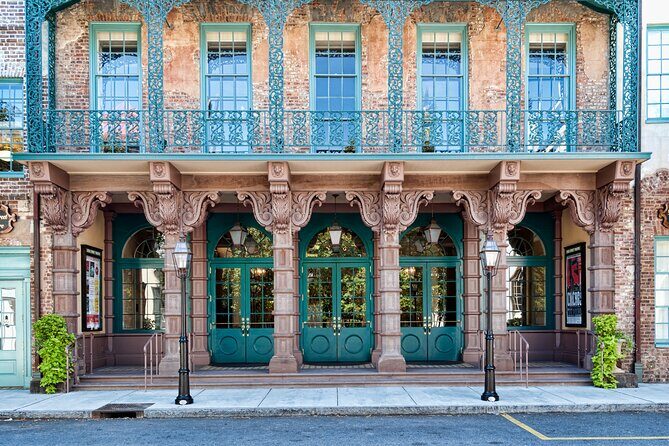
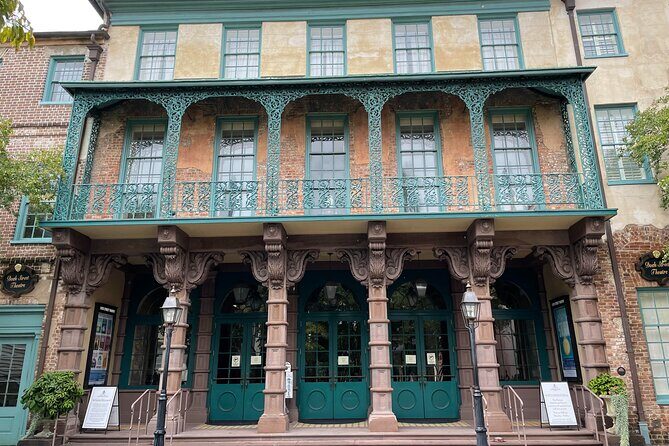
You then pass Dock Street Theatre, with a bit about its history and the history of the building while you walk.
This segment is a nice shift in pace. It’s still history, but it’s history with performance and public life mixed in. Historic theaters are one of the fastest ways to connect a city’s cultural identity to real physical space.
If you’re the kind of visitor who likes to understand why certain buildings are standing where they are, the audio here helps you read the scene with intent—not just for scenery.
St. Philip’s Church: ending a cultural thread before the finale
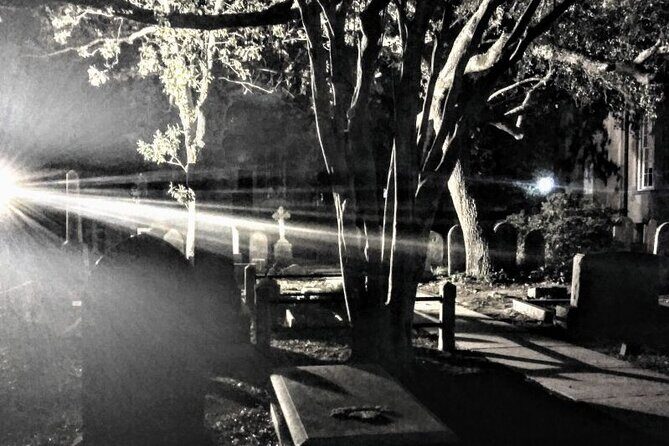
After Dock Street Theatre, you pass St. Philip’s Church and hear about it while you walk.
Churches are often where cities show continuity. In Charleston, St. Philip’s Church is part of how the city’s identity has held through changes in political power and social life.
This stop also works as a breath before the closing landmark. By the time you reach it, you’ve already moved through commerce, punishment, symbolic culture, and the visual icons of downtown.
Finish at the Powder Magazine Museum area
The tour ends outside the Powder Magazine at 79 Cumberland St, Charleston, SC 29401.
That ending location ties neatly to the tour theme of “war and peacetime.” Powder stores symbolize conflict readiness, but the very fact that it’s now a historical site places it in the longer arc of how a city transforms what it once needed for survival into something you learn from.
The tour ends close to where you started, which helps you wrap your day efficiently. If you want to keep exploring afterward, you’re still in the central zone rather than being deposited far away.
It’s listed as open daily with hours shown as 12:00 AM to 11:59 PM, which suggests you can plan around your schedule. Just remember the museum may have its own rules, so if you want to go in, you’ll likely need to check separately.
Who should book this audio tour (and who might skip)
This is a strong pick if you:
- Want a self-paced way to learn Charleston without booking multiple guided tours
- Prefer learning on foot while you see the actual landmarks
- Like the idea of mixing major historical topics with “small but memorable” details like pineapples and film connections
- Need a history-focused activity that fits in about 2 hours
You might skip or reconsider if you:
- Want a guided group with a person speaking live
- Prefer to spend your time mostly inside museums and paying for entrances
- Dislike apps or don’t want to manage your own device during a walking route
Quick FAQ
FAQ
How long is the Charleston self-guided audio tour?
It usually takes about 1 hour 30 minutes to 2 hours.
Where does the tour start and end?
It starts outside the Historic Charleston City Market near The Museum at Market Hall, 188 Meeting St and ends outside the Powder Magazine, 79 Cumberland St.
Is the tour only available in English?
Yes. It’s offered in English.
Do I need a ticket to visit museums on the route?
No. The tour does not include tickets or entrance fees for museums or other attractions along the way.
Does VoiceMap work offline?
Yes. It includes offline access to the audio, maps, and geodata.
What’s included in the price?
Lifetime access to the tour in English, plus the VoiceMap app for Android and iOS with offline access.
Can I cancel if my plans change?
Yes—free cancellation is available. You must cancel at least 24 hours in advance for a full refund.
Should you book it?
If you’re visiting Charleston for the first time and want the city to click in your head, I’d book this. For a low per-person price, you get a walkable route through major landmarks, plus story context that covers serious topics and also keeps the experience human with cultural details like pineapples and the movie connection.
Just go into it expecting a self-guided walk. Bring comfy shoes, keep your phone charged, and let the audio do what it’s designed to do: turn streets into a clear, usable timeline.