REVIEW · CHARLESTON
Lowcountry History Strolls
Book on Viator →Operated by Karen McDaniel · Bookable on Viator
Charleston can feel like a postcard. This tour makes it a timeline, block by block, with Laurens/Rutledge House as your anchor. I love how you get big-picture context fast, then see it right on the street in the buildings and gates. I also love the guide’s use of visuals and easy charts—history that usually sounds dry turns clear and memorable. One possible drawback: it moves at a steady walk-and-talk pace, and it covers heavy topics (wars, slavery, epidemics), so it’s not the pick if you want only light, breezy sightseeing.
I took in the story through the route’s logic: English roots, colonial layout, turning points around Meeting Street and Bay Street, and then the harbor conflicts that shaped later centuries. The tour is private (just your group), and it’s offered in English with a mobile ticket, so you’re not stuck hunting for paper maps.
Karen McDaniel leads with energy and humor, and she keeps the pace comfortable. Expect stops that connect architecture to events, plus practical advice at the end so you can eat well without guessing.
In This Review
- What Makes This Stroll Work So Well
- Getting Your Bearings on Broad Street (117 Broad St)
- Laurens/Rutledge to Tradd Street: English Roots and Real Architecture
- Sword Gates and Col. John Stewart: When a Street-Corner Becomes a Story
- Crossing Meeting Street into the Walled City
- Bay Street’s Lord’s Proprietors Plan: Built with Intent, Then Gone
- The High Battery and Harbor Wars: From Royal Rule to the Civil War
- Coming Back with the Social Story: Slavery, Hospitality, Friendly Societies
- Food Culture at the Finish: Turning Learning into a Great Meal
- Price, Value, and What You’re Really Paying For
- Who Should Book This History Stroll
- FAQ
- How long is the Lowcountry History Strolls tour?
- Where does the tour start?
- Does the tour end at the same place?
- Is this a private tour?
- What language is the tour offered in?
- Is a mobile ticket used?
- Are service animals allowed?
- Is free cancellation available?
- Is it near public transportation?
- Should You Book Lowcountry History Strolls with Karen McDaniel?
What Makes This Stroll Work So Well
- A tight 90-minute route that hits major story zones without feeling like a marathon
- Broad Street to High Battery gives you the city’s “before and after” in one loop
- Visual aids and charts that explain the why behind what you’re looking at
- Specific stops like the Sword Gates and the home tied to Col. John Stewart
- Food-culture guidance at the finish so history lands in real life
- A guide who names details you’d normally miss, from buildings to plants and trees
Getting Your Bearings on Broad Street (117 Broad St)
You start at 117 Broad St, at the Laurens/Rutledge house. This place sets the tone. It’s not just old walls. It’s a starting point tied to the founding story of the country, and it gives you something to hold onto as the tour starts moving.
From the first minutes, Karen frames what you’re about to see like cause and effect. A house is a snapshot of wealth and power, but also of planning, craftsmanship, and the local rules of daily life. That matters because Charleston history is layered. If you only look at surfaces, you miss the connections.
This tour is also built for time. Ninety minutes is long enough to feel oriented, but short enough that you can still enjoy the rest of your day. If you like walking with purpose—rather than wandering—you’ll appreciate how quickly you gain traction.
One practical thing: you’ll be on sidewalks and crossing streets as you go. Wear shoes you trust. You’re going to look up a lot, but you’re also going to walk.
Other historical tours in Charleston



Laurens/Rutledge to Tradd Street: English Roots and Real Architecture
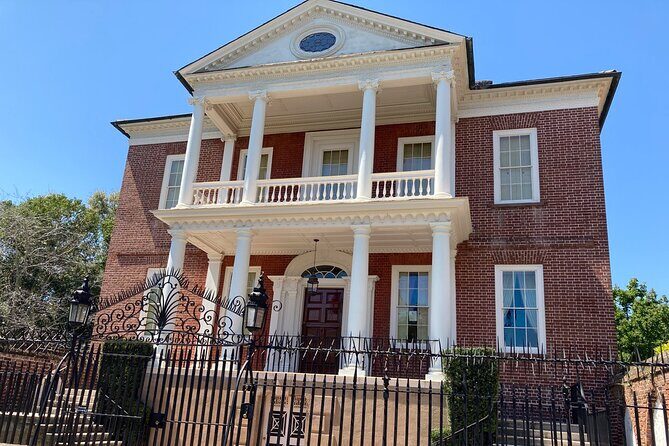
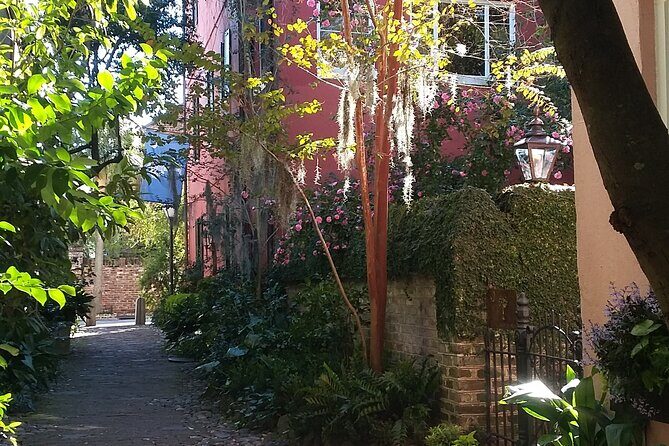
After the Laurens/Rutledge house, the stroll works toward Tradd St. This is where the tour’s structure really clicks. Karen connects the English history behind the colony to what you’re seeing in the neighborhood—especially the shapes and styles of the buildings.
You’ll stop to discuss architecture in a way that goes beyond names of structures. The point isn’t to memorize dates. The point is to understand why certain designs and layouts make sense in Charleston’s world. Heat, weather, materials, and social needs all show up in the built environment.
Karen also brings in the harder chapters you’d rather not think about on vacation. Epidemics and disasters appear in the story, not as trivia, but as reasons people built, adapted, and sometimes lost everything. That’s part of what makes this stroll feel like more than “pretty old streets.” The city’s looks didn’t happen in a vacuum.
This section is a solid match for people who like context. If you enjoy learning how politics, economics, and everyday survival shaped what you see today, you’ll feel fed the whole way.
Sword Gates and Col. John Stewart: When a Street-Corner Becomes a Story
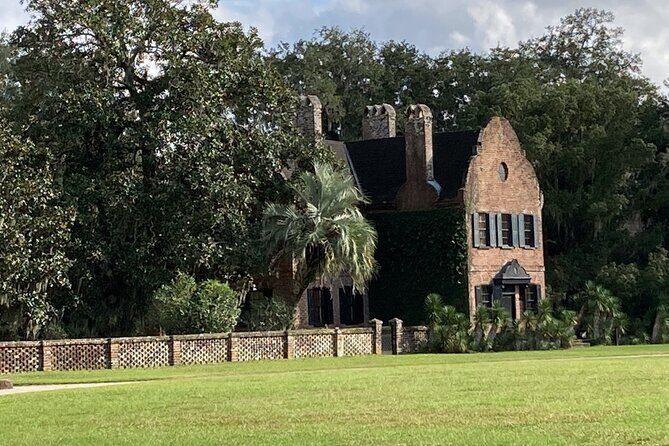
As you move around toward Tradd St, you’ll hit two major landmarks: the Sword Gates and the home associated with Col. John Stewart. These stops help the tour zoom from big political ideas down to readable details.
The Sword Gates give you a natural moment to talk about how English authority and colonial planning showed up physically. Gates and entrances are never just decorations. They’re statements about control, access, and defense. Standing near them, you start to see the city’s original logic as a system, not random street beauty.
The discussion of Col. John Stewart adds another layer. It ties a person to a place and then ties that back into English history and colonial growth. You don’t just hear what happened; you hear how people lived inside the consequences.
From the guide style you’ll likely notice quickly, she doesn’t treat Charleston like a museum. You’ll get charts and visuals to explain the social and economic background behind what you see. In the same spirit, she also pays attention to plants and trees as you walk—names and context that make the street-level details feel less like background clutter.
A small consideration: if you prefer purely visual art tours, this section may feel more classroom than photo walk. But if you want meaning attached to every stop, this is where the tour starts paying off.
Crossing Meeting Street into the Walled City
Then you cross Meeting Street into the original walled city. This is a smart pivot. You’re moving from the broader colonial landscape into the tighter planned space where daily life concentrated and where the city’s boundaries mattered.
One standout theme here is Washington’s visit. Even without turning it into a lecture, the tour helps you connect that moment to what Charleston was at the time—an important stage in the young country’s story. You also get discussion of Charleston’s firsts, which gives you a sense that the city wasn’t just surviving. It was influencing.
The walled city framework makes everything feel more navigable. Streets start to explain themselves. Why people grouped where they did. Why certain movements and boundaries mattered. And why architecture in a limited space has different pressures than architecture spread out across open terrain.
This is also where Karen’s pace helps. You won’t feel rushed through the ideas. The conversation gives you time to look, then time to understand what you’re looking at.
If you hate walking in hot weather, aim to start earlier in the day when possible. The route is short, but outdoors still means sun and humidity.
Bay Street’s Lord’s Proprietors Plan: Built with Intent, Then Gone
Ending on Bay Street, you’ll see the city planned by the Lord’s Proprietors. That’s a huge story shift: you go from events and people to planning itself—how someone imagines a city and then tries to make it real.
Karen discusses why it was built and why it came down. That framing matters, because many history walks only cover who lived there. This one asks how the city was intended to function and what made that plan fail or change.
This stop is especially valuable for people who like systems thinking. City plans show priorities—trade, defense, access, control. When the plan breaks, you see that in the physical layout and in the long-term story of the place.
Bay Street also works as a transition point in the tour’s emotional tone. Earlier stops focus on origins and growth. Now you’re watching the city’s structure face limits. It’s a reminder that even powerful planners run into reality: economics, politics, and shifting circumstances.
When the tour is over soon after this, you’ll feel grounded. Bay Street helps you understand why the rest of Charleston looks the way it does and why certain patterns don’t last forever.



The High Battery and Harbor Wars: From Royal Rule to the Civil War
Next comes the High Battery, and this is where the tour turns cinematic. You’ll discuss the start of two wars in Charleston’s harbor, plus the last Royal Governor, and then the beginning and end of the Civil War.
The value here isn’t just the names of conflicts. It’s the location itself. The High Battery gives you a perspective on why the harbor mattered so much. When you stand where defenses and observation make sense, the story feels less abstract. You can picture movement, tension, and the stakes of control over a waterway.
Hearing about royal power and the transition to later eras also creates a clean line through time. You watch political authority shift, but you also see how those shifts affect daily life and the city’s trajectory.
One more thing: the tour doesn’t skip the discomfort. Slavery, war, and major social change are part of the narrative, and they show up at key moments rather than being stuffed into a single segment. That approach helps you hold multiple truths at once—Charleston as art and Charleston as labor and conflict.
If you want a “big history” section in a short walk, this is it. High Battery is the tour’s high note.
Coming Back with the Social Story: Slavery, Hospitality, Friendly Societies
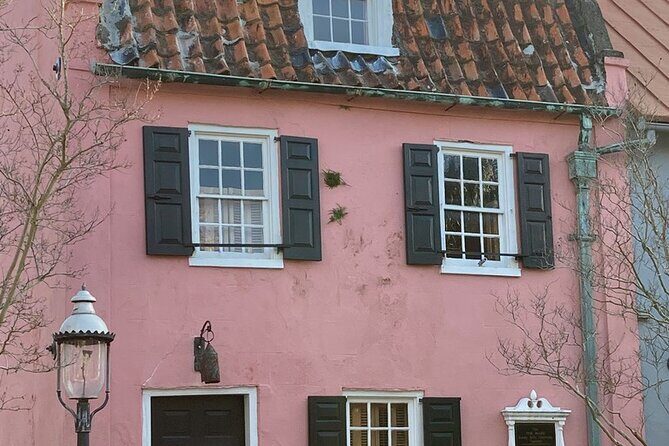
As you make your way back, the tour widens again into the social fabric of colonial Charleston. You’ll talk about slavery, hospitality, and friendly societies, bringing the focus back to how people organized their lives.
This part matters because it answers a question a lot of architectural tours ignore: who supported the system, and who suffered from it? Karen treats these topics with context, and the discussion doesn’t feel like a scary interruption. It feels like part of understanding how the city functioned.
You may also hear about later eras of discrimination, including the Jim Crow era in Charleston, as part of the broader social-history thread. That connection helps the story feel continuous rather than chopped into disconnected time periods.
The hospitality theme is a good balance point. Charleston’s reputation for welcome is real, and it’s also complicated by the systems underneath. Hearing both sides in the same tour gives you a more honest picture without turning the walk into a list of gloom.
Friendly societies add another angle. They show how people built mutual support and identity within the rules they had. It’s an important reminder that history isn’t only rulers and wars. It’s also neighbors making it through.
If you’re hoping for a one-note tour, this one will surprise you—in a good way. It has room for contradiction.
Food Culture at the Finish: Turning Learning into a Great Meal
You end back at the meeting point, and the tour wraps with food culture. That’s not an afterthought. It’s how you shift from interpretation to experience.
Karen sends you off with options for dining experiences in town. And based on her style, those suggestions tend to be practical rather than generic—choices that match what you’re in the mood for after a history-and-walking session.
This is where the timing works in your favor. After 90 minutes of story, you’ll want something real: a meal that feels like Charleston, not just a stop on a checklist.
If you’re planning the rest of your day, ask her for a plan. You’ll get better results if you tell her what you want—casual versus sit-down, seafood versus something else, and whether you want a neighborhood vibe or a classic pick.
Price, Value, and What You’re Really Paying For
There’s no need to overthink value. You’re paying for concentrated interpretation: a guide who can connect landmarks to political and social shifts, and do it in about 1 hour 30 minutes.
The private setup is part of the value too. You can ask questions without feeling like you’re competing with a crowd. And the mobile ticket format keeps logistics simple so you start fast.
This tour is also a good value if you’re doing a short visit. You’re not trying to see every attraction. You’re learning the city’s logic so the rest of your wandering makes more sense.
If you dislike guided walking tours or you prefer to read at your own pace, then the value question tilts the other way. But if you like structure—here, the structure is the point.
Who Should Book This History Stroll
I’d put this tour near the top of the list if you:
- want a fast way to understand Charleston’s layout and major turning points
- enjoy architecture when it comes with context
- like guided storytelling that uses visuals and clear explanations
- want a family-friendly pace with enough humor to keep you paying attention
It may be less ideal if you:
- want a purely scenic walk with minimal heavy topics
- hate standing still for explanations
- need very slow, low-impact walking (the route is short, but it is a real stroll)
If you’re a history lover, this feels like a great orientation. If you’re a casual sightseer, it still gives you enough story to make the city click.
FAQ
How long is the Lowcountry History Strolls tour?
It runs about 1 hour 30 minutes.
Where does the tour start?
The tour starts at 117 Broad St, Charleston, SC 29401.
Does the tour end at the same place?
Yes. The experience ends back at the meeting point.
Is this a private tour?
Yes. It’s a private tour/activity, and only your group will participate.
What language is the tour offered in?
The tour is offered in English.
Is a mobile ticket used?
Yes. The tour uses a mobile ticket.
Are service animals allowed?
Yes, service animals are allowed.
Is free cancellation available?
Free cancellation is available. You can cancel up to 24 hours in advance for a full refund.
Is it near public transportation?
Yes, it’s near public transportation.
Should You Book Lowcountry History Strolls with Karen McDaniel?
If you want your Charleston to make sense, book it. Karen McDaniel brings the story to life with visuals, charts, and a pace that keeps you engaged without feeling rushed. You’ll leave with a clear sense of how Broad Street origins connect to the walled city, why Bay Street matters, and why the harbor wars shaped the city’s later chapters.
The best part for me is the balance: you get beauty and people and planning, but you also get the realities of epidemics, disasters, slavery, and war. If that mix sounds like what you want from your trip, this is an easy yes.