REVIEW · CHARLESTON
Charleston’s Best Highlights: History, Culture & Architecture
Book on Viator →Operated by Charleston Sole Walking Tours · Bookable on Viator
Charleston reveals itself in footstep-sized chapters. This guided walk strings together some of the city’s most famous buildings into one clear story, from early American politics to church glass and merchant wealth. I especially love how the route is built around big moments you can still point at with confidence, even when you’re just starting your first day in town, and the guide keeps the pace friendly.
I also like the architecture mix—Georgian houses at Rainbow Row, Federal grandeur in the Russell House area, and Gothic Revival at the French Huguenot Church—so you don’t just memorize names, you see patterns. For example, if you catch Brian, or Finn, you’ll feel their teaching style fast: lots of specifics, good energy, and room for questions.
One consideration: it’s a walking tour in downtown Charleston, so good weather matters, and a couple of places have entrances that depend on availability or separate hours. You’ll also get exterior views at some stops, since not every building is entered.
In This Review
- Key Highlights You’ll Appreciate Up Front
- Bay Street Orientation: Starting Where Charleston’s Story Begins
- Old Exchange & Provost Dungeon: One Site, Many Turning Points
- Rainbow Row: Mariner’s Stores Now Painted Caribbean-Style
- Old Slave Mart Museum: Learning Without Pretending It’s Easy
- French Huguenot Church: One of the Last Practicing Communities
- Dock Street Theater: Where Built-Over History Still Performs
- Charleston City Hall and the Four Corners of Law
- St. Michael’s Church: Tiffany Glass and Constitution-Era Names in the Yard
- Nathaniel Russell House Garden: Federal-Era Merchant Power
- High Battery Views and the Edmondston-Alston House
- Timing, Pacing, and Why the Tour May Run a Bit Longer
- Value: What’s Included, What’s Free, and What Costs Extra
- Who Should Book This Historic Highlights Walk
- Should You Book It?
- FAQ
- How long is the tour?
- Is the tour offered in English?
- Is admission to each attraction included?
- Will the tour enter the Old Slave Mart Museum building?
- Are Dock Street Theater and St. Michael’s Church entrances guaranteed?
- What is the policy if weather is bad or I need to cancel?
Key Highlights You’ll Appreciate Up Front
- Major American milestones tied to real buildings like the Old Exchange and Provost Dungeon
- Rainbow Row’s Georgian row houses explained as working waterfront-era mariner’s stores
- Historical context around slavery handled directly, even though you don’t enter the museum
- Church and theater stops that show Charleston’s mix of faith and public life
- Views from the High Battery with Fort Sumter in sight
- Small group size (max 20) for a calmer, question-friendly tour
Bay Street Orientation: Starting Where Charleston’s Story Begins
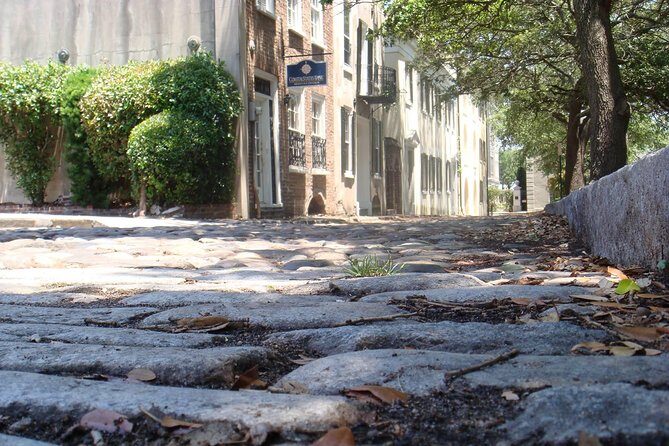
The tour starts at 122 E Bay St, right where you can feel the city’s historic core. That matters because Charleston is built like a set of overlapping chapters; start here and the rest of the route clicks into place faster.
This is a 2-hour walk (approx.) guided in English. A small group cap of 20 also helps. You can hear the guide, ask questions, and still move at a normal walking pace without getting swallowed by a crowd.
Other historical tours in Charleston


Old Exchange & Provost Dungeon: One Site, Many Turning Points
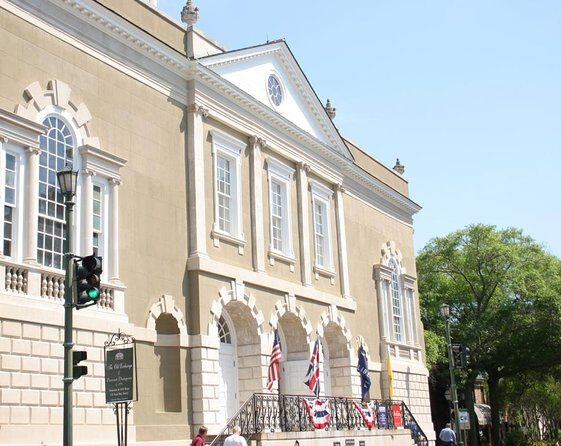
Stop 1 is the Old Exchange & Provost Dungeon, dating to around 1771. This is one of those places that makes you slow down, because the building sits at the intersection of politics, war, and law—long before modern Charleston took its current shape.
Here’s what makes the stop feel more than just scenic: the Declaration of Independence was read in 1776, the building was used as a British prison for roughly two years during the American Revolution, and South Carolina ratified the U.S. Constitution in 1788. You also get the George Washington connection from May 1791, when he visited and was entertained during a week-long stay.
Important practical note: admission isn’t included at this stop. That doesn’t mean the tour is incomplete—your guide will help you understand what happened there and what to notice from your vantage point. But if you want to go inside on your own time, you may need a separate paid entry.
Rainbow Row: Mariner’s Stores Now Painted Caribbean-Style
Then you move to Rainbow Row, one of the most photographed stretches in Charleston—for good reason. What I like most is that the stop isn’t treated like a postcard. You learn what these buildings originally were used for: mariner’s stores in the 18th and 19th centuries.
They’re attached Georgian row houses, and the guide connects that architecture to the working city around them. You also hear how the row was restored in the 1930s during Charleston’s preservation efforts, including the shift to the bright Caribbean color scheme you see today.
This is also a quick stop with no admission needed, so it works well even if you’re tired or the sun is intense. Use this moment to spot details like the repeated facade rhythm—Charleston’s “beauty” is built on repetition and proportion, not just paint.
Old Slave Mart Museum: Learning Without Pretending It’s Easy
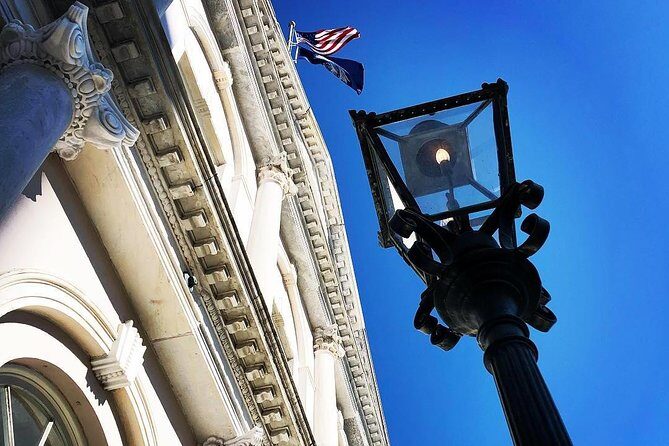
Stop 3 is Old Slave Mart Museum, known in the 1850s as Ryan’s Slave Mart. This site was used as an auction location for the interstate slave trade, and the tour focuses on Charleston’s role in that system.
What you do here is powerful in a different way than the other stops. The tour does not enter the building, and admission is not included. Instead, you get the interpretation outside, with your guide speaking to the historical reality directly.
That format is worth knowing before you come. If you’re hoping for a museum-style indoor experience, this isn’t that. But if you want a guided route that doesn’t dodge the hardest parts, it gives you a focused moment where the guide can keep the conversation grounded and specific.
French Huguenot Church: One of the Last Practicing Communities
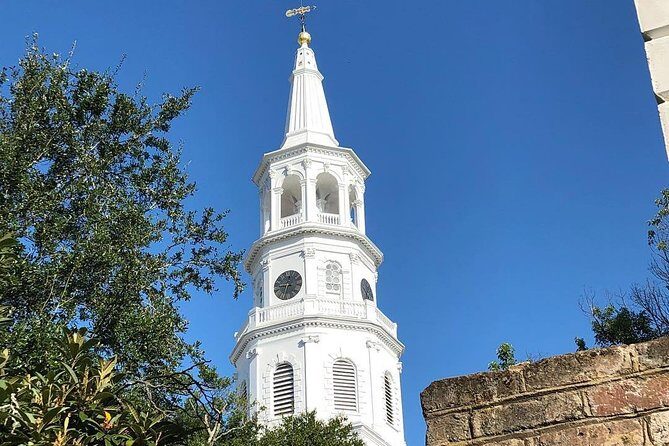
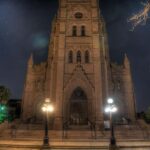
Next is the French Huguenot Church, a Gothic Revival building from 1845. This stop is short, but it lands because it’s not just about architecture—it’s about lived faith.
You learn how the church houses one of the only practicing Huguenot (French Protestant) communities in the country. That’s a rare kind of historical continuity. It also helps you understand Charleston as a city shaped by incoming communities, not just by one dominant storyline.
Admission is free here, and the exterior is the main experience on this stop. Even so, you’ll likely walk away noticing how Gothic Revival features communicate solidity and identity—especially in a city full of softer-looking historic facades.



Dock Street Theater: Where Built-Over History Still Performs
Dock Street Theater is Stop 5, and this one mixes “what you see now” with “what was here first.” The entry can depend on availability, so plan for the possibility that you might view it from outside rather than inside.
What’s exciting is the layered timeline:
- It’s built on the site of the first theater in the British colonies
- The current Dock Street Theatre dates to about 1937
- It was restored from the old Planter’s Hotel (around 1809)
- The Charleston Stage company operates as the largest professional theater company in South Carolina
- Roughly 120 performances happen each year
Admission is listed as free, and even when you don’t go in, it’s still a great stop because it shows how Charleston reuses its past. It’s the same idea as preserving buildings, but applied to purpose: a place made for gathering and storytelling keeps doing the job.
Charleston City Hall and the Four Corners of Law

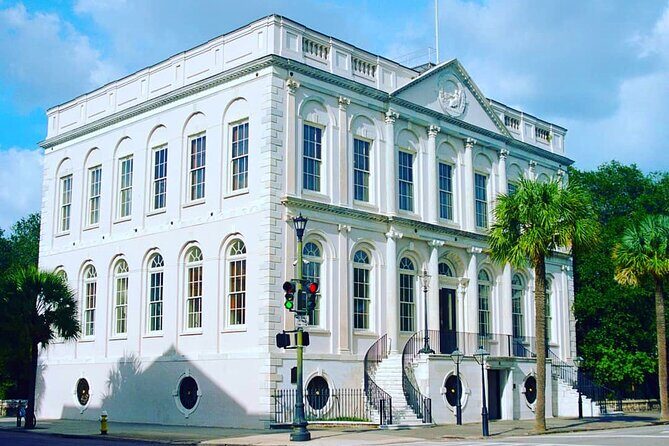
Stop 6 brings you to Charleston City Hall, which sits on one of the “Four Corners of Law,” named by Robert Ripley. That trivia-style framing is more useful than it sounds—it helps you see how the city likes to mark its legal and civic identity in public spaces.
The building began as a bank in 1801, and it has functioned as city hall since 1818. The result is that you’re standing in a civic building tied to long-running local governance, not a one-off monument.
Admission is free. And on weekdays, visitors can enter the council chamber and see a collection there, complimentary. If your timing matches a weekday, this is one of the spots where you’ll get more “inside” value than at some other stops.
St. Michael’s Church: Tiffany Glass and Constitution-Era Names in the Yard
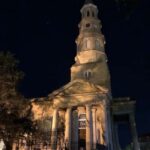
Stop 7 is St. Michael’s Church, with entrance depending on availability. This is the oldest house of worship in Charleston, around 1761, and the stop is designed to give you both the spiritual and civic angles.
You’ll hear about Charleston’s religious history—then get concrete details like the original woodwork and Tiffany stained glass windows. The churchyard also matters: John Rutledge and Charles Cotesworth Pinckney, both U.S. Constitution signers, are buried there.
Admission is free. If you do get entry, the building details will make you slow down. If you don’t, the external stop still works because the guide uses the burial information and architectural clues to keep it meaningful.
Nathaniel Russell House Garden: Federal-Era Merchant Power
Stop 8 focuses on the Nathaniel Russell House. You don’t just look at the facade; you enter the garden of this Federal-style townhouse, built in 1808.
The guide connects it to Nathaniel Russell, a wealthy merchant involved in shipping. You also learn he was originally from Rhode Island, which reinforces a bigger theme of the tour: Charleston’s wealth didn’t come from nothing. It came from maritime trade, and people moved and invested across regions.
Admission is marked not included, but the tour still includes stepping into the garden area. I’d treat this as an opportunity to compare the garden space to the street rhythm around it. The contrast shows how wealth operated: public faces outside, controlled calm inside.
High Battery Views and the Edmondston-Alston House
Stop 9 starts with a walk to the High Battery wall. This is one of the best “stretch your legs and reset your brain” parts of the route because it turns the walking history into a geography lesson.
From here, you look at the waterfront mansions and discuss the beginning of the Civil War, with Fort Sumter in view. That line of sight gives context that photos can’t fully explain, because you understand where people stood while events unfolded.
You also look at the Edmondston-Alston House, which has been in the same family since 1838. The guide points out that it was a site where Gen. P. G. T. Beauregard watched the bombardment of Fort Sumter with others.
Admission is not included for this stop. The value here is interpretation plus view. Even if you don’t go inside anything, you’ll leave with a clearer mental map of Charleston’s role at a turning point in U.S. history.
Timing, Pacing, and Why the Tour May Run a Bit Longer
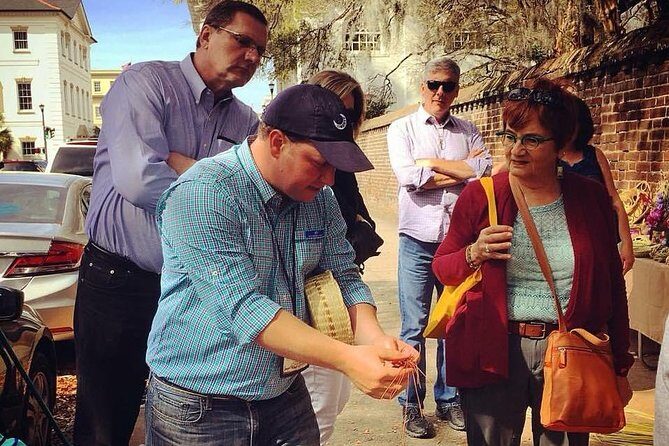
The tour is scheduled for about 2 hours, but it’s built as a conversation, not a hurried checklist. If your group asks lots of questions, or if the guide slows down to point out details, you may find you’re out longer than you expected.
That’s not a failure of timing—it’s the style of the tour. The guides (including Brian and Finn, when they’re assigned) tend to answer questions and add context instead of cutting people off to stay rigid. With a max group size of 20, that keeps it fun rather than chaotic.
Also, plan for a true walking tour. Downtown Charleston means uneven sidewalks and sun exposure. If you’re sensitive to walking time, bring water and wear shoes you trust.
Value: What’s Included, What’s Free, and What Costs Extra
This experience is great value if you want a guided route that connects landmarks and explains what they mean. The “included” part is the walking, the licensed-style interpretation, and the way the guide ties architecture to real events.
To plan your budget, look at the mix of stops:
- Free stops: Rainbow Row, French Huguenot Church, Dock Street Theater (typically free admission), Charleston City Hall, and St. Michael’s Church
- Not included: Old Exchange & Provost Dungeon, Old Slave Mart Museum (you don’t enter), Nathaniel Russell House, and Edmondston-Alston House
- Availability-dependent entrances: Dock Street Theater and St. Michael’s Church
So you shouldn’t expect to pay for every site. But you should also expect that a few stops may require separate entry if you want an interior experience beyond what the guide provides.
If you’re optimizing value, I recommend thinking in two layers: do the tour for the story, then pick one or two paid interiors afterward that match your interests.
Who Should Book This Historic Highlights Walk
This tour fits best if you want:
- a fast way to get your bearings in downtown Charleston
- a guided mix of architecture and American history
- a route that works for both first-timers and people who have already done one basic overview
It also suits you if you like asking questions and getting direct answers. The format works because the group stays small, and the route is designed so the guide can connect the dots—politics, faith, commerce, and war—without rushing.
If you hate walking or you want a fully indoor museum day, this isn’t the right match. This is about streets, buildings, and what you can learn while moving.
Should You Book It?
Yes, if you want a guided historic Charleston walk that gives you a clear framework for what you’re looking at. I’d book it early in your trip so the rest of your days have context—especially the stops tied to the Constitution-era names, the slave trade history discussion, and the Fort Sumter sightline from the High Battery.
I’d also book it if you appreciate architecture, because the guide doesn’t just name styles. You’ll understand why the styles matter in a city that preserved a working coastal economy into the present.
Skip it only if weather is likely to be rough, or if you strongly need guaranteed inside access at every stop. With a little planning, though, this one is a smart, high-impact way to experience Charleston’s highlights in about two hours.
FAQ
How long is the tour?
It runs for about 2 hours (approx.) and ends back at the meeting point.
Is the tour offered in English?
Yes. The experience is offered in English.
Is admission to each attraction included?
No. Some stops list admission as not included, while others are free. A few entrances also depend on availability.
Will the tour enter the Old Slave Mart Museum building?
No. The tour discusses it, but it does not enter the building.
Are Dock Street Theater and St. Michael’s Church entrances guaranteed?
No. Entrance depends on availability.
What is the policy if weather is bad or I need to cancel?
The tour requires good weather. If it’s canceled due to poor weather, you’ll be offered a different date or a full refund. You can cancel for free up to 24 hours in advance for a full refund.