REVIEW · CHARLESTON
Evening History Tour
Book on Viator →Operated by Peninsula Walking Tours · Bookable on Viator
Charleston after dark tells the full story. This 2-hour evening walking tour keeps you out of the hottest part of the day while you learn how the city got built, fought over, and explained itself through centuries of events. It’s led by a local guide, and it’s offered in English with a mobile ticket for easy entry.
I especially like the way this route strings together major moments in American history without feeling like a lecture. The Robert Smalls escape story at the start is memorable, and the stops keep coming fast: from Rainbow Row to the harbor history of Fort Sumter.
One thing to consider: the tour depends on good weather. If the forecast turns ugly, you may need to switch dates or get a refund.
In This Review
- Key points you should know before you go
- Why an evening history walk works so well in Charleston
- Meeting at 80 Broad St and how the tour flows
- Pineapple Fountain: hospitality plus Robert Smalls’ escape story
- Rainbow Row at dusk: more than a postcard line
- Fort Sumter National Monument and the harbor’s chain of conflicts
- Old Exchange & Provost Dungeon: presidents to pirates in one footprint
- St. Michael’s Church and the Four Corners of Law
- What I like most about a local guide (and why Evans matters)
- Group size, pace, and what kind of traveler this suits
- Value: why the free admission stops make the tour feel efficient
- Should you book this evening history tour?
- FAQ
- How long is the Evening History Tour?
- Where does the tour start and end?
- What language is the tour offered in?
- Do I need a printed ticket?
- Is admission required at the stops?
- What is the cancellation policy?
- Is the tour dependent on weather?
Key points you should know before you go
Pineapple Fountain starts the story with hospitality and Robert Smalls’ Civil War escape.
Rainbow Row gets historical context beyond postcards, with a quick stop that still feels focused.
Fort Sumter National Monument ties Revolutionary conflict to the start of the Civil War and Battery Wagner.
Old Exchange & Provost Dungeon connects colonial-era power to stories ranging from presidents to pirates.
St. Michael’s Church highlights the Four Corners of Law named by Robert Ripley, linking religious and civic categories.
Small group size (max 20) helps you keep questions moving with your guide.
Why an evening history walk works so well in Charleston
Charleston’s history is everywhere. The hard part is turning all those facades into a story you can actually remember. Doing it in the evening helps because you’re not fighting midday heat while trying to listen and look at details.
This format is also practical. You get a paced, guided walking route with short stops, so your attention stays sharp. You’re not stuck in one place waiting for the next step, and you can still cover a lot of ground in about 2 hours.
And because it’s downtown-focused, it’s an easy fit for many trip schedules. If you’re exploring on your own during the day, this can act like the glue that connects the pieces you saw earlier.
Other historical tours in Charleston



Meeting at 80 Broad St and how the tour flows
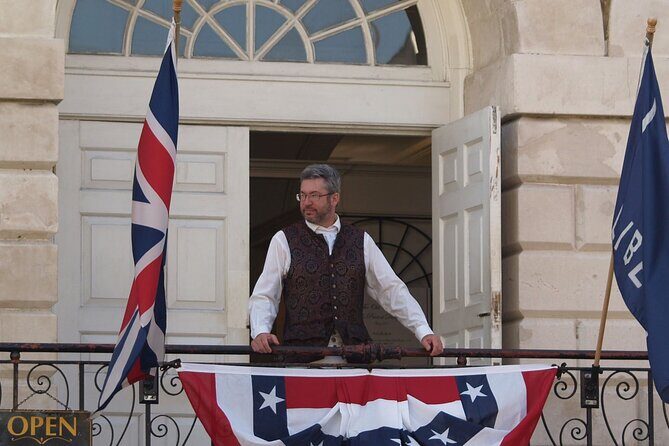
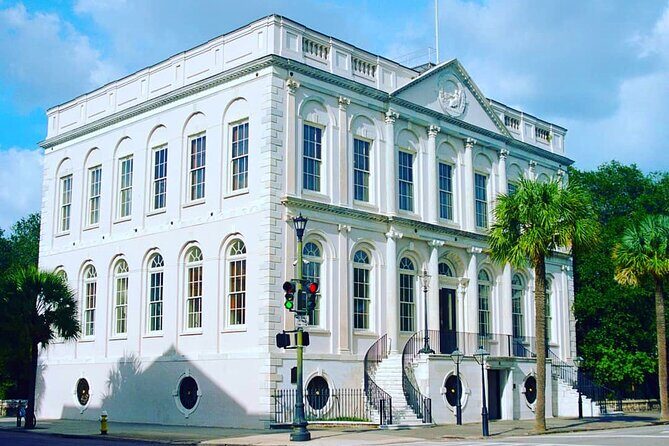
The tour starts at 80 Broad St, Charleston, SC 29401, and ends at Charleston City Hall at the intersection of Broad and Meeting Streets. That matters because it means your walking time finishes near a central landmark area, so you’re not stuck trying to “figure out” transportation far from the core of the city.
It also helps that the tour uses a mobile ticket. You don’t need to hunt for paper, and that makes the beginning less stressful—especially if you’re meeting right as daylight shifts.
The group is capped at 20 travelers, which you’ll feel in a good way. It’s big enough that the tour has energy, but small enough that your guide can manage the pace without leaving people behind.
Pineapple Fountain: hospitality plus Robert Smalls’ escape story

Your first stop is the Pineapple Fountain, a symbol of welcome that Charleston has leaned on for a long time. That alone is a fun starting point because it’s not a battlefield or a government building—it’s a message. Then the guide connects it to something much heavier.
Right next to it is the monument to Robert Smalls, and the story focuses on what’s described as the bravest escape by an enslaved African American during the Civil War. This stop works because it gives the tour an emotional anchor early on. You start with an image of hospitality, then quickly move to the reality of the city during slavery and war.
Why I think this is a great opener: you set expectations that the tour won’t just point at landmarks. It will attach those landmarks to decisions, risks, and human courage. Even if you’ve visited Charleston before, this pairing—pineapple welcome plus Smalls’ story—tends to land.
Time-wise, it’s about 15 minutes. That’s long enough for the main story arc, but short enough that the rest of the walk still feels energetic.
Rainbow Row at dusk: more than a postcard line
Next comes Rainbow Row, Charleston’s most famous row of buildings. It was built between the 1740s and 1750s, and the row shows up everywhere—needlepoint designs, souvenirs, the kind of imagery you’ll see on shot glasses and magnets.
The value of a guided stop here isn’t the photo. It’s the interpretation. Rainbow Row can feel like a neat visual pattern unless someone helps you connect it to the age, architecture, and the social world that produced it.
The stop is about 10 minutes, which is the right amount for this kind of landmark. You get the context without getting stuck while others lag behind trying to frame the perfect shot.
If you like walking tours that keep moving, Rainbow Row is a perfect example of how to do a famous sight without wasting your evening.
Fort Sumter National Monument and the harbor’s chain of conflicts
Then you shift to the harbor with Fort Sumter National Monument. Charleston’s shoreline history is not just about one war. It’s about a sequence—battles that foreshadow later ones, and decisions that echo across time.
Here, the tour connects:
- the battle of Fort Sullivan during the American Revolution
- the first shots of the Civil War at Fort Sumter
- the role of the Massachusetts 54th at Battery Wagner
This is where your evening can feel more cinematic than you expect. A harbor is naturally layered—land, water, visibility, strategy. Even without extra spectacle, the guide’s framing can help you picture why these forts mattered.
A possible drawback: if you’re someone who hates any outdoor cold, you’ll want a light layer. This stop is still brief at about 15 minutes, but it’s tied to being in the open air and near waterfront viewpoints.
Other evening experiences in Charleston





Old Exchange & Provost Dungeon: presidents to pirates in one footprint
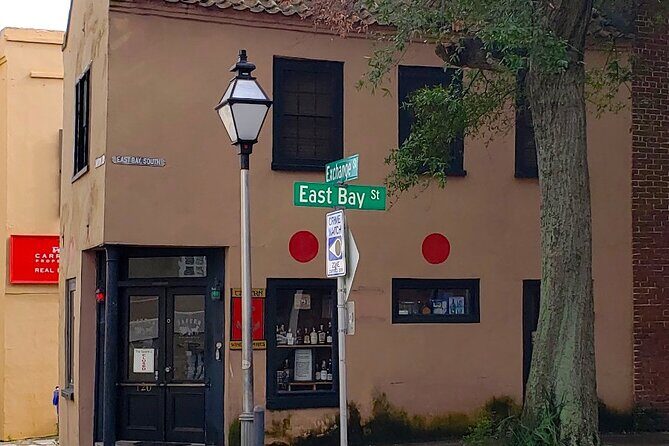
After the forts and the harbor story, you head into colonial-era power with the Old Exchange & Provost Dungeon area. This stop is described as one of the three most historic colonial American structures, combining the Exchange, the Customs House, and the Provost Dungeon.
The best part of this stop is the range of what you’re told it held. The way the site is framed includes stories from presidents to pirates. That kind of spread matters because it helps you see the building as more than a single-lesson museum. It was part of how commerce, law, and punishment worked in different eras.
It’s a 10-minute stop, so don’t expect a full building tour. Instead, think of it as a strong “orientation stop” that gives you a mental map. When you pass this area later on your own, the place feels like it has layers you can recognize, not just stone walls.
St. Michael’s Church and the Four Corners of Law
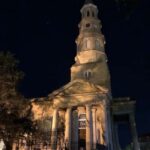
Your final story stop is St. Michael’s Church. This is the place tied to the Four Corners of Law, a feature named by Robert Ripley of Ripley’s Believe it or Not.
The tour explains that the Four Corners represent God, Local State, and Federal Law. That’s a fascinating angle because it makes the church feel like a living piece of governance, not only a religious landmark. It also gives the tour a nice change of pace right at the end.
Time here is short—about 5 minutes—but the detail is oddly memorable. If you enjoy weird-but-meaningful Charleston facts, this is one of those stops that helps the whole evening stick in your head.
What I like most about a local guide (and why Evans matters)
A big reason this tour scores high is the guide’s ability to connect the dots quickly. In at least one of the experiences tied to this tour, the guide name is Evans, and the standout point is how much Charleston history gets shared in a clear, enjoyable way.
That’s the practical goal of a good evening history tour: you don’t want more facts, you want the right facts in the right order. The route does that by moving from welcome symbols to Civil War escape, then into architecture, harbor battles, colonial institutions, and finally the Four Corners of Law.
So if you like learning at a conversational pace—with someone steering you away from getting lost in trivia—you’ll likely appreciate the way Evans frames things.
Group size, pace, and what kind of traveler this suits
With a cap of 20 travelers, you’re in a sweet spot for walking tours. The group feels manageable, and your guide can keep the story line intact instead of just reciting facts over heads.
The pace also fits people who want history without a huge time commitment. About 2 hours lets you do this even on a day when you’ve already spent time browsing museums or hopping between neighborhoods.
This tour tends to work well if you:
- are visiting Charleston for the first time and want a fast mental framework
- have been before and want a different angle on familiar landmarks
- enjoy history that’s tied to real places you can see immediately
If you’re the type who wants to sit and read slowly, you might find the frequent short stops a bit brisk. But for most people, that’s exactly why the evening format is so satisfying.
Value: why the free admission stops make the tour feel efficient
Several stops list admission as free, which helps the overall value. You’re not paying extra at each location to get the basics. That makes the tour feel efficient, because you’re paying for the guidance and the connections—while the stop-entry costs don’t pile up.
Since the tour is only about 2 hours, the best “value move” is to arrive with curiosity. Ask yourself what you want to understand most: how Charleston dealt with war, how it structured law and civic life, or how its identity got shaped by major turning points.
A guided evening like this is most worth it when you’re open to having someone steer your attention. The landmarks will already look impressive. The guide is what gives them meaning.
Should you book this evening history tour?
I’d book it if you want an easy win in Charleston: a guided night-to-evening walk that ties famous sights to real historical turning points. The lineup of stops—Pineapple Fountain and Robert Smalls, Rainbow Row, Fort Sumter’s conflict timeline, Old Exchange and Provost Dungeon, and St. Michael’s Church—creates a satisfying arc without dragging you through the day.
I’d skip or at least reconsider if you dislike outdoor walking in changing weather. Because it requires good weather, you may have to reschedule.
If your goal is to get your bearings fast and leave with a clearer picture of how Charleston’s story fits together, this tour is a strong pick.
FAQ
How long is the Evening History Tour?
The tour lasts about 2 hours.
Where does the tour start and end?
It starts at 80 Broad St, Charleston, SC 29401 and ends in front of Charleston City Hall at the intersection of Broad and Meeting Streets.
What language is the tour offered in?
The tour is offered in English.
Do I need a printed ticket?
No. It uses a mobile ticket.
Is admission required at the stops?
The tour information provided lists free admission at the stops.
What is the cancellation policy?
You can cancel for a full refund if you cancel at least 24 hours before the experience’s start time. If you cancel less than 24 hours before, the amount paid is not refunded.
Is the tour dependent on weather?
Yes. The experience requires good weather. If it’s canceled due to poor weather, you’ll be offered a different date or a full refund.