REVIEW · CHARLESTON
REV Walks – History Walking Tour
Book on GetYourGuide →Operated by Revolutionary Charleston Tours · Bookable on GetYourGuide
Charleston’s streets teach you fast. This 2-hour walking tour is a focused way to see the city’s major landmarks, connect the French Quarter to what came before, and make sense of how different eras shaped the peninsula. I especially like the guide-led storytelling (it’s not just dates) and the way the route passes meaningful places like Rainbow Row and the Old Slave Mart area without turning the walk into a checklist. One thing to plan for: it runs rain or shine, so you’ll need to dress for weather and wear shoes that handle uneven sidewalks.
You’ll start in the heart of town and get your bearings quickly at Washington Square Park, guided from a clear landmark: the Elizabeth Jackson Monument, which looks like a tombstone. From there, you’ll work your way through some of Charleston’s best-known streets, including the French Quarter and the colorful row of houses at Rainbow Row, with stops designed for seeing and listening rather than museum-hopping.
Finally, a fair heads-up: because the tour is only 120 minutes, you won’t linger everywhere. A few spots are passed by without stopping, so if you’re hoping for long time inside every site, you may want to pair this with an additional visit afterward.
In This Review
- Key highlights you’ll actually feel on the walk
- Setting out with Revolutionary Charleston Tours: how the 2 hours work
- Where to start: Washington Square Park and finding the Elizabeth Jackson Monument
- Rainbow Row on foot: colorful houses with a story attached
- Charleston City Market: seeing the city’s public heart
- French Quarter history: why the neighborhood layout matters
- Old Slave Mart Museum area: learning while you pass by
- Circular Congregational Church: Meeting Street’s landmark you’ll spot while moving
- Fort Sumter National Monument and the Battery & White Point Gardens
- What you’ll learn about Charleston’s eras (and how the tour keeps it understandable)
- Price and value: what $34 gets you for a 2-hour history walk
- What to bring and how to handle weather and comfort
- Who this tour is best for (and who might want a different style)
- Should you book Revolutionary Charleston’s History Walking Tour?
- FAQ
- How long is the REV Walks History Walking Tour?
- What is the price per person?
- Where does the tour start?
- How do I find the guide at the meeting point?
- Will the tour run in rain?
- What should I bring?
- Is the tour wheelchair accessible?
- What sites are included on the walk?
- Is there a live guide, and what language is it in?
- Are alcohol or drugs allowed?
- Can I cancel and get a full refund?
- Is pay later available?
Key highlights you’ll actually feel on the walk
- French Quarter context on the ground: learn how the neighborhood’s story connects to the city’s bigger timeline as you walk its streets
- Rainbow Row in full color mode: see the famous painted houses and get the meaning behind why they matter
- Pass-by experience at the Old Slave Mart area: you’ll be guided past a key site without turning the topic into a quick photo stop
- Meeting Street landmarks, plus a route that makes sense: the walk ties together the Holy City’s different eras without feeling random
- Fort Sumter National Monument and the Battery area: you get a coastal, conflict-and-change perspective built into the route
- Guides that keep it lively: Paul, John, and Brie are named in past tours for being fun, energetic, and able to tailor the pacing to your group
Setting out with Revolutionary Charleston Tours: how the 2 hours work

This is a history walking tour that stays tight on time: it’s designed for 120 minutes, so you’ll cover a lot of ground without feeling like you’re trapped in slow pace. The best part is that the tour isn’t written like a script of facts you’ll forget. The guides frame Charleston as a city with both beauty and hard edges, and you’ll feel that in how the stops are arranged.
You’ll also get licensed guide energy. The tour emphasizes learning from guides who care about Charleston’s beauty and its flaws. That matters, because history in Charleston can’t be handled with rose-colored glasses. You’ll get a guided path that helps you hold the contradictions in your head as you move from one area to another.
And since the tour is in English and wheelchair accessible, it’s built to be straightforward for a wide range of travelers. If you’re coming for your first Charleston trip and want to avoid wandering in circles, this gives you a strong spine for your day.
Other walking tours we've reviewed in Charleston



Where to start: Washington Square Park and finding the Elizabeth Jackson Monument

The meeting point is Washington Square Park, behind the city hall building. That’s a helpful detail because it keeps you from hunting around a huge downtown zone.
Look for your guide by the Elizabeth Jackson Monument, which is described as tombstone-like. That’s your visual shortcut. Arrive a bit early so you can locate the monument, settle your group, and start the tour without stress.
Practical tip: this tour is outside and you’ll be walking city streets, so plan on a steady pace rather than sprinting between sights. Once you lock in the meeting spot, you can relax and let the guide set the rhythm.
Rainbow Row on foot: colorful houses with a story attached

Rainbow Row is one of the big draws, and you’ll see it as part of the walk route. This is one of those Charleston moments where photos are easy, but understanding why the place matters makes the experience better.
The tour doesn’t treat Rainbow Row like wallpaper. Your guide connects what you’re seeing to the city’s shifting eras, so the colorful facades become clues. You’ll likely notice how the architecture and street setting reinforce Charleston’s identity—especially the contrast between what looks charming and what the city has lived through.
I like that this stop is early enough that it gives you a visual anchor. After you see Rainbow Row, the rest of the walk feels more connected because you’ve already learned what the guide means by different eras.
If you hate holding your phone up for long periods, no problem. This is more about listening while you look. Still, bring sunglasses or a hat, because downtown light can get bright even when the weather’s mild.
Charleston City Market: seeing the city’s public heart
Charleston City Market is another included stop, at 188 Meeting St. The City Market is the kind of place that tends to pull your attention in every direction, which is exactly why a guide helps.
On this tour, you’re not just passing by storefronts. You get a guided thread for understanding how the market fits into the way the city has worked—how people gather, how commerce shows up in everyday life, and how that all ties back to the broader timeline your guide is building.
Here’s the practical value: the market area can be a little chaotic on your own. With the guide, you know what to focus on, what to ignore, and how long to spend before moving on.
If you plan to do additional shopping after the walk, this stop gives you a head start. You’ll know where you’re already standing when you come back.
French Quarter history: why the neighborhood layout matters

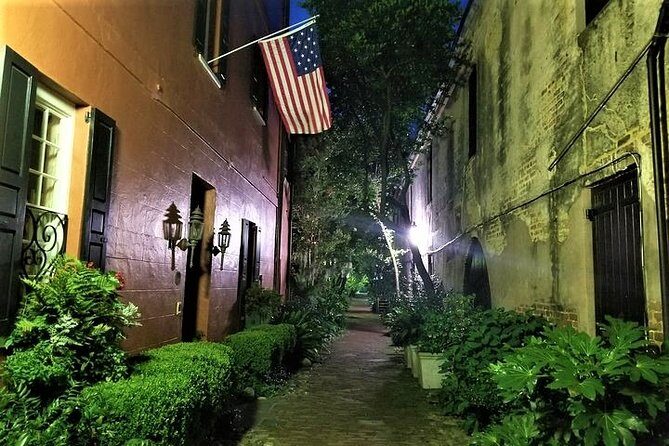
One of the tour’s stated goals is helping you discover the French Quarter and learn its history from your guide. That’s more than name-dropping. The French Quarter is all about how streets, buildings, and local landmarks connect into a lived-in neighborhood.
On foot, neighborhoods make more sense. You can see how the street pattern guides movement, where major corners sit, and how different buildings shape the feel of the block. Your guide uses that on-the-ground view to explain context—so the history becomes something you can picture, not something you just read.
From a “value for your time” angle, this is one of the strongest parts of the 2-hour plan. If you’re only doing one guided experience in Charleston, this French Quarter element is what helps you understand the city beyond the postcard spots.
Other historical tours in Charleston





Old Slave Mart Museum area: learning while you pass by
The Old Slave Mart Museum is a pass-by stop rather than a long time inside. That might sound limiting at first, but it’s also a good reminder that this tour is about walking and learning as you go. You’ll be guided past the area at 6 Chalmers St, with context that frames it as part of the broader history of slavery in the United States.
For me, the key is tone and pacing. You don’t want to treat this kind of location like a quick photo moment, and you don’t want to rush either. A pass-by format can work well when a guide sets the expectations and keeps you focused on what matters.
If this topic is heavy for you, give yourself permission to take it in slowly. Stand where the guide directs you, look where you’re told to look, and let the rest of the walk give you time to reset after that stop.
Circular Congregational Church: Meeting Street’s landmark you’ll spot while moving
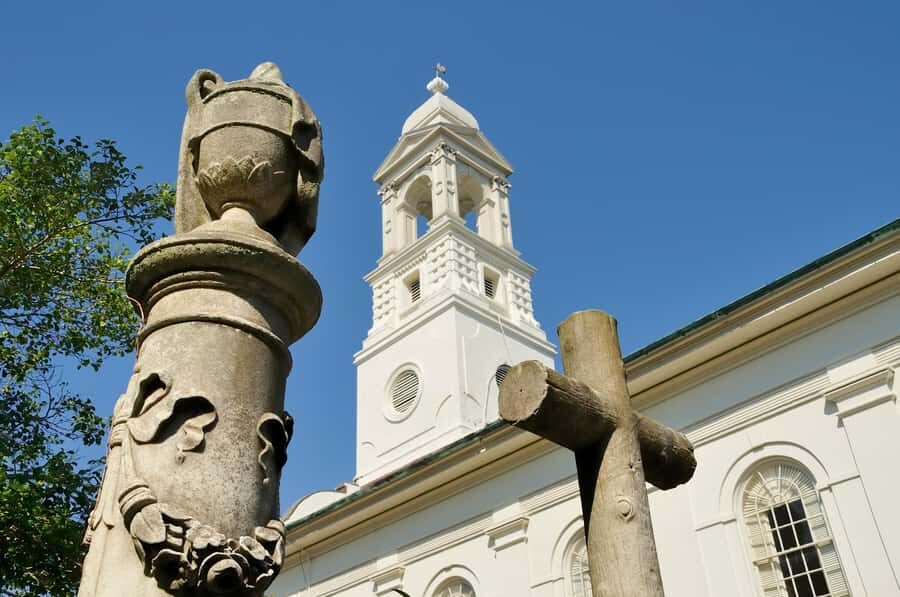
Another pass-by location is the Circular Congregational Church at 150 Meeting St. Since you’re not stopping for an extended visit here, the goal is recognition: you’ll see the landmark from the street and learn how it fits into the city’s story across different eras.
This is a smart choice for a 120-minute tour. You get the “I’ve seen it” payoff without losing too much time to long entries and line waits. Then, if you later decide you want to go inside, you have the exact location in mind.
Bonus: seeing it from the street also helps you connect it visually to the blocks around it. That’s often harder to do when you’re inside a single building and the street context slips away.
Fort Sumter National Monument and the Battery & White Point Gardens
The tour includes Fort Sumter National Monument and the Battery & White Point Gardens area. Even without lingering for a long period, these parts of the route add a crucial layer: Charleston isn’t only about architecture. It’s also about the city’s coastal location and the conflict and change wrapped into its past.
This section matters because it balances the walk. After seeing downtown landmarks and neighborhood streets, you move toward the city’s edge—where Charleston’s story naturally turns from everyday life to the larger forces that shaped the peninsula.
At the Battery & White Point Gardens (East Battery & Murray Blvd.), you’ll get that shift in perspective. Your guide ties the coastal area into the timeline you’ve been hearing, which makes the walk feel more like one connected lesson instead of separate stops.
If you’re the kind of traveler who likes a “why” behind the geography, you’ll enjoy this portion. It turns the city map into a storyline.
What you’ll learn about Charleston’s eras (and how the tour keeps it understandable)
The tour promises coverage of different eras of Charleston, and it’s paced so you can follow the threads. That’s not a small thing. Charleston history can get tangled quickly if you try to self-tour without a guide.
A good sign here is that the tour frames Charleston as a place with both glory and pain, splendor and darkness. You’ll feel that balance in how the route moves through neighborhoods and landmarks tied to different parts of the story.
I also like the “small peninsula” idea. Charleston’s compact nature means that a lot of history is close together. But close together doesn’t mean easy to understand. A guide gives you the map inside your head, so you can connect the dots instead of just collecting stops.
One more plus: past groups noted that guides can tailor the walk to interests. That’s where the smaller-group feel shows up. If you want extra time listening about neighborhood history, the guide has room to adjust within the 2-hour window.
Price and value: what $34 gets you for a 2-hour history walk
At $34 per person for a 2-hour walk, this isn’t a budget-only tour, and it also isn’t priced like a full-day excursion with transportation. So what you’re paying for is the guide experience and the efficiency of the route.
Here’s the value math that matters: you get major Charleston touchpoints (Rainbow Row, City Market, French Quarter focus, plus key historical pass-by sites) in a tight timeframe. That means you’re less likely to waste time figuring out where to start and what to see first.
Also, because it’s guided, you’re not just looking at buildings. You’re learning the meaning behind the blocks. If you enjoy walking and want your history presented in a way you can keep up with, the price feels fair for what you gain.
Bring your own essentials. The tour asks you to bring water, comfortable clothes, bug spray, and sunscreen. That’s normal, but it’s also part of the overall value: you’re not paying extra for basics that keep you comfortable outdoors.
What to bring and how to handle weather and comfort
This tour takes place rain or shine, so dress like you might get weather changes during the 2 hours. Comfortable shoes matter most. Charleston sidewalks can be uneven, and you’ll be walking continuously.
Bring:
- Water
- Bug spray (especially in warmer months)
- Sunscreen
- Comfortable clothes
Not allowed: alcohol and drugs. Keep it simple and you’ll have a better experience.
One small strategy: if it’s hot, plan to take water sips even if you don’t feel thirsty. A 2-hour walk can still sneak up on you when the sun hits.
Who this tour is best for (and who might want a different style)
This tour is a strong match if:
- It’s your first time in Charleston and you want a guided framework
- You prefer walking with context instead of reading a guidebook alone
- You want to see Rainbow Row and key downtown areas without spending the whole day
- You appreciate history presented with both beauty and pain addressed
You might want to consider a different format if:
- You need long time at museums or expect every stop to be a deep entry
- You’re looking for a mostly scenic photo walk with minimal talking
- You dislike tours that keep moving at a steady pace
If you like guides who keep the story human, you’re in good shape. Past tours highlight Paul as amazing and very informative, John for being full of knowledge and life, and Brie for making the old-town streets feel navigable in a way you wouldn’t find on your own.
Should you book Revolutionary Charleston’s History Walking Tour?
I think you should book it if you want an efficient, guide-led way to understand Charleston’s key places in just 2 hours. Rainbow Row and the French Quarter focus give you instant payoff, and the pass-by moments at the Old Slave Mart Museum area and along Meeting Street add serious context without turning the whole walk into a long museum day.
If your ideal trip includes ongoing movement, clear storytelling, and a route that keeps you from wasting time deciding where to go next, this is a smart choice. If you’d rather take your time at each site for 45–60 minutes, plan extra self-guided time after the walk instead of expecting that from a 120-minute format.
FAQ
How long is the REV Walks History Walking Tour?
The tour lasts about 2 hours (120 minutes).
What is the price per person?
The price is $34 per person.
Where does the tour start?
It departs from Washington Square Park, located behind the city hall building.
How do I find the guide at the meeting point?
Find your guide by the Elizabeth Jackson Monument, which looks like a tombstone.
Will the tour run in rain?
Yes. The tour takes place rain or shine.
What should I bring?
Bring water, comfortable shoes/clothes, bug spray, and sunscreen.
Is the tour wheelchair accessible?
Yes, the tour is wheelchair accessible.
What sites are included on the walk?
The tour includes Rainbow Row, Charleston City Market, Fort Sumter National Monument, the Old Slave Mart Museum area (passed by without stopping), Circular Congregational Church (passed by without stopping), and the Battery & White Point Gardens.
Is there a live guide, and what language is it in?
Yes, there is a live guide and the tour is in English.
Are alcohol or drugs allowed?
No. Alcohol and drugs are not allowed on the tour.
Can I cancel and get a full refund?
You can cancel up to 24 hours in advance for a full refund.
Is pay later available?
Yes. You can reserve now and pay later to keep your plans flexible.